The late Sen. Daniel Patrick Moynihan liked to quip that “everyone is entitled to their own opinion, but not to their own facts.”
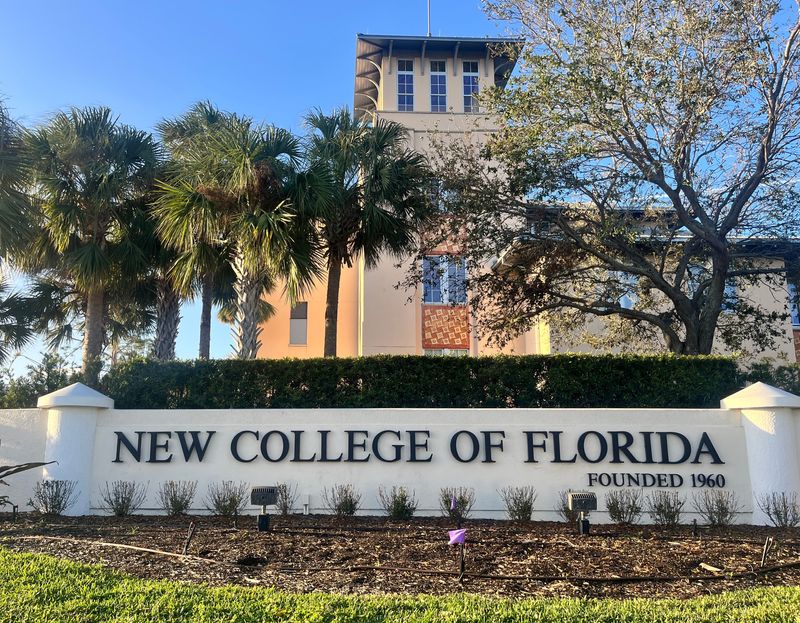
New College of Florida, where I have taught since 2000, has been the subject of a great deal of debate in the media since its Spring 2023 change in leadership, including several highly critical opinion pieces published in the Sarasota Herald-Tribune.

Vigorous public debate is appropriate and beneficial in that it can identify problems and suggest ways to remedy them – but to serve this function, debate needs to be grounded in the facts.
I’m writing to set the record straight and to offer my perspective as a longtime New College of Florida faculty member.
Numbers paint complex picture
Some critics allege that enrollments, retention and graduation rates and academic quality have “plummeted” since the new administration took office. The data show a more complex picture.
New College’s decline began earlier, after Fall 2016, when enrollment peaked at 875 students – which was ironically the moment when former New College president Donal O’Shea presented the Florida Legislature with a plan to grow to 1,200 students.
Instead of growing, however, the college struggled to attract students, and subsequently academic standards were relaxed. The college, which once admitted fewer than 50% of applicants, accepted 75% of them – and the average SAT scores of admitted students dipped from more than 1,300 to 1,230.
Even so, New College’s enrollment declined to a low of 620 students by Spring 2022.
The administrative changes in Spring 2023, at least in part a response to these indicators of decline, aggravated the problems in the short term, as they took place in the middle of the admissions cycle –and the atmosphere of chaos, conflict and uncertainty led many students, faculty and staff to leave the college.
As a result of these events, average SAT scores fell nearly 100 points to 1138 for the Fall 2023 entering class, while first-year retention rates for the prior cohort dropped to 65%, the lowest in the college’s recent history.
When critics present New College as an institution in crisis, with “plummeting” enrollments and academic standards leading to a mass exodus, they are talking about 2023 – which, by any measure, was a difficult year for the college.
But is this an accurate reflection of New College today?
New College has reversed decline
In the two years since the transition, these patterns of decline have largely reversed themselves.
Total enrollment at New College, which bottomed out at just over 600 students, has exceeded 900 for the first time in the college’s history.
Academic standards have risen as well, with average SAT scores rising to 1210 for the Fall 2025 entering cohort, and student retention has risen from a low of 65% to just over 75%, which is within the average range at the college over its history.
In absolute numbers, this means that the number of returning students increased from just 395 in Fall 2023 to 602 in Fall 2025.
Is it enough?
Of course not, and the college will continue to strive to improve in all of these areas over the coming years. But for the first time in New College’s history, a path to 1,200 students seems not only achievable, but probable.
Signs of revitalization
Signs of the college’s revitalization are visible everywhere on campus.
Caples Mansion, an architectural jewel that was long shuttered due to deferred maintenance needs, has been thoroughly remodeled and now houses the college’s new master’s program in marine mammal science.
Beach volleyball areas and soccer fields have returned student life to the beautiful, bayfront.
Dynamic new faculty members have joined with old stalwarts like me to develop new academic programs while building upon New College’s traditional strengths in the liberal arts.
Get to know the ‘new’ New College
There are, to be sure, some growing pains.
Parking, never a problem in the old days, has become increasingly scarce as enrollment increases.
And New College needs new dorms to house its growing student population – and additional office and lab space for a growing faculty.
But given the choice, the challenges of growth are far preferable to those of decline.
I encourage all members of the Sarasota community, and particularly those who have been critical of New College in recent years, to come to our campus and see the school for themselves.
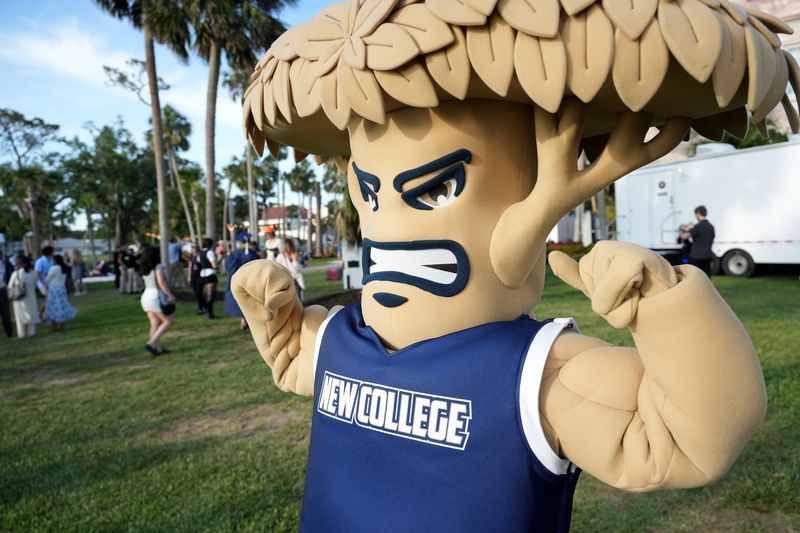
Take a tour, catch a sunset over Sarasota Bay from our revitalized waterfront, attend a public lecture or an artistic performance – such as the excellent concert series inaugurated last year by new members of our music faculty – or cheer on the Mighty Banyans in the sport of your choice.
Above all, get to know our bright, eager students and our hardworking, dedicated faculty and staff.
As our sometimes-fractious internal debates reveal, New College is a place that inspires strong feelings of attachment and belonging.
Despite our differences, I truly believe that both sides in this debate love New College and hope to see it thrive and grow. We are proud to call Sarasota our home and can’t wait to reintroduce ourselves.
David Allen Harvey is a history professor and chair of the faculty at New College of Florida. The views expressed in his guest column are his own and should not be taken as representing New College of Florida.
This article originally appeared on Sarasota Herald-Tribune: New College of Florida moving onward and upward | Opinion
Reporting by David Allen Harvey Guest columnist / Sarasota Herald-Tribune
USA TODAY Network via Reuters Connect