Improved hurricane forecasts may mean longer lead times for watches and warnings, giving Florida residents an extended notice to prepare and get out of harm’s way.
The last time the National Weather Service officially changed tropical cyclone watch and warning times was in 2010 when each was increased by 12 hours.

But National Hurricane Center meteorologists speaking at the National Hurricane Conference in Orlando said there is ongoing discussion about the potential for extending them again based on increasingly more accurate weather predictions.
“What type of lead time would you prefer?” National Hurricane Center warning coordination meteorologist Robbie Berg asked a room of emergency managers on April 2. “Once we put up a watch or warning it will not come down until we are confident that the winds are not going to happen.”
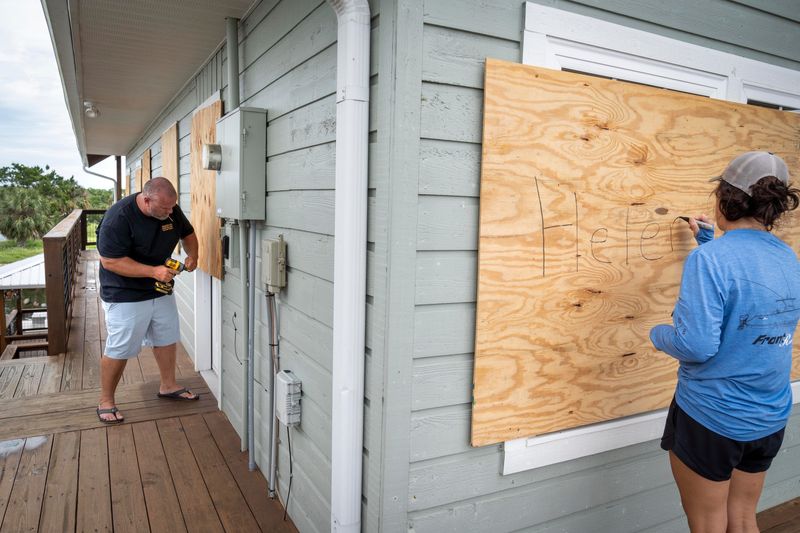
Today, a tropical storm or hurricane watch is issued 48 hours before damaging tropical storm force winds are expected to arrive in an area. A warning is issued 36 hours before the onset of tropical storm force winds, which will make it difficult to complete outdoor preparations such as hanging plywood or putting up shutters.
Tropical storm force winds begin at a sustained 39 mph.
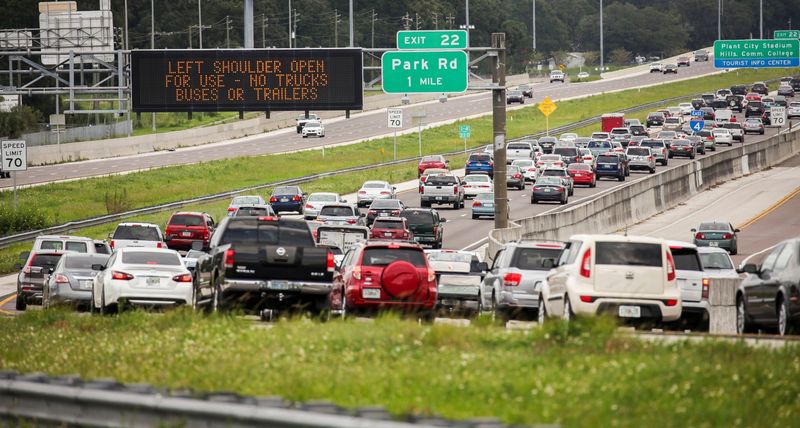
Longer lead times would also allow emergency managers more wiggle room when considering evacuations.
Berg said it’s possible the watch and warning times could be customized based on the storm.
Hurricane watches and warnings could be different based on the storm
For example, if meteorologists were confident in their forecasts for a major hurricane, they could give longer lead times than they would for minimal to moderate tropical storms, which can be harder to predict and may carry fewer risks.
“For as long as we can remember, the warning and watch times have been static,” Berg said during a session with emergency managers and meteorologists about possible future changes to hurricane-related messaging. “We understand that preparation for different levels of storms may be different. The proposal is to have dynamic lead times; a sliding scale based on the severity of storm.”
Berg said a dynamic watch and warning system would be a new paradigm for the NWS as he’s not aware of any other watches and warnings that aren’t fixed time periods.
“Everyone is better off if a longer lead time can be done,” said Erik Salna, associate director at Florida International University’s Extreme Events Institute and the Wall of Wind.
Salna, who teaches hurricane preparedness to business owners, said he tells them to initiate their hurricane plan when they are in the cone of uncertainty because it typically gives them more time than a watch or warning.
“We barely get done what we need to personally get done in two days,” Salna said. “If you’re a business and you’re not going to wake everyone up until there’s a watch; the next day is a warning and then landfall.”
Hurricane forecasts have improved in both track and intensity
Any extension to watch and warning lead times would be based on the improved accuracy of NHC forecasts for track and intensity.
Track forecast errors three days ahead of landfall have been reduced by about 70% since 1990.
The NHC’s track forecasts in 2024 were the best in historical record and the average improvement over the past five years means the 2026 hurricane forecast cone is smaller at every forecast hour except two where it remains unchanged from 2025.
Intensity forecasts for how strong a storm will get have been a bigger challenge.
“For about four decades we were only getting a little better each decade, not a lot,” said NHC senior hurricane specialist John Cangialosi. “That’s not true anymore. In the 2010s, intensity errors dropped a lot.”
There has also been improvement in forecasting rapid intensification, which is an increase in winds speeds of 35 mph over 24 hours.
From 2010 to 2014 the average error for rapid intensification forecasts was 30 mph too low. Between 2020 and 2024, it was down to an error of 18 mph too low.
“It’s almost been cut in half,” Cangialosi said. “We’re getting better at predicting the hardest types of systems.”
Currently, the NHC will issue watches outside the set time in cases when the forecast confidence is high but a technical change would give it the authority to do so with more “structure” Cangialosi said.
One concern raised was if forecasts consistently went sideways, leading to scenarios where areas were repeatedly under unnecessary warnings, which can trigger responses like mandatory evacuations. An International Hurricane Research Center report on 2004’s Hurricane Charley said a lack of major storms since 1960 and “numerous warnings over the years” meant people didn’t take the warnings for the Category 4 storm seriously.
Berg said in previous discussions with emergency managers there was more support to extend the watch lead time while there were mixed responses for longer warning times.
Florida’s rising population means longer evacuation times
In 1987, watches were defined as 36 hours ahead of damaging winds with warnings issued 24 hours in advance.
The 2010 changes that increased lead times to 48 and 36 hours noted the “ever-increasing population along the United States coastline” needing more time to prepare for tropical cyclones.
In Florida, the overall population since 2010 has grown from 18.8 million to 23.4 million in 2024, according to the state’s Office of Economic and Demographic Research. That’s a 23.5% increase.
Scott Lewis, a Certified Emergency Manager and business owner whose Eagles’ Wings Foundation helps in disaster situations, said he believes most Floridians have a good understanding of the watch and warning system as it pertains to tropical cyclones.
But he’s nervous about recent transplants, especially on the southeast coast which hasn’t experienced a hurricane since 2017’s Irma.
And regardless of the lead time, he said too many people will either panic or do nothing at all.
“There are extremes on both sides,” Lewis said. “That’s the biggest concern. They won’t be ready.”
Kimberly Miller is a journalist for the USA TODAY NETWORK FLORIDA. She covers weather, the environment and critters as the Embracing Florida reporter. If you have news tips, please send them to kmiller@pbpost.com. You can get all of Florida’s best content directly in your inbox each weekday by signing up for the free newsletter, Florida TODAY, at palmbeachpost.com/newsletters.
This article originally appeared on Palm Beach Post: Need more hurricane prep time? Watches and warnings could come earlier
Reporting by Kimberly Miller, USA TODAY NETWORK – Florida / Palm Beach Post
USA TODAY Network via Reuters Connect