Well, at least they kept it under $100 million.
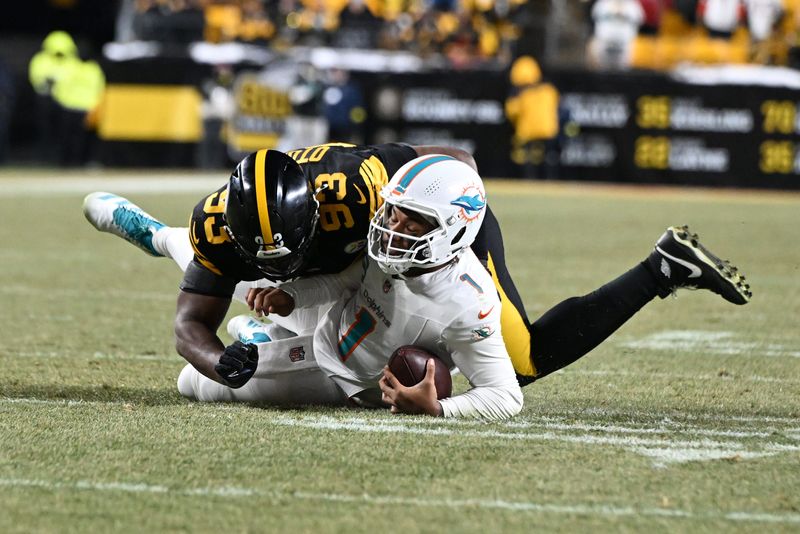
Welcome to the gallows humor portion of NFL free agency, where the Miami Dolphins locked themselves into an unprecedented $99.2 million salary dead cap hit by releasing quarterback Tua Tagovailoa 20 months after re-signing quarterback Tua Tagovailoa.

Not an ideal way to do business, which is why a few decades ago, some wise guy borrowed the label “dead money” to describe dollars a team has committed against the cap for players no longer on the team. It’s a term you’re going to see repeatedly associated with the 2026 Dolphins, although, as you’ll also soon see, maybe “The Dawn of the Dead” is just around the corner.
Freshly minted history tells us that not even record-setting amounts of cap hell are the death sentence you’d expect it to be. Teams often dig themselves out of this hole quickly (settle in, might as well beat this grave humor thing to death).
Until this week, the dead money champions of the NFL were the Denver Broncos and the $85 million they committed to quarterback Russell Wilson to not play for them. It crippled them so terribly that they made the playoffs in 2024 for the first time since 2015, a turnaround that isn’t nearly the outlier you’d assume. According to The Athletic, of the five teams with the greatest dead money anchors in 2023, four made the playoffs.
And this season? The team with the fourth-largest dead money, $88.1 million? That would be the Seattle Seahawks, Super Bowl champions, according to spotrac.
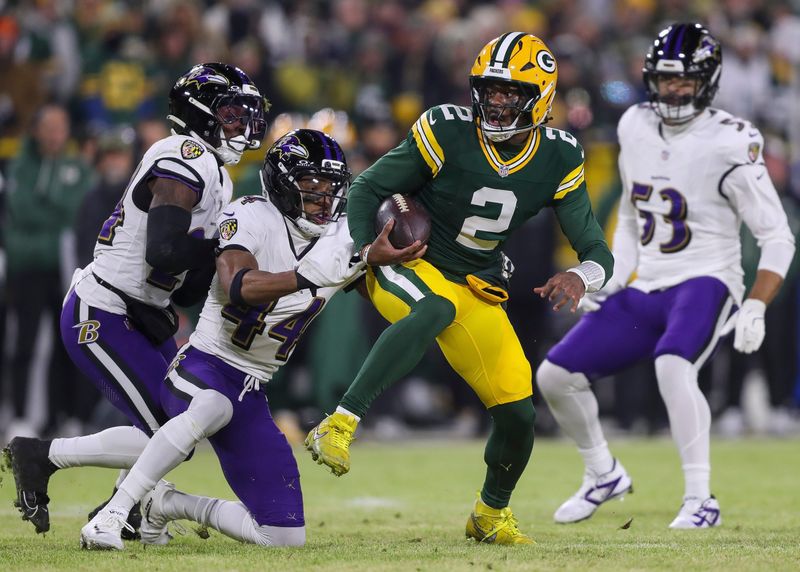
It says something that hours after announcing they were releasing Tagovailoa, the Dolphins still managed to create a path to secure their top choice as his successor. They snatched Malik Willis from the Green Bay Packers with a three-year offer worth $67.5 million, including $40 million guaranteed.
Green Bay Packers learned how to deal with dead money
Somewhere, deep in the offices in Miami Gardens, Brandon Shore, the Dolphins’ capologist, must have been burning up the calculators to make that happen. Why it came to be is a secret to no one, since new coach Jeff Hafley and new general manager Jon-Eric Sullivan came via Green Bay, where the GM there, Brian Gutenkust, obviously taught Sullivan well when it comes to navigating the cap.
“Every situation is a little bit different, (but) I do think you’re always going to have a little bit of dead money if you’re doing things properly,” Gutenkust told The Athletic. “You don’t want it, but at the same time, if you’re trying to maximize your ability to win, you shouldn’t be afraid to have some of that.”
In other words: Don’t Fear the Walking Dead (Money), hefty as it is in Miami’s case.
According to overthecap.com’s calculations, the Dolphins had $89.6 million in dead money committed before the Tagovailoa move, with about half of that accounting for the contracts of Tyreek Hill and Jalen Ramsey. From there, it’s all the way down to minor charges for (believe it or not) Matthew Judon, Cam Smith and Mohamed Kamara. Tack on Tagovailoa’s $67.4 million for 2026 and you’re looking at 52.1 percent of the 2026 salary cap devoted to the grateful dead.
Dead money goes back to NFL installing salary cap in 90s
The term came alive after the NFL created the salary cap in 1994.
“In business terms, it is essentially a ‘sunk cost,’ ” according to the NFL’s explanation of the term. “Any money a team pays a player must be accounted for against the salary cap. If there is dead money in a player’s contract and he is released or retires, that charge will accelerate onto the team’s salary cap for the current year.”
The exception is one the Dolphins are using: the June 1 designation.
“Teams can spread the cap hit over two seasons by releasing or trading a player after June 1,” the NFL says, with limitations. “Teams are allowed to release two players prior to June 1 (but on or after the first day of the League Year) while still using this designation and getting the same cap treatment. However, the cap savings created by a June 1 designation do not take effect until after June 1.”
The term may have been borrowed from poker, where it often refers to money in the pot from players who have folded. But it has other applications.
If you’ve ever played a video game where you have to survive the horrors of a Sierra Madre resort, you’ve played “Fallout: New Vegas – Dead Money DLC.” If you had the misfortune of devoting 1 hour, 40 minutes of your life to watching a 2024 film about a professional poker hustler playing “the biggest game of his life,” according to the Internet Movie Database, you endured “Dead Money.” And you learned why you should have checked the Rotten Tomatoes score (31 percent) in advance.
Better to focus on the dead in NFL terms, where in this decade alone, the Los Angeles Rams and Philadelphia Eagles also found Super Bowl glory when the dead money charts suggested it wasn’t possible. And the Tampa Bay Buccaneers made a playoff run with Baker Mayfield after Tom Brady’s retirement triggered a $35 million dead cap hit.
The Dolphins hope that Willis is to Tagovailoa what Bo Nix was to Wilson. The Broncos drafted Nix 12th overall and saw him help them reach the AFC Championship Game in only his second season. Only two years prior, Denver had visited Miami and suffered 70-20 embarrassment.
There were those walking out of Hard Rock Stadium that day thinking the Broncos were toast.
They were dead wrong.
This article originally appeared on Palm Beach Post: Miami Dolphins’ record dead money isn’t a death sentence
Reporting by Hal Habib, Palm Beach Post / Palm Beach Post
USA TODAY Network via Reuters Connect