The Blue Angels launched a safety review on Wednesday after a jet thrilled the crowd while reportedly flying closer than normal over Pensacola Beach during its “Breakfast with the Blues” event.
Blue Angels fans don’t need to worry about flyovers going away, however. Safety reviews are used to make internal suggestions to prevent similar incidents. Wednesday’s flyover serves as a crucial safety component by marking the weekend shows’ coordinates.

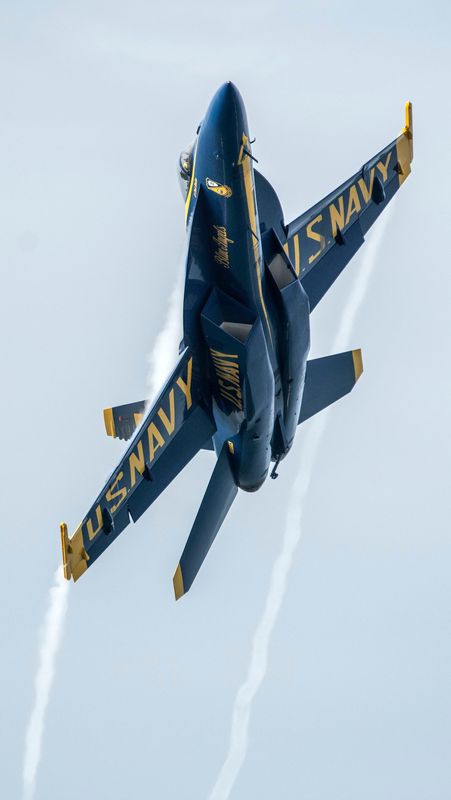
Video from the flyover shows one of the team’s F/A-18E/F Super Hornets making a low pass over a crowded Pensacola Beach, knocking down a tent and kicking up some sand as it passed.
In a statement, the Blue Angels confirmed that the aircraft flew abnormally low and that the team was conducting a full safety review.
“During an arrival maneuver, an aircraft flew lower than standard profiles, resulting in a disturbance on the beach that affected civilian chairs and umbrellas,” the Blue Angels said.
“The safety of our hometown community, spectators, and our pilots is our highest priority,” it said. “Team leadership is reviewing the circumstances surrounding the maneuver and conducting a thorough safety review to ensure all operations adhere to strict Navy and FAA safety standards.”
Those on the beach for the flyover appeared to love the up close look at the jet, with many hoping for a repeat in this weekend’s performances. While it’s unlikely after the Blue Angels’ statement, Defense Secretary Pete Hegseth assured the world that flyovers in general will continue.
“The flyovers will continue until morale continues,” Hegseth tweeted Thursday morning.
This isn’t the first time a Blue Angels jet has been accused of flying too close to onlookers at Pensacola Beach.
In 2025, a photo went around social media showing the No. 5 jet passing what appeared to be uncomfortably close to the Pensacola Pier. The photo’s perspective makes it unclear how close the jet actually was to the pier, however.
An incident in 2021 at Naval Air Facility El Centro, where the team conducts its winter training, prompted the Blue Angels to change how they perform their iconic low-altitude maneuver known as the “sneak pass.”
The team performed the maneuver just after transitioning to its new F/A-18E/F Super Hornet jets, which are bigger, louder and faster than the previous F/A-18 Hornets.
The power of the new jets created a sonic wave and resulted in property damage to three base structures.
After an investigation, the Navy altered the maneuver to slightly reduce the maximum speed for a sneak pass, prohibiting it within 200 feet of any structure, vehicle or personnel and prohibiting it when the aircraft’s flight path is closer than 500 feet of an assembled crowd.
This article originally appeared on Pensacola News Journal: Low Blue Angels pass thrills crowd, kicks up umbrellas at Pensacola Beach
Reporting by Brandon Girod, Pensacola News Journal / Pensacola News Journal
USA TODAY Network via Reuters Connect
By Brandon Girod, Pensacola News Journal | USA TODAY Network