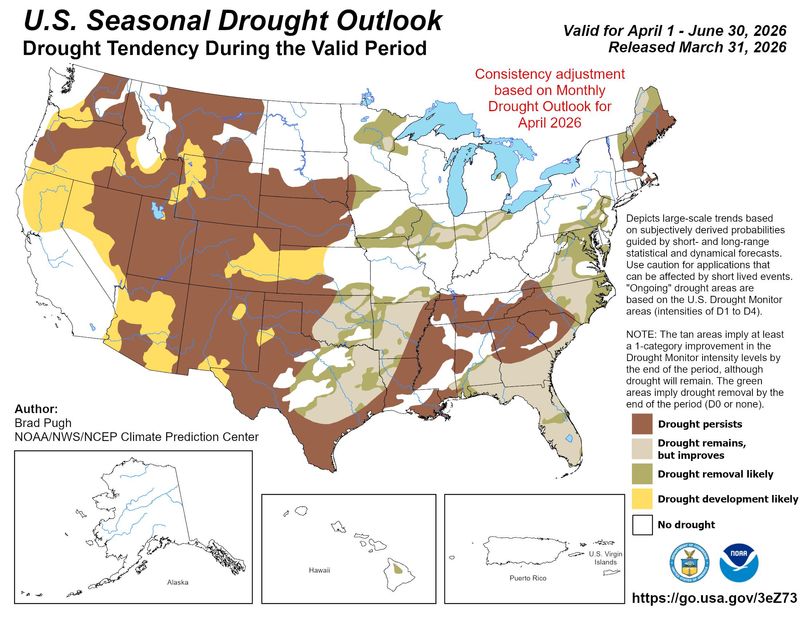
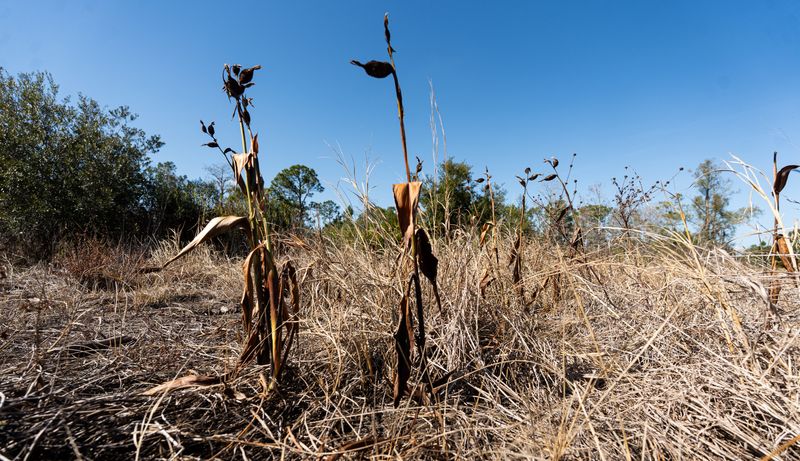
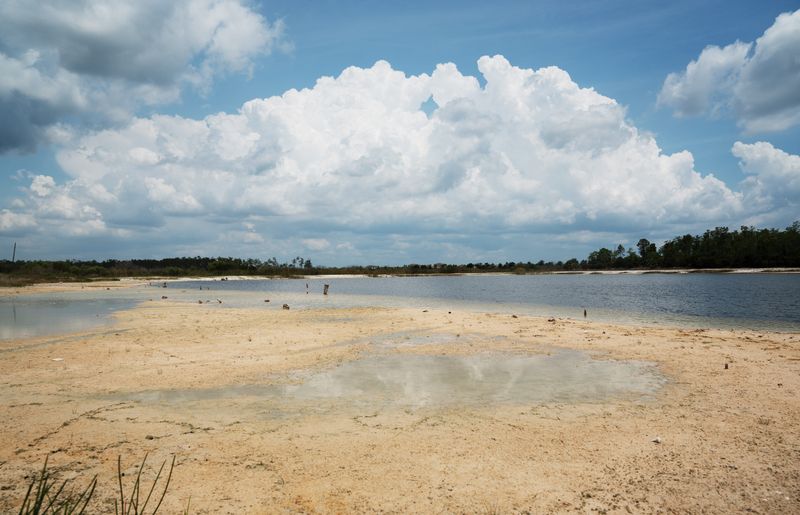
It comes as no surprise to anyone that Northeast Florida and Southeast Georgia are experiencing an extreme drought. In fact, this drought is impacting the entire Southeast United States.
My sincere sympathies go out to those having to endure wildfire and especially those who have lost their homes, businesses and property damaged or destroyed by the fires.

My thoughts and prayers are for substantial rain soon and a speedy recovery. It does appear from recent forecasts that the area may get some much needed rainfall in the coming weeks. And while we will never make up for the rain deficit, we can return to a more normal rainfall pattern.
The ancient Greek philosopher Heraclitus (circa 535 BC) first wrote the philosophical concept that “The only constant in life is change.” Heraclitus proposed that the world and even the universe is in constant motion. He noted in his famous analogy that one cannot step into the same river twice.
Change is often slow and almost imperceptible. It can also be sudden and extremely disruptive, like the wildfires and the damage they cause. And the current drought may be an example of a slower, more gradual change. Time will tell.
There is no doubt that we are seeing climate change. It has always changed. That is nothing new. We can argue about the causes, and there are many, including the impact of over 8 billion people living on the earth for the first time ever.
What is different now is our ability to gather data and analyze the variations over time. The National Weather Service predicted this drought months ago because of a pattern developing that indicated decreased rainfall.
What resulted was the warmest and dryest spring on record. Drought can be defined in different ways, depending on levels, impacts and time scales. It is hard to compare one drought to another. But an examination of weather records since 1900 shows that there has been at least one severe and widespread drought somewhere within Florida every decade.
Droughts can have severe impacts to land, especially if there are wildfires, plus there is the potential damage to agricultural crops. That can influence economics and people’s wallets across a much greater area than just the drought-stricken area.
Droughts also affect stream and river flow. And we are seeing a definite change in the salinity of the St Johns River. We measure salinity in parts per one thousand with 0 ppt being fresh and 35 ppt being typical average ocean water. Over the last few months, we have seen the salinity at the Acosta Bridge in downtown Jacksonville go from near 0 ppt in November to 32 ppt in April.
Saltwater intrusion into the St. Johns River has been influenced by higher than normal water levels. We have consistently seen the water levels in the river higher than what would have been with historic levels since Hurricane Irma in 2017.
The change in salinity causes changes in the river ecology. What fish species are there and what vegetation can grow are all affected. Since Irma, we have seen the submerged aquatic vegetation all but disappear in parts of the river.
How long this will last is unknown at this point. But with advances in instrumentation and data gathering, we may be able to make more accurate forecasts in the future. The National Weather Service and National Oceanic and Atmospheric Administration are already monitoring El Niño-Southern Oscillation. ENSO is a recurring pattern involving climate changes in water temperature in the central and eastern tropical Pacific Ocean. Over what are approximately three- to seven-year periods, the surface waters across the tropical Pacific Ocean vary from 1°C to 3°C, warmer or cooler when compared to normal.
That pattern influences our local weather and climate. We have known about El Niño and the Southern Oscillation for decades; however, it has only been with more recent satellite and buoy data that we have been able to make the connection.
It is hard to believe that what happens in the Pacific affects us here in the Southeast. But it does.
Glad you asked River Life
While walking along the beach at what was nearing low tide, I saw what looked like small clams moving in the waves and then digging into the sand. What were they?
You were seeing Coquina or Surf Clams that have the scientific name Donax variabilis. These little clams are under an inch in size and move up and down the beach face with the tide. They can also be a major component of coquina rock that is soft and porous, but it was still used as construction material to build the Castillo de San Marcos, the Spanish fort in St. Augustine.
River Life runs the first Tuesday of each month in The Florida Times-Union. Email Quinton White, professor emeritus and former executive director of Jacksonville University’s Marine Science Research Institute, with questions about our waterways at qwhite@ju.edu. For more on the MSRI, visit ju.edu/msri.
This article originally appeared on Florida Times-Union: Let it rain, let it rain, Florida is burning in the sun
Reporting by Quinton White, Special to Jacksonville Florida Times-Union USA TODAY NETWORK / Florida Times-Union
USA TODAY Network via Reuters Connect