On May 12, the Leon County Commission will decide the future of arts funding in this community, a decision that will reshape a 40-year system in a matter of days.
An agenda item before the commission would transfer Council on Culture & Arts (COCA) grant programs from COCA to the county’s Division of Tourism. It is my understanding that COCA leadership, and the arts community, first learned of the proposal when the agenda was published, leaving a scant seven days before the vote.

There will be only one public hearing scheduled later, but that hearing is only to address the paperwork required to make the change — not on whether the change itself should happen.
This is not just an administrative adjustment. It is a fundamental shift in how arts and cultural funding decisions are made in this community — decisions that have, for four decades, been guided by artist-led panels and subject-matter expertise.
I understand the county’s interest in accountability and efficiency. Those are legitimate goals. But when a long-standing community partnership is set to be restructured on this kind of timeline, the risk is not just that something changes – it’s that something important is lost before it is fully understood.
My core concern is this: moving these decisions into local government risks changing a process that has long been guided by professional judgment and has been backed for decades by liaisons with Florida State University, Florida A&M University, Tallahassee State College, Tourist Development Council, and Leon County Schools among others. We risk losing artist services, workshops, consultations, and marketing support that have helped launch careers, and deliver support for arts and cultural programming.
That’s not a criticism of the individuals involved. It’s a recognition of how systems work. When decisions for funding the arts move closer to elected bodies and administrative structures, they inevitably become more exposed to shifting priorities, public pressure, and political considerations. That is a fundamentally different model than one led by cultural professionals and working artists.
And the stakes are not abstract.
Arts and culture generate more than $200+ million annually in Leon County, including approximately $85 million tied to tourism and events. These programs are part of the economic fabric of this community.
COCA’s model is also tied to something that is not easily replaced. Its designation as a local arts agency under Florida law allows it to maintain relationships with organizations like the National Endowment for the Arts, the Knight Foundation, and the Levitt Family Foundation. Those relationships brought more than $259,000 in outside funding into Tallahassee this year alone. It is not clear that those dollars would continue under a different structure.
There has also been significant discussion about COCA’s ‘reserves.’ The figure cited, roughly $3 million, could sound concerning. But the organization’s audited financial statements show that many of those assets are committed to grantees and held in trust until disbursed on a contractual schedule during the grant cycle. COCA’s discretionary reserve is a much smaller portion of that total, and its financial stewardship has been reviewed repeatedly without material findings. In fact, 93% of COCA funds received go to artists and programs.
This conversation has also included questions about return on investment. Cultural investment does not operate the same way as sports tourism or event-driven spending. Its value is reflected in the kind of community it helps sustain, one that attracts and retains talent, supports local creators, and contributes to long-term economic vitality.
None of this is to suggest that the county’s concerns should be ignored. COCA has indicated a willingness to address them. What the arts community is asking for is not a pass but a transparent process.
Option 2 on Tuesday’s agenda would extend the current agreement for one year and allow time for a more deliberate evaluation, one that includes public input, careful analysis, and a shared understanding of what is at stake.
This is the Leon County Commission’s tradition for conducting public business. As the county’s 2022-26 Strategic Plan assures its constituents: “In the years ahead we will continue to engage citizens as co-creators of this special community we share.”
Forty years of community investment should not be restructured in a matter of days. I urge commissioners to choose Option 2 and take the time to get this right.
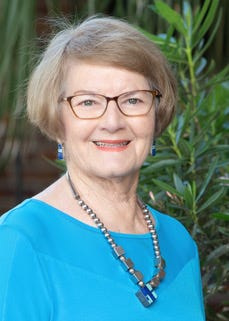
Marjorie Turnbull is a former state representative and Leon County commissioner who was co-chair of the committee that recommended the formation of COCA.
JOIN THE CONVERSATION
Send letters to the editor (up to 200 words) or Your Turn columns (500-550 words) to letters@tallahassee.com. Please include your address for verification purposes only, and if you send a Your Turn, also include a photo and 1-2 line bio of yourself. You can also submit anonymous Zing!s at Tallahassee.com/Zing.Submissions are published on a space-available basis. All submissions may be edited for content, clarity and length, and may also be published by any part of the USA TODAY NETWORK.
This article originally appeared on Tallahassee Democrat: Leon County arts decision deserves longer look | Opinion
Reporting by Marjorie Turnbull, Your Turn / Tallahassee Democrat
USA TODAY Network via Reuters Connect