A few days before the first anniversary of Hurricane Milton, Lakeland officials indicated that flooding concerns have not abated.
City Manager Shawn Sherrouse and the city’s manager of lakes and stormwater spoke at the Oct. 6 City Commission meeting about efforts to prevent a repeat of the flooding around Lake Bonny that occurred after Hurricane Milton struck.

Sherrouse said that Lakeland is working on both short-term and long-term projects to reduce the flooding risk. The city is collaborating with Polk County, he said, as much of the area surrounding Lake Bonny is outside the city’s boundaries.
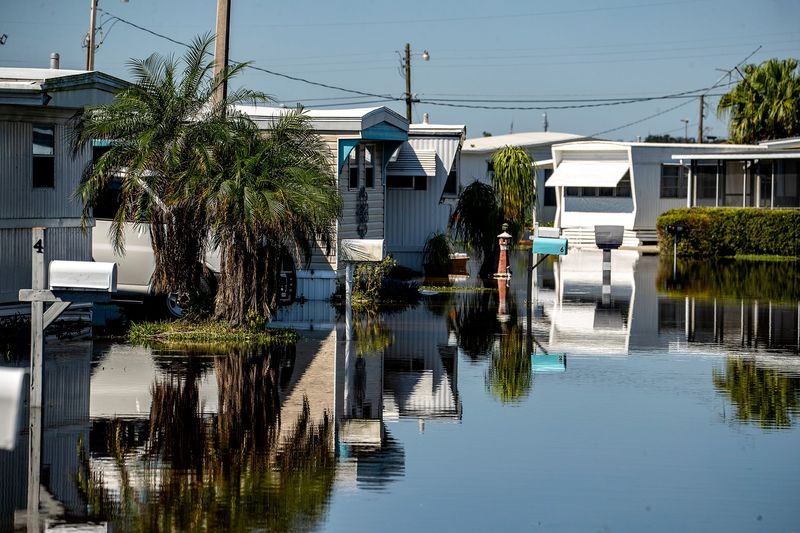
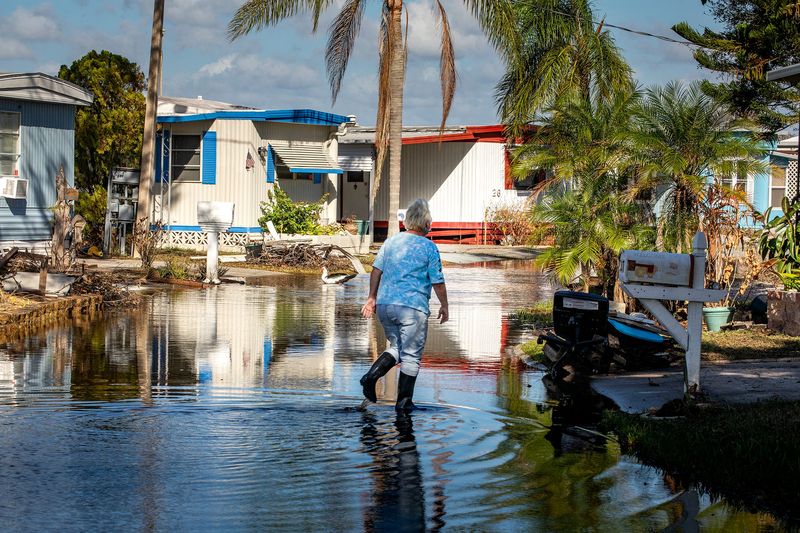
Hurricane Milton, which entered Polk County on Oct. 9, 2024, dropped as much as 18 inches of rain in some areas around Lakeland. The water flow overwhelmed Lake Bonny, spreading to flood dozens of dwellings on the city’s east side.
A study conducted by Aecom Technical Services Inc., a Tampa firm, determined that Lakeland’s pump and infrastructure were “insufficient” for storm events, as The Ledger previously reported. The six-month study, released in July, found that the city’s pump operated at no more than half its capacity following the flooding.
The report also determined that Lake Bonny’s stormwater drainage infrastructure needed major improvements to prevent future flooding.
Officials from Lakeland and Polk County, including technical staff members, met in late September to continue discussions on current and future actions to address potential flooding in the drainage area extending south from Lake Parker to the Peace River system, Sherrouse said.
County seeks major grants
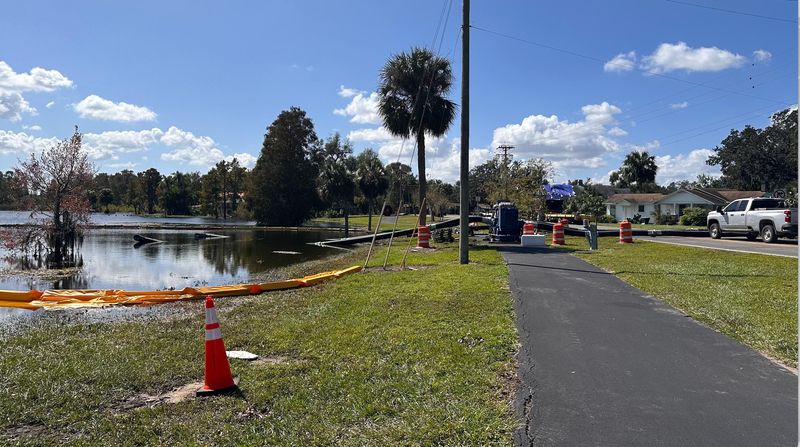
The city and county have settled on two phases, the first of which is already underway, Sherrouse said. The county is hiring an engineering firm to complete an assessment of the Lake Bonny watershed and determine the feasibility of plans to improve the existing system of pumping and other water conveyance.
Polk County has also applied for a pair of major grants, Sherrouse said. The county is seeking an $11.8 million grant from FEMA, a federal agency, through its Hazard Mitigation Grant Program. That money would be used to develop an improved pumping and conveyance system.
The county has applied for an even larger grant from the state — $100 million from the Florida Department of Commerce through its Community Development Grant Program.
“This would be for an infrastructure repair program to implement regional stormwater drainage, conveyance and storage improvements to mitigate regional, widespread flooding from Lake Gibson to the Peace River,” Sherrouse said.
That “holistic approach” would be much more delayed and more expensive, Sherrouse said.
Polk County allows Lakeland to operate a pump system from Lake Bonny located on county property. While the city and county are seeking to improve the efficiency of the system, the strategy is limited by the capacity of Lake Parker to retain water pumped into it, Sherrouse said.
“The key, however, is what we’ve talked about — it’s Lake Parker, it’s capacity in Lake Parker,” Sherrouse said. “We can enhance that system and those pumps to the greatest extent on demand, but if we’re pumping against head pressure in Lake Parker, and there’s no capacity there, it will not work.”
Sherrouse spoke after Laurie Smith, Lakeland’s manager of lakes and stormwater, gave commissioners a summary of her department’s activities. The city is working to update a stormwater management plan that is about 20 years old, she said.
Having completed the modeling phase, Lakeland has applied for a $400,000 grant from the Florida Division of Emergency Management to cover the next phase of planning, she said.
Focused on water quality
Smith’s presentation mainly covered initiatives to improve water quality. With 38 named lakes, the city operates more than 1 million linear feet of drainage conveyance, she said. The system also includes more than 7,000 inlet baskets and catch basins, 77 stormwater treatment ponds, 22 pollution-control devices and nearly 270,000 linear feet of drainage infrastructure that the staff inspects each year using remote cameras.
Smith addressed the negative effects of nutrient runoff and sediment accumulation in lakes. The buildup degrades water quality and reduces storage capacity, increasing the risk of flooding.
As mandated by the Florida Department of Environmental Protection, Lakeland monitors 15 lakes that have public access, Smith said. State and federal guidelines require the city to limit total maximum daily loads of pollutants.
Lakeland operates sweeper trucks that cover 25,000 miles of streets annually, collecting 2,500 tons of debris and preventing it from going into storm drains that feed into lakes, Smith said.
In 2021, the city received a $42.9 million Community Development Block Grant from the Florida Department of Commerce for cleaning and rehabilitating Lake Bonnet (not to be confused with Lake Bonny). The grant followed a flood study and a nutrient source and restoration feasibility study.
Lakeland is also implementing a state-funded algae harvesting project on Lake Bonnet in partnership with the privately owned Bonnet Springs Park, Smith said.
Turning to Lake Bonny, Smith said the city has carried out two major projects. One, based at Fletcher Park, diverts stormwater into a wetland area to create more storage during severe flooding. A retrofitted pollution control device at the North Crystal Lake Drive outfall has reduced nutrient flow into the lake, she said.
Smith projected a series of graphics documenting reductions in pollution in some lakes.
Commissioner Chad McLeod asked Smith whether the city might reach a point at which the lakes have recovered enough that they require only minimal maintenance.
“Well, in my opinion, it’s going to be a decades-long struggle,” Smith said. “It took decades to get us where we are now, and as you saw in those graphs — where that red, dotted line was — even though our water quality is improving, we’re not quite there yet. So, implementing these projects helps to reduce the nutrient loads, and they are trending downwards. But it’s going to take us a while.”
Gary White can be reached at gary.white@theledger.com or 863-802-7518. Follow on X @garywhite13.
This article originally appeared on The Ledger: Lakeland, Polk County await grants sought to limit future flooding from Lake Bonny
Reporting by Gary White, Lakeland Ledger / The Ledger
USA TODAY Network via Reuters Connect