(This article was revised to correct where a current data center in Lakeland ranks among electric consumers. Also to fix a typo.)
Data centers could becomes a major source of valuable tax revenue, according to a Lakeland developer who believes the city has the resources to meet the demands of such facilities without negatively impacting residents.

Franklin Cruz, CEO of True Investors Development, said he thinks Lakeland could become a prime location for developers searching to build data centers. The city has lots of available warehouses close to Interstate 4.
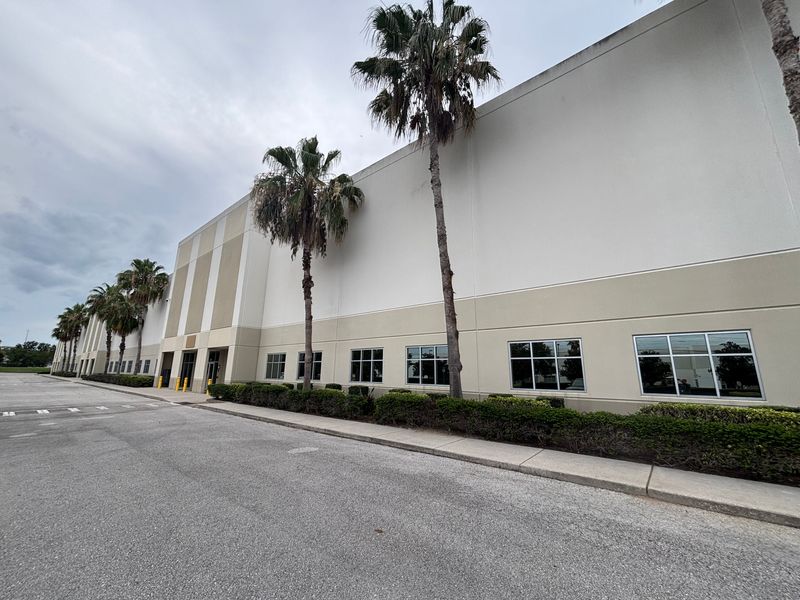
“At the end of the day, the core facility is a warehouse that stores materials. That material happens to be computers,” he said.
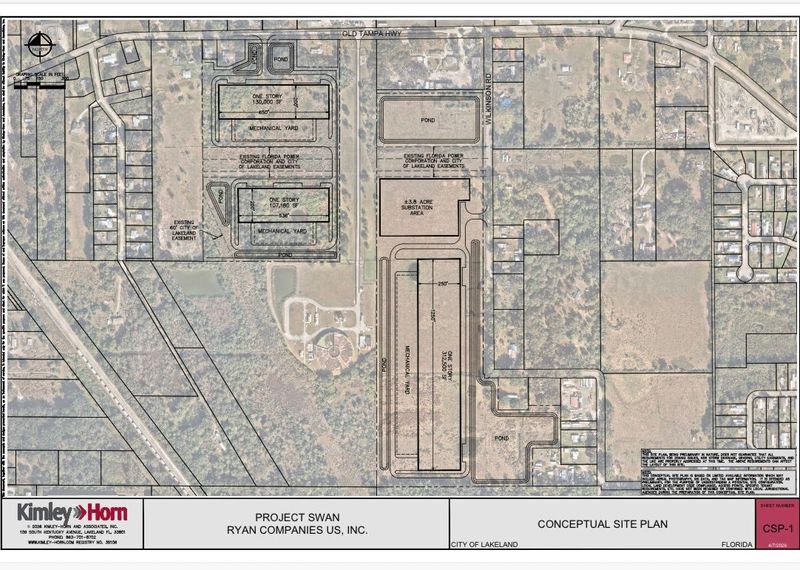
Lakeland residents voiced strong opposition to a conceptual proposal to build a 600,000-square-foot hyperscale data center off Old Tampa Highway in West Lakeland. They raised concerns about the substantial power demands, daily water needs and potential negative environmental impacts, among others.
“For the past year, all people have been hearing is AI is going to take my job,” Cruz said. “People are feeling this tremendous pressure. Now it’s going to be in my backyard, my electric bill will go up, my water quality will go down. All of this is based on assumptions.”
Cruz said developing data centers is similar to building any other industrial business, all of which must ensure power and water demands are met. It would create a significant source of new property taxes for the city, during a time when revenue is uncertain.
Cruz shared his insights with The Ledger as the developer who purchased and assembled the 40 acres of parcels along Old Tampa Highway where the data center is proposed.
‘It comes down to zoning’ in industrial areas
The main issue for the proposed data center along Old Tampa Highway and Wilkinson Road will be getting zoning, Cruz said.
Audrey McGuire, one of Lakeland’s senior planners, has determined that the city’s Land Development Code does not include a zoning category that allows data centers to be built as a permitted use.
Data centers “are presumed to be a prohibited use unless a determination is made that the use is essentially the same as another permitted use,” McGuire wrote on page 12 of the city’s Development Review report.
Data centers are the same as industrial warehouses, Cruz argues, citing Elon Musk. Musk said he chose Memphis, Tennessee, for the world’s largest data center, Colossus, because it had a large abandoned former Electrolux factory and warehouse, as WREG News 3 reported.
Lakeland, and Polk County in general, is a logistical mecca because of its close proximity to I-4 and has long been seen as the place to build warehouses and distribution centers.
Cruz, who previously owned the land as part of an investment group, said the area of the proposed data center is already industrial in nature. The West Lakeland Wasteload Reduction Facility that handles the city’s wastewater is immediately adjacent on land zoned industrial. Other industrial businesses neighboring the property include Integrated Metal Products Inc., McLane Distribution and A-1 Diesel Repair.
Former Lakeland warehouse is now the city’s first data center
Lakeland already has at least one data center, and it’s been running for over a decade in a warehouse near I-4.
Cologix, located at 2850 Interstate Drive, is a data center measuring more than 105,000 square feet. Brian Rewis, Lakeland’s community and economic development director, said the facility was originally built as a warehouse and retrofitted as a data center.
“Lakeland’s proximity to major market centers makes it a natural Central Florida colocation location for enterprises in Orlando, Miami and Tampa that need primary or secondary IT sites,” reads Cologix’s website.
Rewis said the city has worked extensively with Cologix over time. The data center ranks among Lakeland Electric’s top 50 power users, according to LE spokeswoman Cathryn Lacy.
Cologix is built on a site with industrial zoning, according to the city’s zoning map. Lakeland’s Future Land Use Map shows the site’s ideal use as business park — the same future zoning given for the property off Old Tampa Highway.
Data center developers expect to pay for electrical infrastructure
The potential electrical needs of a hyperscale data center are major concerns for local governments and their residents.
Cruz said the general assumption is a data center will need roughly 1 megawatt of power per acre of developed land. For comparison, 1 megawatt is generally enough energy to power about 1,000 residential homes.
Electrical utilities generally require developers ― for data centers or other large-scale industrial projects ― to pay upfront for any upgrades needed to the grid, Cruz said.
Scott Bishop, Lakeland Electric’s assistant general manager, wrote in the city’s Development Review report that the developer should be prepared to:
Cruz said while he’s heard public concerns about data centers “taking from the grid,” it often works that the developer pays to strengthen the immediate electrical grid.
Lakeland Electric has the capacity to generate up to 841 megawatts of power, with average daily demand being 403 megawatts, according to the municipal-owned utility’s 2025 audited financial statements. LE’s peak demand was 753 megawatts in 2025, according to the report.
Major data center developers are cutting deals with utilities to cut power use during peak time periods, Cruz said. Google signed agreements in March with five U.S. electric utilities to curtail its electricity use during peak demand periods, as Reuters reported.
During these peak times, data centers often rely on their own forms of power generation, Cruz said. Data centers turn to industrial gas-powered generators or solar panels with Tesla Megapacks, commercial-scale solar batteries.
Generally, Cruz said his research and talks with companies including Duke Energy and Tampa Electric Company, or TECO, indicate it would take an average of three to five years to build the electrical infrastructure needed to support a hyperscale data center.
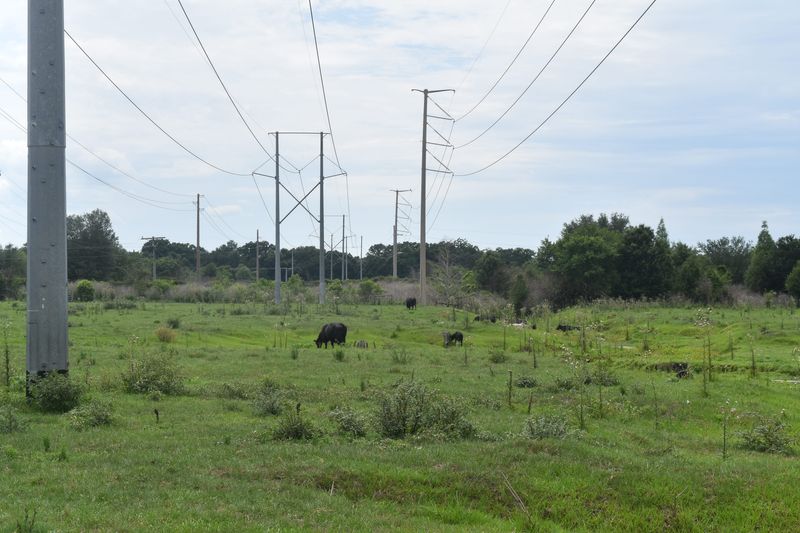
There are already Duke Energy transmission lines running east-to-west, and along the western boundary of the proposed Lakeland data center site.
Does Lakeland have water available?
Data center developers are largely looking to avoid needing large quantities of water to run daily operations, Cruz said, as it’s an unsustainable cost.
“These are private companies. They don’t want to spend a lot of money on water bills,” he said, adding they’d prefer using liquid coolant or recycled water.
Lakeland already provides an average of 3.5 million to 4 million gallons of reclaimed water per day, or MGD, to TECO. Lakeland officials struck a deal with TECO in 2009 to provide reclaimed water for it to cool its power plants for a minimum of 30 years.
Joe Costine, the city’s assistant director of water utilities, told city commissioners at a March 13 agenda study that Lakeland produces 12 to 13 MGD of reclaimed water from wastewater treatment facilities. TECO’s contract, renewed on March 16, guarantees the utility access to 4 million gallons per day.
“They are entitled to the entire amount that helps us right now as a disposal means. Right now, we don’t have another user for the water, so it’s beneficial reuse,” Costine said.
Costine said if the water was not given to TECO, the city would have to provide more extensive treatment to the wastewater, resulting in higher costs.
One option a potential data center would have is to use reclaimed water to cool, rather than seeking a permit from the Southwest Florida Water Management District to draw from the Upper Floridan Aquifer.
With Lakeland having estimated 8 MGD in reclaimed water available, that’s more than the Fort Meade data center projected it would need. It is seeking 50,000 gallons of water a day from Fort Meade. Residents and others called this estimate into question, but Stonebridge executives have said at public meetings that the data center will use a closed-loop cooling system, requiring only an initial infusion of water that will be recirculated.
Potential tax benefits of a Lakeland data center
As Florida Gov. Ron DeSantis’ plan for property tax exemptions goes voters in November, Lakeland officials face a grim possibility that the city could lose $14.5 million in annual revenue.
Cruz said allowing industrial development, which wouldn’t be eligible for homestead exemptions, could be a benefit by providing a much-needed tax base boost.
When Cruz and his partners proposed to build warehouses on the properties along Old Tampa Highway, he said they received an estimate for impact fees between $1.6 million to $1.9 million. These impact fees are paid upfront, Cruz said, and the estimated taxes over a 20-year period were more than $90 million to the city.
The property owners of 2850 Interstate Drive — where Cologix is located ‒ paid more than $53,000 in 2025 property taxes to the city, according to Polk County Property Appraiser’s Office website.
This article originally appeared on The Ledger: Lakeland is primed to become a data center hotspot, developer says
Reporting by Sara-Megan Walsh, Lakeland Ledger / The Ledger
USA TODAY Network via Reuters Connect
By Sara-Megan Walsh, Lakeland Ledger | USA TODAY Network