This story was updated to correct an inaccuracy. The arguments in favor of Elliott’s termination were made in a petition filed by the school district attorney, not in the order of an administrative law judge.
A petition from the Santa Rosa School District attorney lists several reasons for the termination of district IT specialist Keith Elliott.

The petition, filed July 31, calls on Administrative Law Judge Yolanda Green to request the county School Board to vote again to stand by a previous vote to fire Elliott.
“Respondent’s misconduct is not limited to a single act or momentary lapse in judgment. Rather, the record establishes repeated dishonesty, misuse of anonymous communications, public disparagement of students and employees, and conduct that undermined the student welfare and District trust,” attorney Derek Dzwonkowski said in the petition.
“The School Board is not required to accept progressive discipline where the nature of the misconduct makes continued employment untenable,” the petition, filed by attorney Dzwonkowski, said.
The petition covered testimony provided and exhibits entered during Zoom hearings on the merits of Elliott’s appeal, which were initiated April 30, halted for nearly a month, then completed June 25 and 26.
Elliott had initially been reprimanded and placed on probation following an investigation conducted between October and September 2024 after it was concluded he had communications with female students that “crossed into inappropriate territory.”
Evidence gathered during the course of the investigation includes photos and witness statements from Central School students detailing lewd comments Elliott had made in their presence, according to Elliott’s personnel file. More than one account described Elliott’s actions or words in the presence of female students as “weird” or “really weird.”
Terms of the original punishment included instructions that Elliott maintain appropriate boundaries with students, meet regularly with a supervisor to discuss interactions with students, and “work with a partner until further notice.”
He got in trouble a second time when, during summer break, he and a team of fellow IT workers were dispatched to Central School near Milton to “reimage” campus computers. Left to work on his own, Elliott found his way to the school gym, where the girls volleyball team was practicing and, according to witness testimony from the hearing, made girls on the team, some of whom had been subject to his previous attention, visibly uncomfortable.
“I saw the composure of my girls change,” Central School volleyball coach Mark Gough testified. “He wasn’t supposed to be there, where he was, (and because he was) my team wasn’t focused, and two of my girls were visibly upset.”
Two days later, Elliott again entered the school gym and sat at the scorer’s table watching girls volleyball practice. This time, the school principal ran him off.
Elliott learned of the school district’s decision to terminate his employment in an Aug. 12, 2025, letter from Superintendent Karen Barber. He petitioned for an administrative hearing within the 15 day period allowed him.
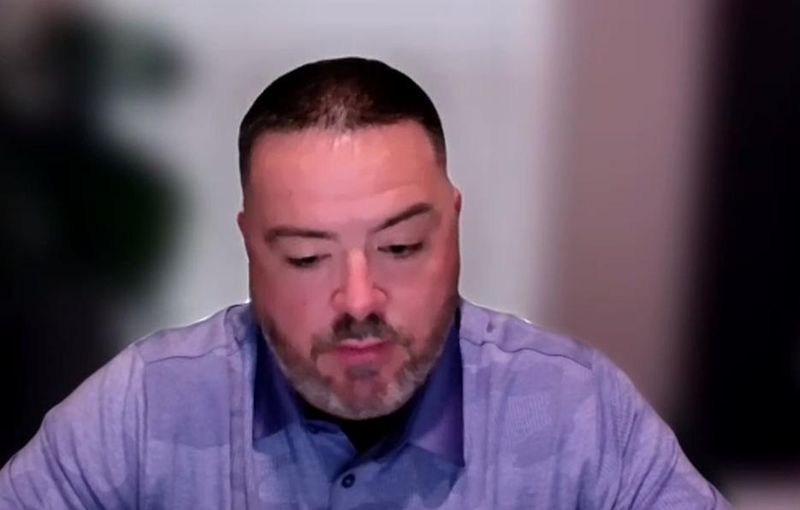
Elliott chose to represent himself at the administrative hearing, and Dzwonkowski focused about three pages of his petition on his lack of credibility during the course of the hearing. He also noted that there were several occasions when Elliott’s testimony defied credible evidence.
The school district had determined in its investigations that Elliott had created a fictitious character named Chad “Think Fast” Powers. As Chad, evidence showed, Elliott posted disparaging comments on Facebook about students within the district.
“Chad Powers” also allegedly sent an email to Elliott’s district account, though when investigators compared Powers’ missives to Elliott’s own writings, they determined the messages “contain significantly identical content and structure.” The writing styles were similar enough to allow investigators “to confirm (Elliott’s) authorship of all identified anonymous emails.”
The attorney said that on six occasions when asked about emails and his email accounts, Elliott had lied under oath and, on some occasions, lied a second time about the same issues.
Dzwonkowski joined school district investigators in finding the Facebook posts “exposed student athletes to public ridicule,” and added that Elliott had exposed his own son, a Pace High School baseball player, “to embarrassment and disparagement.”
The petition was also critical of his declaring at the DOAH hearing, but on no other previous occasion, that a woman named “Marissa Simmons” was responsible for manufacturing a “complaint letter” sent to Barber and other administrators highlighting “Central School Major Issues,” among them Elliott not receiving a coaching supplement for his work with school athletic teams.
The most significant credibility issue Dzwonkowski noted was Elliott’s repeated sworn testimony that he had “no idea” who had authored the many email blasts linked to him and then, at the last minute, placed blame for the complaint letter at the feet of the previously unmentioned Marissa Simmons.
The Simmons story, along with a host of other under-oath denials and fabrications, “supports rejecting Respondent’s testimony where it conflicts with more reliable record evidence,” Green said in the ruling.
The petition concluded Elliott had violated Santa Rosa District Schools policies governing respect and civility, prohibiting discrimination and harassment, ethical standards, use of social media, anti-fraud and the responsible use of electronic systems.
“Respondent’s violations, considered together, are serious enough to impair his effectiveness in the school system,” Dzwonkowski wrote, ticking off the violations to include anonymous communications disparaging students and personnel, false statements during compelled interviews, use of fictitious identities to influence district action, and repeated gymnasium entries that caused visible distress to students who had previously complained about his conduct.
“Termination is an appropriate penalty,” he said in conclusion.
Elliott is the son of School Board member Charles Elliott, who recused himself from all disciplinary decisions in the case.
Tom McLaughlin covers Santa Rosa County, environmental stories, development and does investigative reporting.
This article originally appeared on Pensacola News Journal: Attorney says firing ‘appropriate penalty’ for school worker’s inappropriate conduct
Reporting by Tom McLaughlin, Pensacola News Journal / Pensacola News Journal
USA TODAY Network via Reuters Connect
By Tom McLaughlin, Pensacola News Journal | USA TODAY Network