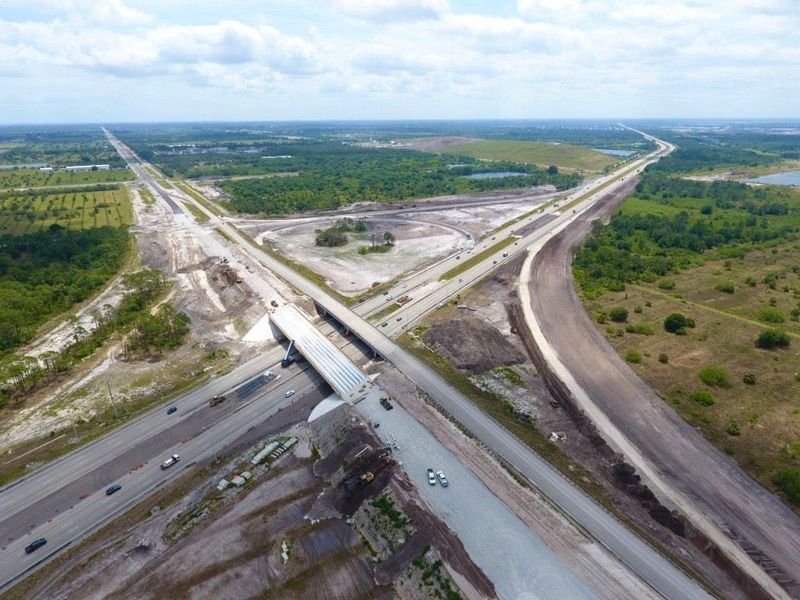
Listening to four Indian River County commissioners decide to urbanize more than 2,000 acres of rural land off Oslo Road east and west of Interstate 95, I had a sense of déjà vu.
In the mid-1980s, I used to travel the then-back roads of Port St. Lucie before Clover Park was built. There were thousands of homesites, but with no water or sewer service, lots remained undeveloped.

City leaders wanted development, and eventually St. Lucie West, with an I-95 exit and a New York Mets training complex, was built.
But it wasn’t enough. The city realized if it provided water and sewer service, developers would line up. Enter Tradition, which opened in 2003, an attempt at traditional neighborhood design. Such design is supposed to have homes above businesses downtown, like the towns and villages many of us grew up in — and interconnected communities.
Tradition initially would have about 2,800 homes, with essentials like a town center with a Publix, a church and a mix of housing styles, according to Jack Kelly, a Port St. Lucie council member at the time.
He was OK allowing part of Tradition, then called Westchester, to annex into the city. The annexation concerned St. Lucie County commissioners, including Cliff Barnes, who said controlled growth was critical.
Port St. Lucie warned about potential nightmare
“All you have to do is drive south of Martin County to see what uncontrolled growth and sprawl can do,” he was quoted as saying in a 2003 TCPalm article.
Developers lined up in Port St. Lucie thanks to the city utilities service, Kelly told me the other day, adding he’d been warned of a development domino effect by Don Cooper, city manager.
A year later, Kelly was the lone voice of reason against a City Council majority that voted to annex ― and provide urban services such as water and sewer ― 9,500 more acres in four developments south and west of Tradition.
The majority of council members were swayed by promises of millions of dollars in contributions to the city for improvements, and land for fire stations and parks, according to TCPalm archives.
“I think it’s too hasty,” Kelly said at the time, citing concerns about overburdening city staff and creating a housing glut. “We’ll never know what we could’ve got if we waited.”
Residents spoke against the expansion.
“The nightmare that we are leaving is happening here,” Broward County refugee Kerry Cochell told the council, adding the city was getting too big.
‘Be careful what you wish for’
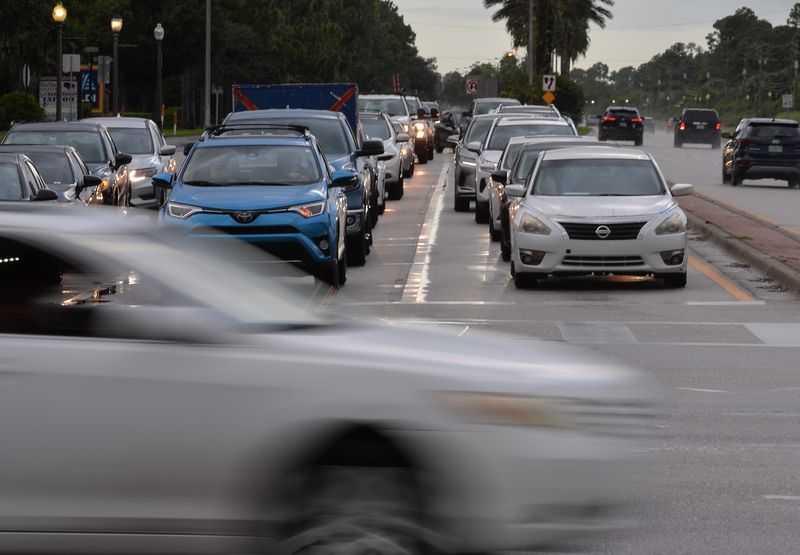
More than 20 years later, Port St. Lucie has approved 62,000 more homes in that area — without the roads and schools to handle it all, Kelly told me. Other residents have complained about a lack of physicians and other amenities.
“I wish I could go back with all the people complaining now,” Kelly said. “Where were they (then)? I would have loved for them to be (speaking out) 20 years ago.”
I told Kelly I was concerned about annexations by Fellsmere and Sebastian and, now, the expansion of Indian River County’s urban services area along Oslo Road.
“It’s just the beginning,” Kelly told me, citing that once government offers water and sewer services, it’s a developer magnet. “That’s what I said back then.”
“Be careful what you wish for,” he continued. “You’ve got to have the infrastructure and make developers pay. History repeats itself. Growth does not pay for itself.”
Kelly, like Indian River County’s Laura Moss, was the lone elected official to vote against the expansion in his community.
In Port St. Lucie, expansion proponents on the council said developers would earmark 250 acres for an industrial park, with a four-mile “job corridor” slated along I-95.
A TCPalm article written by Sarah Myrick (Vero Beach Elementary School’s new principal) included some classic public official language:
“Councilman Jim Anderson said the agreement would allow the city to plan the area and prepare for inevitable growth.
“‘Florida is growing. We can’t stop it,’ Anderson said. ‘Hopefully with this plan we can have planned growth, not haphazard.’”
I don’t know how many times I’ve heard the “we can’t stop growth, but we can plan it” line years before developments are completed, traffic and other issues overwhelm the area, and the elected officials who made the decisions are gone — sometimes moving out of the area or state.
Last month, in agreeing to extend urban services farther west (while people in Sebastian and other parts of Indian River County’s existing service area still can’t hook up to sewer, or in some cases water), I heard lines like this:
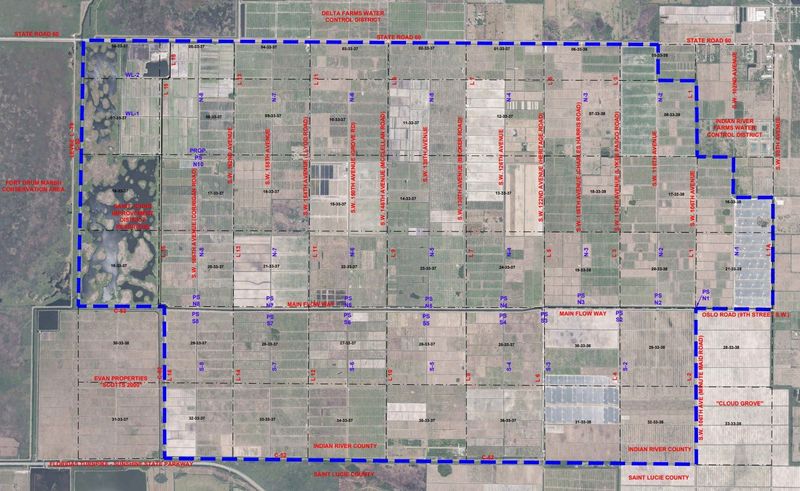
“2,300 acres, relatively speaking, is not a whole lot,” said Deryl Loar, seemingly the most bullish commissioner on providing water, sewer and other urban services to now-agricultural landowners between 58th and 98th avenues and 5th and 13th streets southwest.
Could 25,000 acres west of I-95 be next?
No, it’s not a lot compared to the 25,000 acres west of I-95 along Oslo Road Loar said would not be developed. Well, in 2020, landowners of those 25,000 acres, in the St. Johns Improvement District, opted not to create their own city, which could have sparked massive development as seen in places like western Broward and Palm Beach counties.
But, with access to I-95 at Oslo expected in 2027, how long will that decision hold? The interchange sparked the county to expand the urban services boundary for the first time since 1990.
Back to Loar’s 2,300 acres not being significant. Heck, Indian River County had a fit with Sebastian in 2020 when it wanted to urbanize only 1,100 acres. Sebastian ended up annexing almost 2,000 acres in 2022.
Having listened to Loar at two meetings, he sounds more like a former state trooper and sheriff who wants to create color-coded patrol zones in neat squares rather than a thoughtful planner trying to keep Indian River County from losing its unique charm.
“Expansion may be the wrong term,” Loar said last month, talking about the Oslo expansion. “We have a gap in this rectangle we’ve all seen.”
Available Indian River County land undesirable?
In November, Loar suggested possibly changing 20,000 acres — so-called doughnut holes in the middle of the central and south county — from agriculture to urban use. He also suggested adding urban services past I-95 on State Road 60 to accommodate future industrial parks.
If we do that, will we also make the urban services boundary even more tidy by closing the gap along 98th Avenue east from Oslo to SR 60? Where and when would expansion end?
Indian River County is unique because it has not exploded like many other Florida counties, in part because its urban service area has not expanded since 1990. Why? Because, as Moss pointed out, consultants told the county it has more than enough urbanized land, mostly east of I-95, to accommodate projected growth through 2050.
Loar pushed back on available land parcels.
“Are they desirable?” he asked. “We know different parts of the county are less desirable than others. That has to be taken into consideration.”
No, there’s not much left on the packed Orchid Island, but “less desirable”? Who doesn’t want to live closer to beaches, Riverside Park and its museum and theater, downtown Vero Beach, Sebastian’s fishing village, the Three Corners and the like? Newcomers will travel there regardless, increasing traffic all around. In addition to open land, there likely are opportunities for redevelopment vs. expanding west like counties to our north and south.
Using urban services for agriculture?
Commission Chairman Joe Flescher also was bullish on expansion, but cited the importance of residents’ concerns.
“We have to have something in place for a positive vision,” he said May 21 on the WTTB Local News Magazine, reminding me of growth proponents in St. Lucie County 20 years ago. “This is not a change for development; this is a change for planning. … (the) possibilities are endless.”
Flescher talked about how the community wants to preserve agriculture, but that its wells suffered from saltwater intrusion.
“If we have to use urban services for more water supply, this might be an open door for more agriculture as well as what is being perceived as development, mixed use, commercial industrial,” he said, adding he does not think what happened in St. Lucie County can happen here. “In the past, we have done quite more fashionably better in vision and in development and progress.
“We’re not going to stop growth, but we’re going to grow gracefully.”
The county plans to stop requests to rezone agricultural property in the corridor for the next year, when it will work with the public to devise new zoning, land uses and an overall vision as it incorporates urban services.
History tells me not to be optimistic, that the slippery slope of Floriduh growth is at our front door. If commissioners and residents don’t learn more about urban planning and unite in an effort to preserve our quality of life, we eventually will pay for our apathy.
This column reflects the opinion of Laurence Reisman. Contact him via email at larry.reisman@tcpalm.com, phone at 772-978-2223, Facebook.com/larryreisman or Twitter @LaurenceReisman.
If you are a subscriber, thank you. If not, become a subscriber to get the latest local news on the latest local news on the Treasure Coast.
This article originally appeared on Treasure Coast Newspapers: Indian River growth like Port St Lucie? I’ve heard this one before. | Opinion
Reporting by Laurence Reisman, Treasure Coast Newspapers / Treasure Coast Newspapers
USA TODAY Network via Reuters Connect