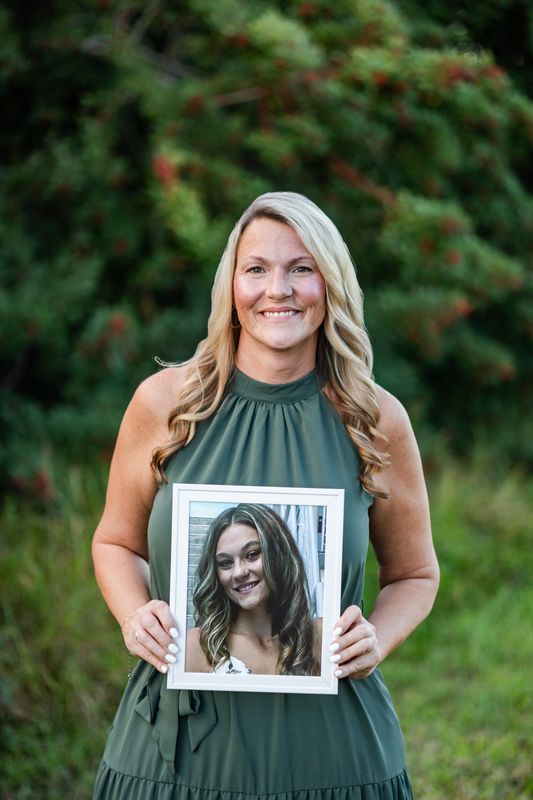
My daughter, Ashlynn, was only 14 when she started vaping.
Like so many young people, she was drawn in by flavored products that appeared harmless.

Mango was her favorite flavor.
The devices were sleek, easy to hide and smelled more like candy than tobacco.
Ashlynn did not fully understand that the products contain nicotine, and that they are highly addictive and dangerous.
Before vaping entered her life, Ashlynn was thriving.
She had just started high school.
She was a member of the National Junior Honor Society.
She played varsity softball.
She was smart, driven and full of potential.
She had a bright future ahead of her.
Over time, we began noticing changes that became harder to explain.
Her grades started dropping.
She became withdrawn.
She struggled with anxiety, depression and self-harm.
Eventually, she began experiencing seizures that grew increasingly severe.
What began as occasional episodes escalated into daily seizures, including grand mal seizures that sometimes left her unable to breathe.
We spent months searching for answers, trying medications, meeting with specialists and desperately trying to understand why this was happening to our daughter.
The milestones that once defined her teenage years slowly disappeared as our family focused entirely on helping her survive.
Eventually, Ashlynn admitted she had been struggling with nicotine addiction for years and had repeatedly tried to quit vaping.
A long struggle
She told us she had initially been drawn in by flavored products and never realized how addictive nicotine could be.
Even after periods when she stopped vaping and seemed to regain pieces of herself, the addiction pulled her back in.
That is what makes flavored nicotine products so dangerous for young people.
These products are intentionally designed to appeal to young people before they fully understand the consequences of addiction.
Flavors mask the harshness of nicotine and make experimentation feel harmless – even though the long-term consequences can be devastating.
In Florida, more than 10% of high school students use e-cigarettes.
The tobacco industry spends billions of dollars each year marketing addictive nicotine products.
Far too many children are being exposed to products that are designed to attract them long before they are old enough to fully understand the risks.
For Ashlynn, the addiction eventually affected every part of her life.
The seizures continued, making it impossible for her to hold a job, drive a car or experience the independence most young adults look forward to enjoying.
Watching her fight through those years was heartbreaking, especially knowing how different her life had once been.
On July 27, 2024, just weeks before her 21st birthday, my daughter passed away.
She suffered a fatal seizure in her sleep related to her vaping addiction.
Families need more education about how these products are targeting young people and fueling nicotine addiction.
Parents need to understand how easy these devices are to hide, how addictive flavored nicotine products are and how quickly experimentation can spiral into long-term dependence.
That is why programs that fund public education campaigns and support prevention efforts – as well as provide resources that help individuals quit vaping – are so important.
Our state lawmakers in Washington, D.C., including Florida Sens. Ashley Moody and Rick Scott, must protect and strengthen funding for anti-vaping efforts.
My daughter deserved the opportunity to live a long, full and healthy life.
I hope that by telling her story, more parents and young people will recognize the risks of vaping.
Before it’s too late.
Erin NesSmith is a Sarasota mother advocating for stronger education and prevention efforts around youth vaping and nicotine addiction and is a parent volunteer with Parents Against Vaping E-cigarettes (PAVE)
This article originally appeared on Sarasota Herald-Tribune: I’m a Sarasota mom. I know vaping kills. It took my girl. | Opinion
Reporting by Erin NesSmith Guest columnist, Sarasota Herald-Tribune / Sarasota Herald-Tribune
USA TODAY Network via Reuters Connect