The official start date of the 2026 Atlantic hurricane season is less than a month away and the first tropical waves of season are moving off the coast of Africa.
Don’t be alarmed, though.

“We typically see around 60 tropical waves move off Africa each year, but only a fraction develop into storms,” said Alex DaSilva, AccuWeather lead hurricane expert.
➤ Weather alerts via text: Sign up to get updates about current storms and weather events by location
Predictions for this year’s hurricane season is for a slightly below-normal season. Forecasters, though, continue to urge Florida residents and visitors to be prepared, no matter what the predictions are.
To raise awareness about the dangers posed by hurricanes and tropical storms and encourage people to prepare early for storms, the National Hurricane Center and National Weather Service have established May 3-9 as Hurricane Preparedness Week.
The week covers a different topic each day, providing valuable information for those new to hurricanes and good reminders to seasoned Florida residents.
Records dating back to 1851 show Florida has been hit by more hurricanes than any other state so it pays to be prepared.
What to expect from Hurricane Preparedness Week 2026
To raise awareness about the dangers posed by hurricanes and tropical storms and encourage people to prepare early for storms, the National Hurricane Center and National Weather Service established May 3-9, 2026, as Hurricane Preparedness Week.
➤ Miss a day? Here are highlights and links to each day’s story
The week covers various topics each day, providing valuable information for those new to hurricanes and good reminders for seasoned Florida residents.
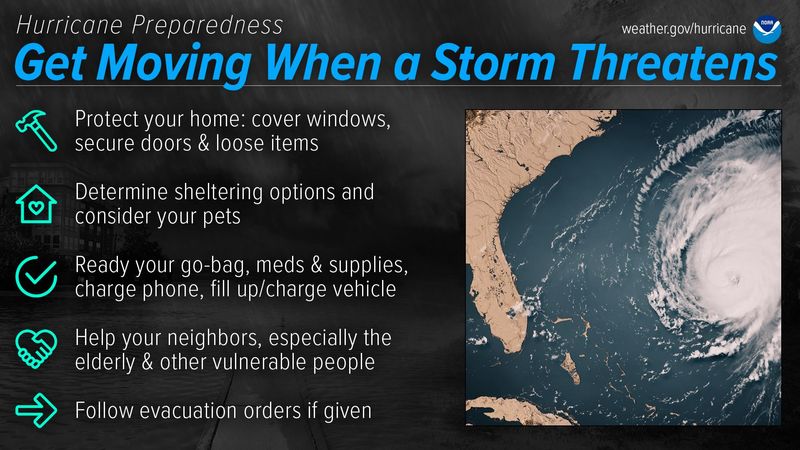
Hurricane Preparedness Week, Day 4: Get moving when a storm threatens
“When a storm is forecast to impact your area, take action immediately to be ready,” NOAA said.
“Ideally, longer-term preparedness actions such as having disaster supplies and an evacuation plan will have already been done before hurricane season, when the stores are stocked and time is on your side.
“When a storm threatens, there’s a lot more to do.”
Here are NOAA’s recommendations.
Short-term actions to protect when hurricane threatens
“While longer-term home improvement needs to be done well ahead of time, when a storm threatens there are short-term actions to help protect your property,” NOAA said.
Among the actions you should take are:
The Federal Alliance for Safe Homes offers more advice on what you should do based on your address, including:
Determine sheltering options and don’t forget your pets
Check with your county to find emergency shelters available in your area but remember: Not all shelters are open for every hurricane. What shelters will open and when is determined if a storm is expected to impact your area, NOAA said.
If you have pets, find a place where they can stay. Most public shelters only allow service animals, but some counties have pet shelters. If so, find out if you have to pre-register.
“In general, have multiple sheltering options, including distant ones such as a friend’s home outside of the impact area, or a motel,” NOAA said.
“Depending on the circumstances, your home may need to be your shelter; make sure it is prepared and that you know the safest places inside.”
Need assistance? Many counties also offer special-needs shelters and transportation. See if pre-registration is required.
Preparations to keep in mind include having go-bag ready
“Have a go-bag ready to take things with you if you need to leave in a hurry. In addition to basic survival needs, don’t forget other supplies such as chargers and hygiene products,” NOAA said.
Gather together enough supplies for at least three days.
“While preparing these basic needs, don’t forget to keep your phone charged, and make sure to fill up/charge your vehicle, as well.”
What should your “go-bag” have? FEMA suggested if you have to evacuate, bring the following:
Help your neighbors
“Many people — especially the elderly and other vulnerable people — rely on their neighbors before and after a disaster, and there are many ways you can help them,” NOAA said.
“Help them prepare for a storm, and help them evacuate if needed. Share the latest forecast information with your community so that they know what to expect.”
Follow evacuation orders
“Always follow evacuation orders from local authorities; don’t wait for a hurricane to intensify before deciding to follow the order” if given, NOAA said.
“You want to leave early enough to avoid being trapped by severe weather. If time allows, unplug electrical equipment, leave a note detailing your whereabouts, and check to see if any neighbors need a ride.”
Here’s how to find out if you live in an evacuation zone
Here’s how to find out if you live in a storm surge evacuation zone:
In the event of a storm, you’ll also see information on any current evacuations.
What do evacuation zone letters mean?
Evacuation zones receive a letter ranging from A to F, with some special zone letters for specific counties, according to the Florida Division of Emergency Management.
“Typically, Zone A is most vulnerable and most likely to be evacuated first, and Zone F is most likely to be evacuated last.”
When is the Atlantic hurricane season?
The Atlantic hurricane season runs from June 1 through Nov. 30.
➤ Hurricane Center testing new cone: What’s changing this season?
Countdown clock to start of 2026 hurricane season
What are predictions for 2026 hurricane season?
Here are some of the predictions released so far for this year’s hurricane season. NOAA will release its forecast toward the end of May.
A major hurricane is a storm that is a Category 3 or stronger, with maximum sustained winds of at least 111 mph.
Sign up now to get latest weather alerts
Set up several different ways to get weather warnings so you’re always aware of the latest information and forecast.
The USA TODAY Network’s Weather Watch team sends SMS messages straight to your phone. Sign up today for the free service.
Could Florida be hit by a hurricane in 2026? See which counties have highest chance
What are names for 2026 Atlantic hurricane season?
Names for the 2026 Atlantic hurricane season, and how to pronounce them, are:
Stay informed. Get weather alerts via text
What’s next?
We will start providing daily tropical weather coverage May 15, unless something with potential for development appears earlier. Download your local site’s app to ensure you’re always connected to the news. And look for our special subscription offers here.
Cheryl McCloud is a journalist for the USA TODAY Network-Florida’s service journalism Connect team. You can get all of Florida’s best content directly in your inbox each weekday day by signing up for the free newsletter, Florida TODAY, at https://naples.com/newsletters.
This article originally appeared on Tallahassee Democrat: Hurricane Preparedness Week tips: When storm threatens, get moving!
Reporting by Cheryl McCloud, USA TODAY NETWORK – Florida / Tallahassee Democrat
USA TODAY Network via Reuters Connect