

As sports gambling has emerged from the shadows to become more accessible in American culture, so too has the dangers it presents to the integrity of college athletics.
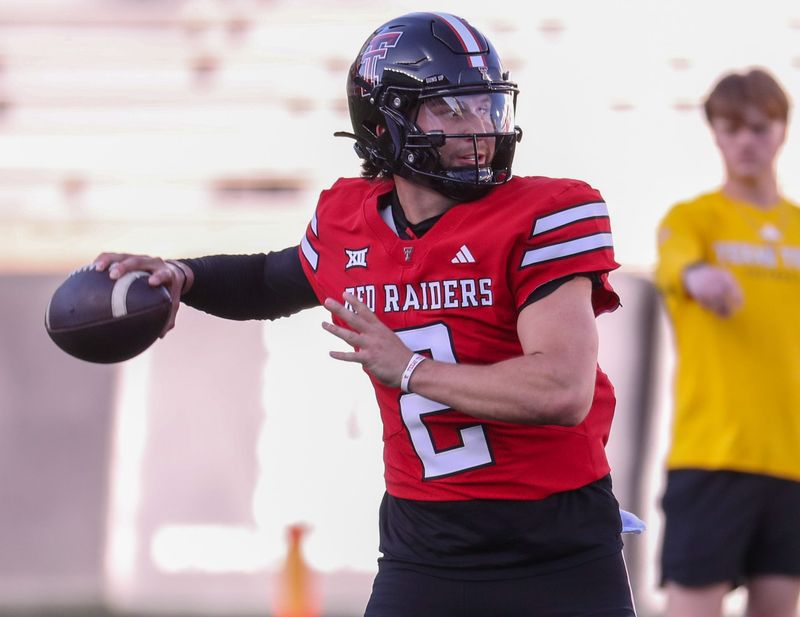
That’s come to a head this month with a case involving Texas Tech quarterback Brandon Sorsby, who underwent treatment for a gambling addiction after admitting he bet on his own games while at his prior school, Indiana. Sorsby is fighting in court to regain his eligibility after being declared ineligible by the NCAA.

A Supreme Court ruling in 2018 (Murphy v. National Collegiate Athletic Association) struck down a federal ban on sports gambling, opening the door for states other than Nevada to legalize sports wagering.
In Florida, sports betting is legal, but heavily restricted under a monopoly with the Seminole Tribe. Sports wagers can be placed in person at six Seminole Casino locations throughout Florida or on mobile betting through the Hard Rock Bet app. The age restriction is 21 and prediction (prop) bets involving college athletes are prohibited.
“It is more available, but we also have more access because of the online nature of it,” Florida Gators athletic director Scott Stricklin said. “We have more transparency to who is using it, when they are using it. We get notifications any time a student so much as downloads an app, to find out what’s going on.”
The last issue involving a high-profile Florida student-athlete involving sports gambling was in 2001, when former UF basketball star Teddy Dupay was declared ineligible after a State Attorney’s office investigation revealed he bet on the Gators.
“Gambling has existed forever,” Stricklin said. “The fact that it’s more available now, probably gives us more insight to what was happening before. Now I do think we need to make sure our student athletes understand there’s a real bright line while they are competing about what they allowed to do.
“We educate them for years. It’s going to be even more important now since we have so much betting that’s been legalized.”
What SEC is doing to combat potential sports gambling scandals
The SEC understands the problems sports gambling can present − not just student-athletes, but coaches, officials, administrators and support staff. In 2023, former Alabama baseball coach Brad Bohannon was fired after he provided inside information (a late scratch involving a starting pitcher) before a game against LSU.
In 2024, the SEC instituted availability reports in football, men’s basketball, women’s basketball and baseball to curtail the spread of inside information. SEC commissioner Greg Sankey said the reports were made in mind that college athletes are more visible on campuses walking to and from classes and practice fields.
“If I see that individual with a boot on and I’m involved in gambling, that’s really valuable information,” Sankey said. “That’s why we went to availability reporting, to take that pressure off.”
According to SEC Associate Commissioner Garth Glissman, more than $12 billion was wagered in sporting events involving SEC teams in 2025-26, with $11 billion involving football and men’s basketball. Of the $12 billion, $9.1 billion came on straight game wagers, with $2.9 billion in prop bets.
Glissman said prop bets have become a growing concern, not just as a temptation for student-athletes but for the harassment that student-athletes face on social media if they don’t score a certain number of points or touchdowns from disgruntled wagerers. The SEC’s student-athlete advisory committee has sent letters to congress urging legislation for a nationwide ban on prop bets involving college athletes. Only one state within the SEC’s footprint − Kentucky −has no restrictions when it comes to prop bets involving college athletes.
The SEC has partnered with an integrity company, I360, that provided 24/7 monitoring of betting markets and can spot any correlated anomalies involving wagering on a conference event.
“The reality we deal with that’s totally different than professional athletes who have that much more isolated reality and by the way have a level of maturity that maybe an 18 or 19 year old might not have,” Sankey said. “That’s why I think there are concerns in college sports about sports gambling, prediction markets, offshore stuff, I think there are still probably local bookies out there still running numbers somehow.”
In 2026-27, the SEC is adopting more measures to create awareness involving the dangers of sports gambling. Those include integrity posters in SEC locker rooms, an integrity hotline to anonymously report any gambling-related issues to the conference office and a mandatory education video for all teams before their first game.
“You do your very best to communicate to our student athletes,” Texas A&M athletic director Trev Alberts said. “We regularly do that through compliance, the NCAA, the SEC, we work as hard as we possibly can but there’s certain realities that exist today that certainly weren’t there when I played college football. It is a challenge. There’s no doubt about it.”
Kevin Brockway is The Gainesville Sun’s Florida beat writer. Contact him at kbrockway@gannett.com. Follow him on X @KevinBrockwayG1.
This article originally appeared on The Gainesville Sun: How UF, SEC is dealing with dangers of mainstream sports betting
Reporting by Kevin Brockway, Gainesville Sun / The Gainesville Sun
USA TODAY Network via Reuters Connect
By Kevin Brockway, Gainesville Sun | USA TODAY Network
