Burmese pythons – destructive invasive snakes with few natural predators in Florida – are fairly distinct once they reach adulthood. But smaller members of the species can be mistaken for native snakes.
According to the FWC, being able to identify Burmese pythons is critical, especially considering that the Florida Python Challenge is likely coming up in summer. Luckily, the snakes have distinct traits, particularly when it comes to their coloring, that can make spotting them easy.

How to identify Burmese pythons
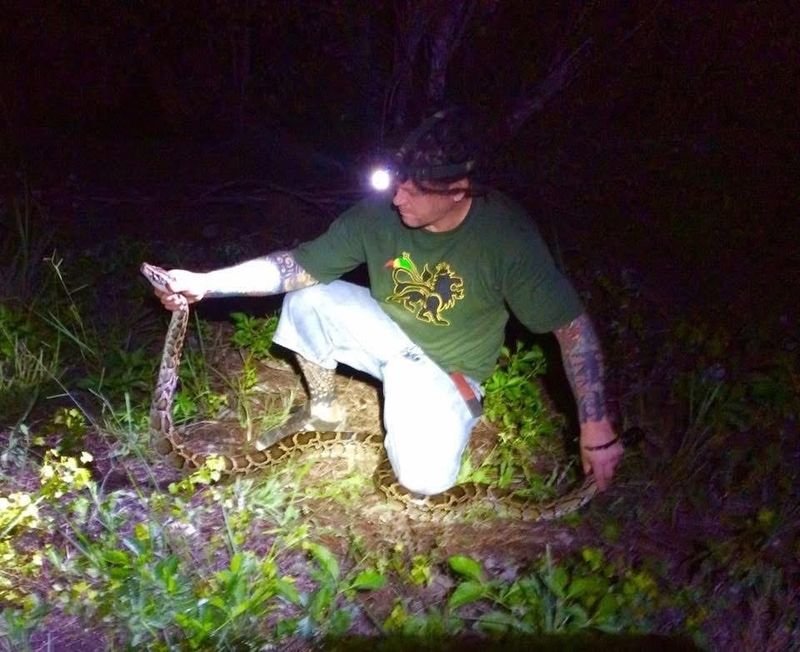
Though Burmese pythons can grow to over 20 feet in length, those captured in Florida are usually between six and 10 feet long, says the FWC. In adulthood, they’re larger than almost all native snakes, and are usually tan with dark blotches along their backs and sides.
Additionally, the dark patches along their bodies usually fit together like puzzle pieces, and can look similar to the patterns on giraffes. They also have dark wedges along the tops and bottoms of their heads, as well as behind their eyes.
Which snakes get mistaken for Burmese pythons?
Other nonnative snakes reported in Florida like ball pythons, boa constrictors and Northern African pythons are all similar to Burmese pythons, according to the FWC. As for native snakes – those often misidentified as Burmese pythons include the eastern coachwhip, the eastern diamondback, the red rat snake, the cottonmouth, the eastern indigo snake and water snakes.
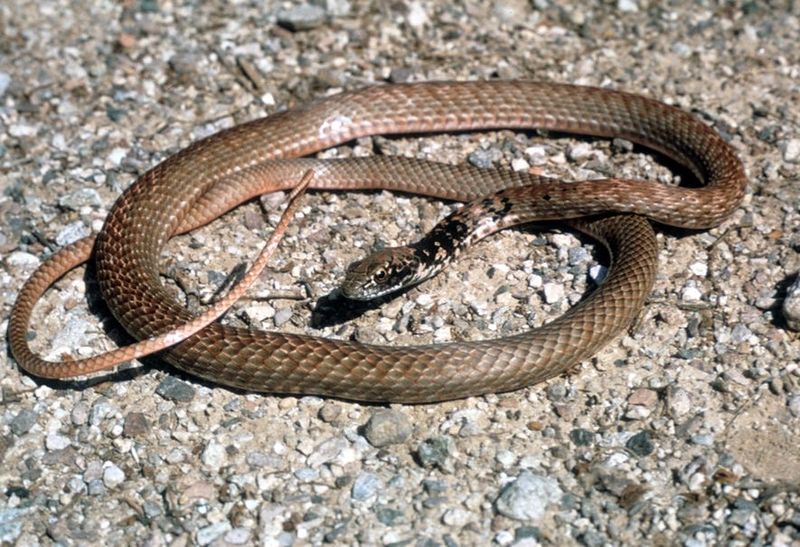
Coachwhip
Eastern coachwhips can reach an average four to six feet in length, according to the FWC. This nonvenomous snake is usually black on the head and neck, with color that fades to tan along the tail. They have very slender bodies, and move extremely quickly.
They are harmless to human beings.
Eastern diamondback
Eastern diamondbacks can be brown, yellow or tan, with black, brown and cream diamonds running down their backs. They have large, broad heads, and are the largest rattlesnake species in the U.S. by length and weight, according to the FWC.
They are venomous, so if you see one, give it some space. Though these rattlesnakes can live for more than 20 years, they frequently have shorter lifespans due to the threats they face in the environment. Eastern diamondbacks face habitat loss and can be targeted by people who misunderstand or fear them, says the FWC.
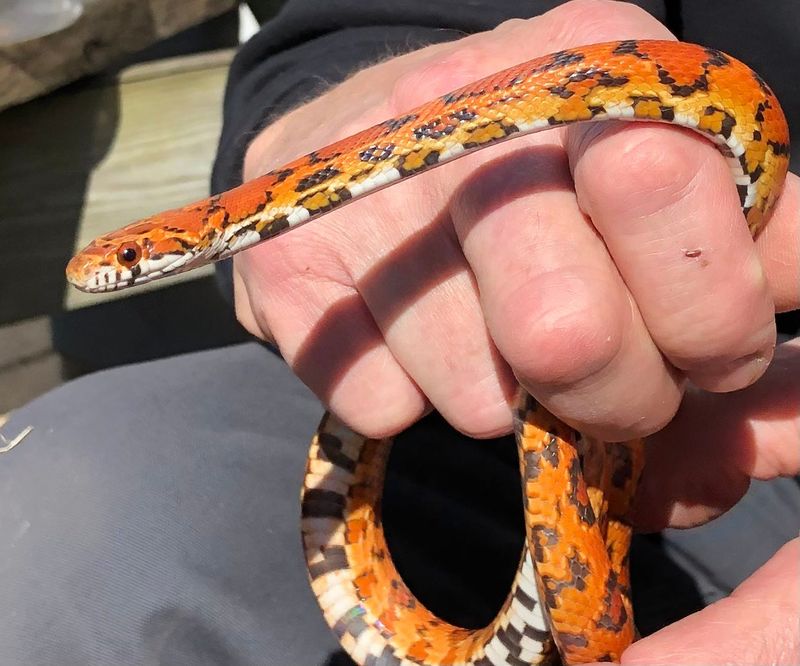
Red rat snake
Red rat snakes are 30 to 48 inches on average, but can grow to up to 72 inches, according to the FWC. The snakes vary in color, but usually have “yellowish-tan to orange” bodies, with large “red or faded blotches” on their backs, dark marks on their bellies, and “V” shapes on their heads.
Red rat snakes primarily eat small mammals like rodents, lizards, birds and their eggs. They kill their prey via constriction, given that they have no venom or fangs.
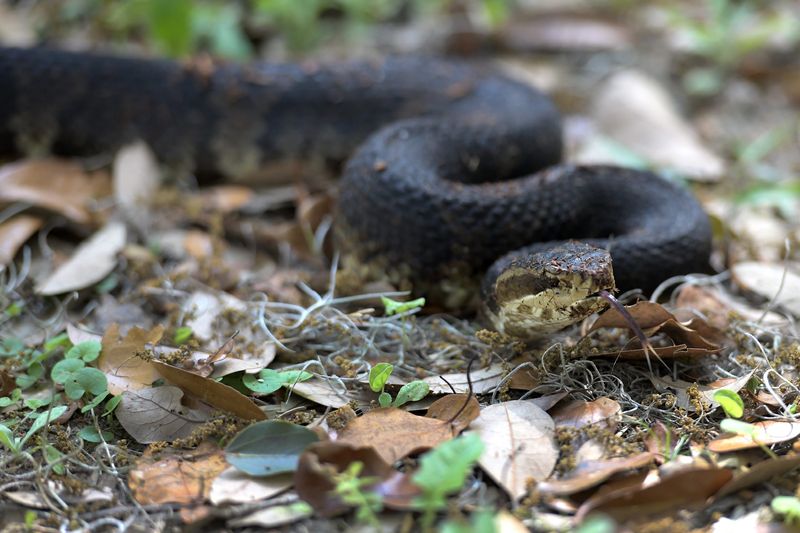
Cottonmouth
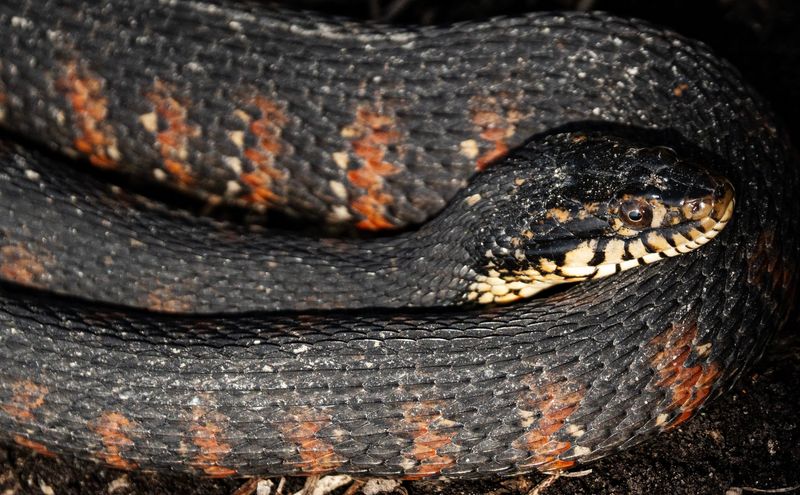
The venomous cottonmouth can be found throughout Florida in wet areas, says the FWC. They’re often confused with water snakes, which are more common and nonvenomous. Cottonmouths are usually uniformly dark as adults or have faint patterns, but juveniles are brown or tan with darker, reddish-brown crossbands running down their backs. Juveniles also have bright yellow tail tips.
More generally, cottonmouths have broad heads and dark stripes that run through their eyes, as well as deep facial pits between their eyes and nostrils.
They’re not “necessarily aggressive,” but should be avoided when they’re encountered.
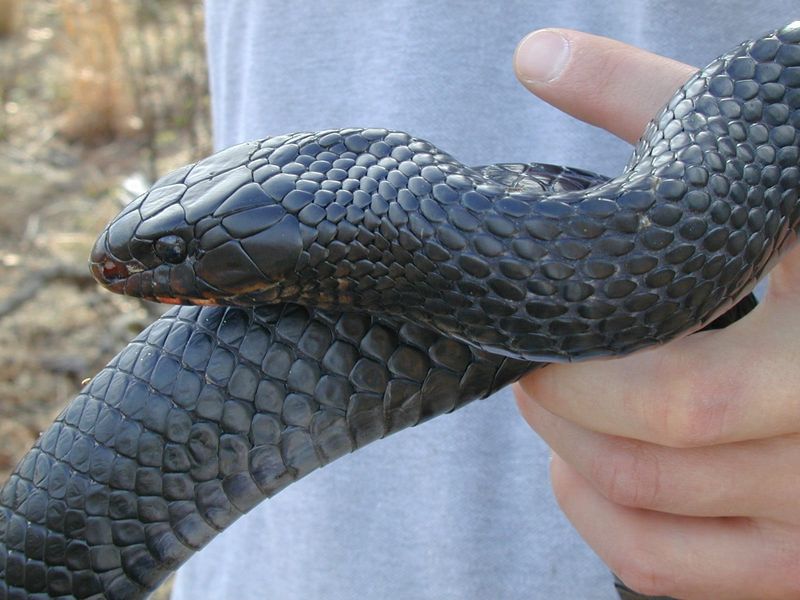
Eastern indigo snake
Eastern indigo snakes are non-venomous and have been Federally designated as threatened, according to the FWC. They are bluish-black in color, and can grow up to eight feet in length. They usually eat small mammals, birds, toads, frogs, turtles, lizards and small alligators.
Water snakes
Water snakes have narrow and pointed heads, where the heads of Burmese pythons are broad and triangular, according to the FWC. Brown water snakes are light tan with darker brown squares on their backs, and banded water snakes have dark brown or black crossbands down their backs that alternate with crossbands of lighter tan and red.
They are harmless and nonvenomous, and typically inhabit wet areas.
Sarah Perkel is a South Florida Connect Reporter for the USA TODAY Network’s Florida Connect team. You can get all of Florida’s best content directly in your inbox each weekday day by signing up for the free newsletter, Florida TODAY.
This article originally appeared on Palm Beach Post: How to tell native Florida snakes apart from young Burmese pythons
Reporting by Sarah Perkel, USA TODAY NETWORK / Palm Beach Post
USA TODAY Network via Reuters Connect