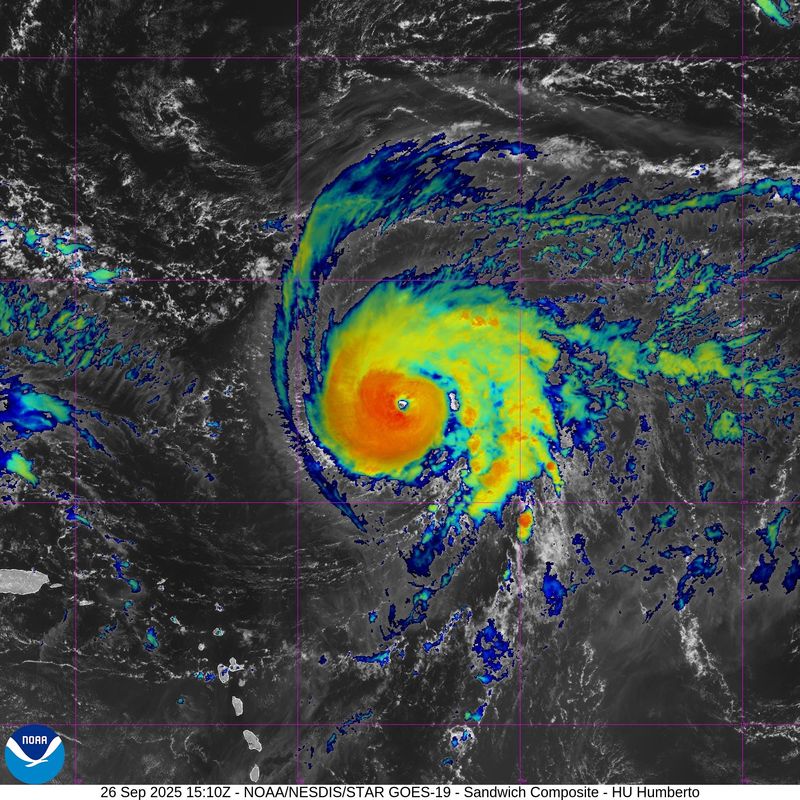
Hurricane season officially is still a few months away, but meteorologists and experts are already watching the Atlantic and Pacific for early signs of what’s ahead.
Ocean and atmospheric conditions in the tropics can offer clues months in advance about how active the season might be and whether storms are more likely to make landfall along the U.S. coast.

La Niña made its mark on this winter this year, as several rounds of Arctic air and snow swept across the U.S. — including Florida — and even brought near-blizzard conditions as far southeast as the Outer Banks. That’s because La Niña tends to shift the jet stream over the U.S., often bringing colder-than-average winters to the northern Plains and Midwest and occasionally stormier conditions to parts of the South.
Looking ahead, a transition from La Niña to ENSO-neutral conditions is expected in February through April 2026, with ENSO-neutral likely lasting through the Northern Hemisphere summer, according to NOAA.
Here’s what that means for Florida and the 2026 hurricane season.
How do El Niño and La Niña impact Florida weather?
La Niña typically brings warmer, drier conditions to much of Florida during winter and early spring. Storm tracks tend to stay farther north, meaning fewer widespread rain events and higher potential for dry-season impacts like wildfire risk, according to the National Weather Service. In summer, La Niña can contribute to hotter, slightly drier conditions and a more active hurricane season due to reduced wind shear over the Atlantic.
El Niño winters, by contrast, usually bring wetter, cooler conditions to the southern states and milder, drier weather to the Pacific Northwest. During summer, El Niño tends to bring slightly wetter conditions to Florida and reduces hurricane activity, as increased wind shear over the Atlantic limits storm formation.
As La Niña weakens and the Pacific shifts toward ENSO-neutral by early spring, Florida’s weather will become more variable. ENSO-neutral doesn’t lock the state into a single pattern, so temperatures and rainfall can fluctuate week to week, driven by cold fronts, Gulf moisture and short-term weather systems rather than a dominant Pacific signal.
How do ENSO conditions impact hurricane season?
ENSO conditions — especially La Niña and El Niño — can influence Atlantic hurricane activity significantly. For instance, La Niña tends to favor more active seasons, while El Niño can suppress storm development.
By contrast, ENSO-neutral years don’t strongly favor or suppress hurricanes. Warm Atlantic sea surface temperatures, short-term wind patterns and even Saharan dust outbreaks can have a bigger impact on storm formation and intensity than sea surface temperatures in neutral years.
For example, 2005 was neutral but produced 28 named storms, including 15 hurricanes, while 2013 — also neutral — had only 14 named storms, including two hurricanes.
Even in busy neutral years, fewer storms typically make landfall along the U.S. coast. Studies show, during neutral years, the jet stream often steers storms out to sea rather than toward the Gulf Coast or Southeast, reducing the overall landfall risk. Since 1900, East Coast landfalls — from Georgia to Maine — have been significantly lower during ENSO-neutral years compared with La Niña years.
A recent example is the 2025 Atlantic hurricane season, which began under ENSO-neutral conditions before transitioning to La Niña in October. The Atlantic produced 13 named storms, including five hurricanes, but only one tropical storm made landfall along the East Coast — illustrating that neutral years can still be active while U.S. landfall risk remains relatively low.
That means predicting the overall number of storms in 2026 will rely more on local and seasonal conditions than on ENSO alone.
What is La Niña?
La Niña is a climate pattern that occurs when sea surface temperatures in the central and eastern Pacific Ocean are cooler than average, according to the National Weather Service. This cooling shifts atmospheric circulation, influencing weather around the globe. La Niña can also affect the jet stream, sometimes contributing to polar vortex disruptions that push Arctic air farther south.
What is El Niño?
El Niño is the opposite pattern, occurring when Pacific Ocean waters in the central and eastern regions are warmer than average, according to NOAA. This warming changes global weather patterns in different ways than La Niña. In the U.S., El Niño winters usually bring wetter, cooler conditions to the southern states and milder, drier weather to the Pacific Northwest.
When is the Atlantic hurricane season?
The Atlantic hurricane season runs from June 1 through Nov. 30.
Ninety-seven percent of tropical cyclone activity occurs during this time period, NOAA said.
When was the earliest tropical storm recorded?
The first tropical cyclone of the 1938 Atlantic hurricane season formed on January 3, making it the earliest documented Atlantic tropical storm — and hurricane — on record.
In terms of hurricanes, Hurricane Able in 1951 was once thought to be the earliest major hurricane on record, but later analysis found it only reached Category 1 strength. The record now belongs to Hurricane Alma of 1966, which became a Category 3 hurricane on June 8, according to USA TODAY. This was also the earliest hurricane to make landfall on the contiguous U.S., when it hit the Big Bend region.
Stay informed. Get weather alerts via text
Brandi D. Addison covers weather across the United States as the Weather Connect Reporter for the USA TODAY Network. She can be reached at baddison@gannett.com. Find her on Facebook here.
This article originally appeared on Palm Beach Post: How may the 2026 hurricane season look? El Niño provides early clues
Reporting by Brandi D. Addison, USA TODAY NETWORK / Palm Beach Post
USA TODAY Network via Reuters Connect