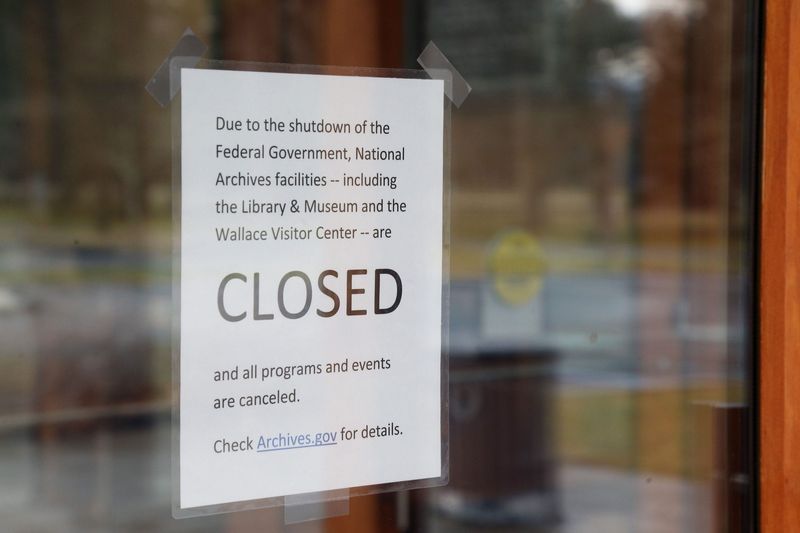
As President Donald Trump is scheduled to sit down with congressional leaders Sept. 29 to discuss funding the government, a possible shutdown looms within days.
If the president and lawmakers don’t agree on a last-minute budget by 12:01 a.m. on Oct. 1, hundreds of thousands of employees could be furloughed and various federal agencies could be haulted.

The Treasure Coast would be largely spared any disruption, but there are agencies in the region that might be impacted by a government shutdown.
What Treasure Coast agencies are affected?
U.S. Coast Guard: The U.S. Coast Guard 7th District Southeast could postpone certain “non-essential” missions under a government shutdown, said Lt. Commander John Beal.
However, the majority of its work regarding federal law enforcement, lifesaving operations and migrant interdictions would continue.
The USCG 7th District Southeast in Miami oversees operations in Puerto Rico, Florida, Georgia, South Carolina and 34 foreign nations and territories from four offices.
U.S. Postal Service: Post offices would stay open. USPS South Florida Spokesperson Debra Jean Fetterly said by email that “Postal Service operations will not be interrupted in the event of a government shutdown, and all Post Offices will remain open for business as usual. Because we are an independent entity that is funded through the sale of our products and services, and not by tax dollars, our services will not be impacted by a government shutdown.”
U.S. Fish and Wildlife Service: Vero Beach office would close.
U.S. District courts: Fort Pierce courthouse would stay open.
Federal Aviation Administration: Air traffic control at airports among other operations would continue. More information can be found within the DOT’s lapse in appropriations plan.
Army Corps of Engineers: Navigation facilities (St. Lucie and Port Mayaca locks in Martin County) would remain open.
Veterans’ hospitals: Will remain open. The Department of Veterans Affairs would still provide medical care and pension benefits, but some services, such as career counseling, would be paused.
National wildlife refuges: Nathaniel P. Reed Hobe Sound National Wildlife Refuge in Martin County and Pelican Island in Indian River County are expected to keep outside areas accessible, but buildings will close.
Jupiter Inlet Lighthouse Outstanding Natural Area: Would stay open but employees will likely be furloughed.
What about Medicaid, SNAP and Social Security?
During a potential shutdown, the federal government will continue to distribute Social Security checks, as well as Medicare benefits.
Medicaid has enough funding to last until the first quarter of next fiscal year, according to the Centers for Medicare and Medicaid Services.
It is unclear what changes may come to The Supplemental Nutrition Assistance Program, also known as food stamps.
In a public statement, the USDA said it is prepared for all contingencies, but did not specify how much funding is available.
The program recently underwent paperwork eligibility changes as part of the One Big Beautiful Bill Act signed into law in July. Under the new requirements, roughly 4 million people, including 1 million children, are expected to lose nutritional SNAP benefits, according to the Congressional Budget Office, a nonpartisan federal agency.
Why could the government shutdown?
A government shutdown happens when lawmakers cannot agree on either a full-year spending bill nor a temporary funding bill, also known as a Continuing Resolution bill.
When certain government agencies meet their budget expiration date without a new budget, some may have to shut down some of their programs.
That excludes programs and activities deemed “essential” by Congress or “critical to national security or the protection of lives or property.”
The current standoff on Capital Hill is between three parties: Congressional Democrats, Republicans, who hold the majority in both chambers, and President Trump.
Democratic lawmakers said they will not pass a bill that does not include certain health care protections, such as extending Obamacare subsidies, which covers 45 million people, according to HHS.
If Trump and members of Congress do not make a deal, this could be the 15th government shutdown since 1980.
TCPalm Reporter Corey Arwood contributed to this report.
Jack Lemnus is a TCPalm enterprise reporter. Contact him at jack.lemnus@tcpalm.com, 772-409-1345, or follow him on X @JackLemnus.
This article originally appeared on Treasure Coast Newspapers: Here’s what may be affected by a government shutdown on the Treasure Coast
Reporting by Jack Lemnus, Treasure Coast Newspapers / Treasure Coast Newspapers
USA TODAY Network via Reuters Connect