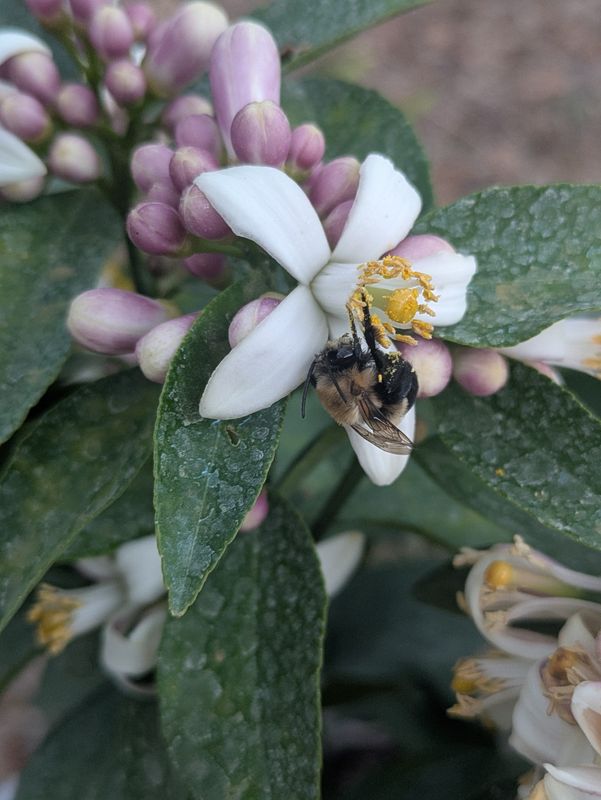
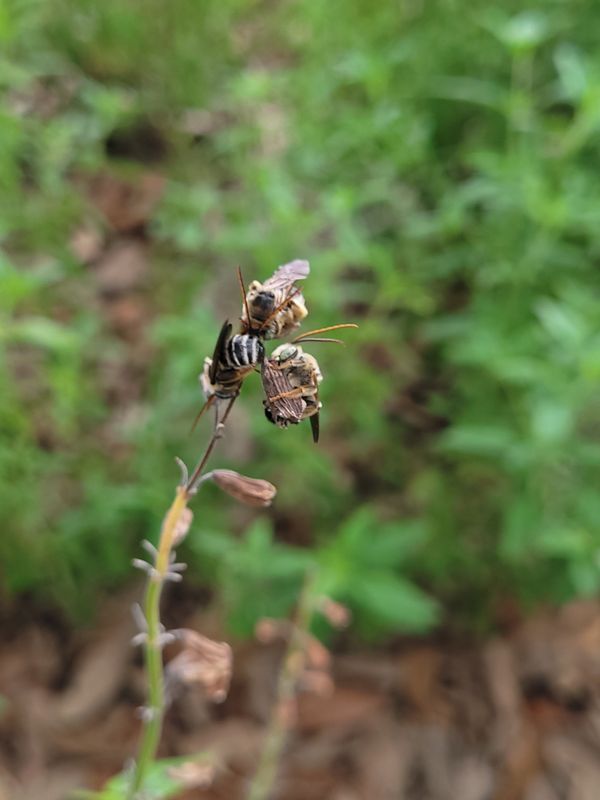
Did you know that pollinators play a crucial role in growing 75% of our food crops? And their contributions to North American agriculture are valued at $15 billion each year. Those are big numbers for such small creatures. Did you also know that our pollinator populations are in decline? A 2025 NatureServe study of North American pollinators found that over 22% of our native pollinators are at an elevated risk of extinction. Native bees are the most at risk, especially leaf-cutter bees and digger bees.
These statistics might make you feel powerless, but you certainly are not. You have an opportunity Aug. 21-22 to further pollinator research by participating in the Great Southeast Pollinator Census.

The Great Southeast Pollinator Census is a multi-state citizen science project that was started by the University of Georgia in 2017 with 50 gardeners counting pollinator landings on plants. Since then, it has expanded to South Carolina, North Carolina, Florida, Alabama, and Mississippi. Last year, over 27,000 citizen scientists recorded over 500,000 insect landings. These counts generate useful data for researchers who can look for trends and better understand how pollinator populations are affected by weather and how honey bees influence native bee populations.
So far, they have found that urban areas have more carpenter bee abundance than rural areas. They also hope to learn more about which plants are best for providing resources for our pollinators.
This year, the census takes place on August 21 and 22, and you can join in. Just choose a pollinator plant, and for fifteen minutes, record the number of insect landings on a count sheet. The count sheets can be printed from the Great Southeast Pollinator Census website at https://gsepc.org/. That’s where you go to enter your data at the conclusion of your count as well. You don’t have to know the names of all the bees and butterflies, just under what general category the insects fall. The categories are bumble bees, carpenter bees, honey bees, small bees, wasps, flies, butterflies, and moths.
If you aren’t sure how to tell the difference between a carpenter bee and a bumble bee, there’s also an easy-to-understand identification guide on the Great Southeast Pollinator Census website.
Or be social like a honey bee and join the Duval County Master Gardener Volunteers at one of the Pollinator Census events they are hosting all over Jacksonville Aug. 21-22. They will be sharing information about the census as well as giving a short course in insect identification so you can be confident in your count. The learning session and the count should not take more than an hour. Kids are welcome to join the count, too. To find a census location near you, see the list below.
In Florida, the biggest contributing factor in pollinator decline is urban development and home construction. However, you can make practical changes to your yard that will make a big difference. Reduce your use of insecticides and plant native flowering plants to support our native insects. You can be a part of the solution.
Tonya Ashworth is an extension agent and environmental horticulture and Master Gardener coordinator with UF/IFAS in Duval County.
This article originally appeared on Florida Times-Union: Help track local bees during the pollinator census. Here’s how
Reporting by Tonya Ashworth, For the Jacksonville Florida Times-Union USA TODAY NETWORK / Florida Times-Union
USA TODAY Network via Reuters Connect
By Tonya Ashworth, For the Jacksonville Florida Times-Union USA TODAY NETWORK | USA TODAY Network