People think of Florida as a paradise-like water world, a place where massive lakes and rivers are surrounded by the Gulf and the Atlantic Ocean.
And why wouldn’t they?

We have the Atlantic Ocean on one side, the Gulf on the other, and a myriad of lakes, rivers and creeks that meander through the entire state. We have one of the largest lakes in the nation (Okeechobee) as well as the mighty Suwannee and Kissimmee rivers and the River of Grass in the Everglades.
With all this water and nearly 5 feet of rain each year, it might seem like the Sunshine State is blessed with an endless supply of water, from every direction.
But that’s not the case as drinking water aquifers are shrinking at a time rain patterns appear to be changing here. And billions of gallons of freshwater flow out to sea each year through rivers and canals.
The demand for water is escalating. The state has added 5.7 million people in the past 20 years. And at least 3 million more will move here in the next 20 years — about a half a million of those moving to Lee and Collier counties.
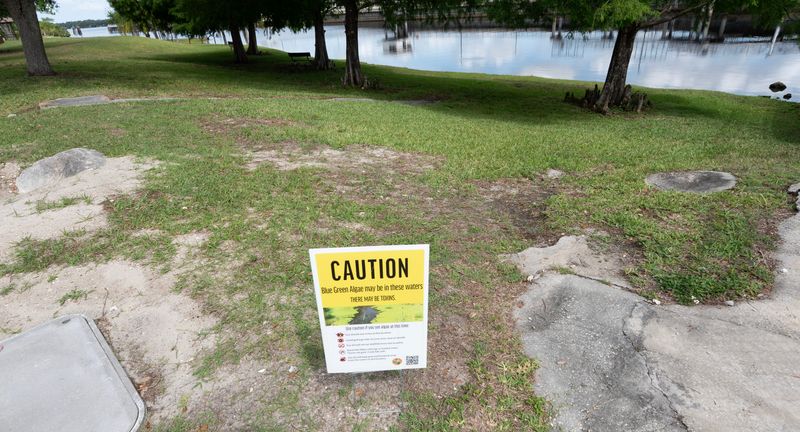
And it’s not just water supply that’s threatening Floridians. Overall water quality across the state is declining, even though billions of taxpayer dollars have been spent on Everglades restoration. In recent years Southwest Florida has seen blue-green algae blooms, red tide outbreaks, sewage system leaks, construction site runoff and beaches closed because of high amounts of fecal bacteria.
Some homeowners in the Lee County area are already running out of well water; and while much of that may be due to a recent drought, the amount of clean, drinkable water in Florida is shrinking.
This area was once home to one of the planet’s cleanest wetland systems, but now taxpayers spend billions of dollars a year to move, clean and store water that moved freely on its own just a century ago.
Now, we’re paying for the most expensive water quality and quantity project ever attempted ― the Comprehensive Everglades Restoration Plan (CERP) a federal-state partnership to restore, protect, and preserve water resources. Some of its projects include the massive C-43 water storage basin near the Lee-Hendry county line and the Picayune Strand restoration project in Collier County.
From endless, clean freshwater to dried up wells and pollution
So, how did we do it ― convert one of the world’s great wetland systems into the largest restoration project ever attempted by humans?
To answer that question, we have to start with a big-picture description of the Everglades system.
First, rain is the main source of water here as the Everglades is a distinct watershed that does not receive water inputs from a distant mountain peak or valley. Desalination plants are growing in Florida but are still more expensive than pulling and treating groundwater.
The Naples-Fort Myers area is within the historic boundaries of what is now the greater Everglades system, a 16-county region that stretches from just south of Kissimmee to Lake Okeechobee, the River of Grass, Everglades National Park, the Gulf and Florida Bay.
Historically, rain that fell just south of Orlando slowly trickled down the Kissimmee River and Chain before entering Lake Okeechobee.
A natural embankment lined the south side of the lake, and the lake would rise several feet in the rainy season before dumping an unfathomable amount of water into the River of Grass.
The River of Grass carried water to what is now Everglades National Park, which includes most of Florida Bay.
The water in the system was so clean that Miccosukee Tribe of Indians of Florida elder Michael Frank scooped water into a cup from the water in the ditch along Tamiami Trail until 1992.
Fish were plentiful and not yet ridden with mercury as they are in freshwater portions of the system today.
The Everglades restoration plan was pitched in 2000 as a 30-year plan to replumb the Everglades to help with growing water quality problems like pollution and toxic algae blooms.
The plan includes everything from massive water reservoirs (on the east and west coasts) to restoring oxbows in river systems that were channelized in order to help drain south Florida.
Calusa Waterkeeper Emeritus John Cassani said he and others are concerned that the Everglades system may soon be tapped out.
What does that mean for residents here?
“I think there’s some growing concerns and declining aquifers in southeast Lee County, Lehigh and Cape Coral,” Cassani said. “So, how much is too much in terms of withdrawal and use?”
Most of the water used in the what the water district refers to as the lower west coast goes to agriculture, which uses nearly 600 million gallons of water a day.
Landscaping comes in second, using about 220 million gallon a day, according to state records.
The rest of the water goes to homes, commercial operations or is used for power generation.
Florida’s protected wildlife species are also considered “legal users,” but, as Cassani points out, the natural system seems to suffer the most from water shortages.
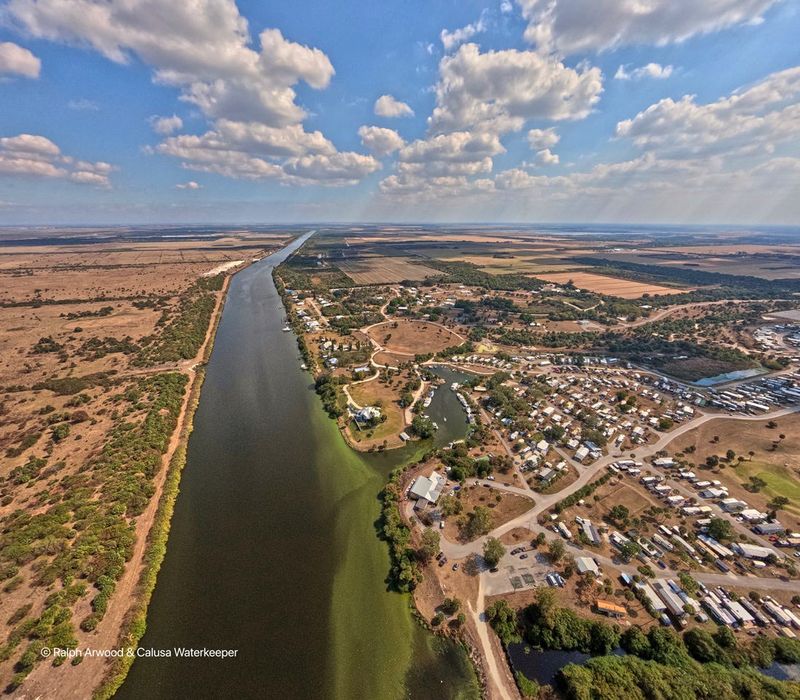
Cassani and others have fought for decades to get a legal reservation, or a minimum flow amount for water sent to through the Caloosahatchee River system.
Wildlife and its habitat are considered legal users of state water, and the environmental groups wanted the state to set aside a certain amount of guaranteed freshwater flow for the ailing river.
The Caloosahatchee River and its estuary need a certain amount of freshwater flow throughout the year in order to keep salinity levels in the estuary at a healthy level.
But agriculture needs water to produce food for a good portion of the eastern United States.
“We all need to eat, and agriculture is a huge business in Florida, second only to tourism,” said Gene McAvoy, who spent 25 years working at the University of Florida’s agriculture extension.
He’s retired now but still farms in the Labelle area.
“It provides a lot of a jobs, and this is the winter breadbasket for much of the Eastern United States,” McAvoy said. “We’re not flushing water down the drain. We use it and a portion is taken up in the roots and released through the plants and will come back down as rain.”
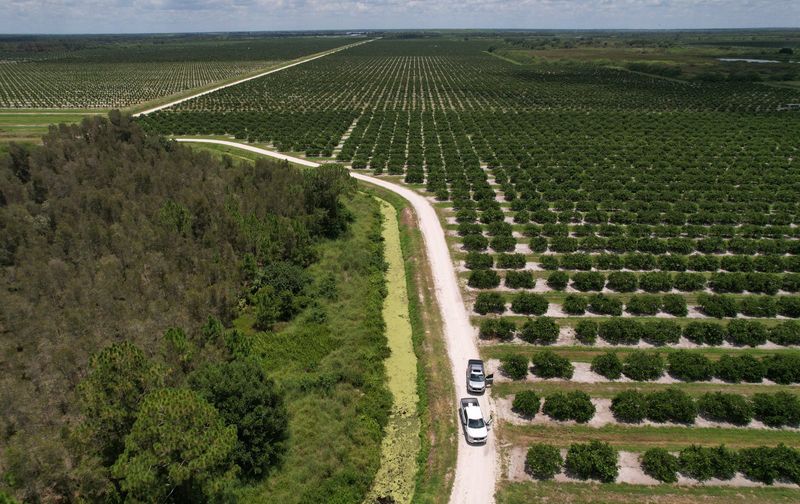
McAvoy said farmlands are much better for water usage and aquifer recharge than developed areas because farm fields allow water to into the seep into the ground, and some of that water ends up in our drinking water aquifers.
“Most fruit and vegetables are 90% and the rest of the water and rainfall we get goes to the drinking water aquifer,” McAvoy said. “We don’t have rivers and streams so Southwest Florida is dependent on agriculture for a water recharge perspective. That has value and a lot of people don’t realize that.”
Between the plants releasing moisture back into the atmosphere (which falls back to the ground as rain), farms are mostly open fields that even provide a wildlife habitat function for some animals. Florida panthers are known for roaming through old citrus fields. The big cats aren’t after oranges or tangerines. Biologists say they use the farmlands to hunt rabbits and other small game and as travel corridors that allow the panthers to disperse from their core breeding grounds in the Big Cypress National Preserve.
As to the allocations granted to agriculture in this region of Florida, McAvoy said farmers only use what they need, and that those needs may change if the types of crops being grown here change in 10 or 20 years.
“Water allocations are about where it needs to be,” he said. “With citrus (not doing well), people think we may not need as much (water) but we’re planning on coming back. Just because we’re not using it at this minute in time doesn’t mean we don’t need it or want it.”
Florida’s waters are becoming more polluted while demand is increasing
And the water is increasingly polluted, reducing the amount of water that doesn’t need to be treated before being consumed or used at home by residents and visitors.
Some people fear the Caloosahatchee reservoir (C-43) may never be operational. The reservoir is designed to pull water from the local watershed, which is loaded with excess nutrients.
The problem comes when the Clean Water Act is applied, and that sweeping law says you can’t discharge pollution, or return water to the Caloosahatchee that is more polluted than when it was initially drawn off the river.
With nutrients in relatively shallow and warm waters, toxic blue-green algae could be a game-ender as federal and state laws wouldn’t allow release of the reservoir water. That would defeat the entire purpose of $600 million project.
“The latest imagery shows that it looks like puddles out there that hold a little bit of water and it doesn’t appear to be rapidly filling and that’s most likely due to the drought,” Cassani said.
Overall, water quality across the state is increasingly problematic as algae blooms, a lack of dissolved oxygen and other water problems lead to fish kills and closed beaches.
The Florida Department of Health this summer sent out an advisory for enterococcus bacteria (poop water) for part of Fort Myers Beach.
Those types of warnings are not uncommon here.
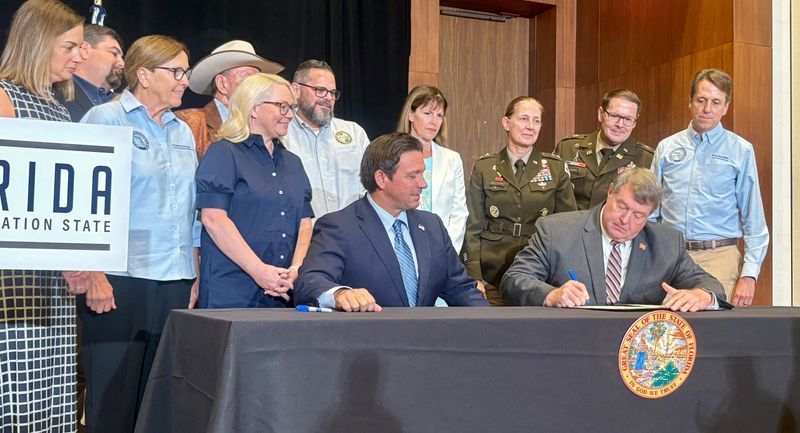
Florida Governor Ron DeSantis often talks in public about how much tax dollars are being spent to clean up Florida’s water problems.
But water quality, overall, is not getting better, Cassani and others say.
“Some of our highest water quality areas have become hot spots for nutrients pollution,” He said. “Matlacha Pass is already impaired for nutrients and so is Estero Bay. Even Charlotte Harbor ― the sea grass there is the lowest it’s been since they started keeping records.”
He says the state announcements are just political talking points and propaganda to keep his supports happy.
“DeSantis will say we’re spending x,y and z on water quality but it doesn’t match the number of waters (the Florida Department of Environmental Protection) is identifying,” Cassani said. “And it’s way more difficult to restore a waterway than it is to keep it clean in the first place.”
What is more imortant: private profits or public water supply?
Lake Okeechobee was diked to protect towns and control water to make space for farms and towns.
Parts of the Everglades were drained at that point ― so there was less water in the system to use.
The U.S. Army Corps connected the Caloosahatchee and St. Lucie Rivers to Lake Okeechobee to drain the historic Everglades for farming and development.
Water was seen the enemy at the time, so engineers helped ditch and dike much of this massive watershed.
Seasonal waterfalls on the Caloosahatchee River were blasted apart and removed from the system as the river was channelized in order to remove water from Lake Okeechobee at a much faster pace.
Historically, it could take rainfall a year to work its way from the central Everglades to either the Gulf of the Atlantic.
Water: what was once free now costs billions each year to manage
Historically, the Everglades was a balanced and natural system.
There were algae blooms occasionally, but they weren’t as frequent or as long-lasting as they are today, scientists say.
Now billions of dollars are spent each year in Florida on cleaning what historically was among the cleanest water on the planet.
Don Duke is a water quality professor and researcher at Florida Gulf Coast University, and he says some of our water challenges are due to wild fluctuations in Florida ‘s weather.
“The environment in Florida has adapted to 50-some inches of that and if it gets less than that it’s a drought and coastal areas have water quality problems so when we move people into that landscape, yeah, we’re going to have water problems,” Duke said.
Water issues fall into two categories ― quality and quantity.
Clean water is vital to life, and we need that water to be safe to consume. The human body is mostly water, ranging from about 55% to around 75%, according to the Mayo Clinic.
With so many straws sipping from south Florida’s drinking water aquifers, demand is already exceeding the rate at which the aquifers can be recharged by rain water.
“It doesn’t get recharged every year,” Duke said of our drinking water aquifers.
Development contributes to the problems because it includes asphalt and concrete, which forces rainwater to run off the landscape much faster than it naturally would travel.
The water blasts to the Atlantic or Gulf through a network of ditches, dikes and water control structures. Those heavy summer rains are wasted, in part, because officials designed and built a system to drain water, not retain it.
More than half of the historic Everglades has been drained and developed, and reversing the impacts of all the ecological and hydrological damage is costing billions. Short-term gains were more important than long-term pains, he said.
“We’re paying for the sins of the past,” Duke said. “If we want to keep growing crops in a down rainfall year like this one, we’re absolutely going to impact the environment if we draw too much. (Drought) hurts the farmers and the food supply and that’s bad, or it impacts the environment.”
When times are dry, either the farmers and our food supply suffers or the environment is damaged.
Duke says reservoirs are one answer for increasing the available amount of usable water here.
“There are many reservoirs in the west and there are very flew in Florida,” he said. “We use (Lake) Okeechobee, and that’s another problem. But out west there’s a lot of snowfall and that melts and fills the reservoirs, but we don’t have that here.”
Climate change will make water management even more challenging
Hurricanes experts say tropical storm and hurricane patterns are already changing.
The overall consensus is that hurricanes will likely be less frequent but will be considerably stronger.
“We’ve seen data that show the storms are becoming less frequent but larger and when you get flooding conditions and it comes as one 8-inch kind of a storm, it runs off, so there is not as much groundwater replenishment,” Duke said.
“We get larger hurricanes and fewer of them and overall less rainfall,” Duke said.
These types of changes are expected to change weather patterns here soon, if they haven’t already.
“That’s what’s happening this summer: we’re seeing fewer showers,” Duke said. “And we might get a storm but that is 8 inches in one day instead of 8 inches spread across a month.”
Duke said weather appears to be shifting in Florida, that the daily afternoon thunderstorms that were so common historically may be a thing of the past.
“There’s plenty of evidence that recent years have not seen the regular afternoon rainfall that we’re accustomed to,” Duke said. “But how do you know if that’s 20-year period of the story of a 1,000-year trend. It’s clear that we’re in that pattern now, which we should be prepared for, or if it’s the start of a new normal. Either way, we would be prudent to prepare for that.”
Millions make water-use decisions daily, and that’s part of the problem
Another issue that impacts Florida water usage is that there are millions of decisions made by residents and visitors.
From watering the lawn (a major water consumer) to taking long showers and leaving the sink running while washing dishes, everyone wastes water to some degree.
“Millions of us are watering lawns and there are millions of individual decisions out there,” Duke said of managing our freshwater supply. “So planning is very hard when it’s millions of users and not just one user. It’s just hard to get communities to do that.”
So, it’s a “we” kind of problem, not a “they.”
If more Floridians were aware of the shrinking water supply along with the water pollutions issues, the public could decide to vote for political candidates who make water a priority, he said.
“The water management district either doesn’t have the appetite or authority or the tools they need to encourage or drive or force people to use w less water,” Duke said. “Voters don’t have the willpower to better use water. And it’s cumulative, over millions of people and dozens of years.”
Besides agriculture, irrigating lawns and landscaping is the top consumer of water.
Duke said he’s spoken with more than 80 Estero communities about irrigation and how to more efficiently use water.
“The HOA gets flack if people can’t water their lawns,” Duke said. “People water to keep their lawns bright green.”
Chad Gillis is an environment reporter and can be reached by email at cgillis@news-press.com.
Please support local community journalism and stay informed about Southwest Florida news by subscribing to The News-Press and Naples Daily News; download the free News-Press or Naples Daily News app, and sign up for daily briefing email newsletter, food & dining and growth & development newsletters here and here.
This article originally appeared on Fort Myers News-Press: Florida’s water paradox: 5 feet of rain a year but we still run dry
Reporting by Chad Gillis, Fort Myers News-Press & Naples Daily News / Fort Myers News-Press
USA TODAY Network via Reuters Connect
By Chad Gillis, Fort Myers News-Press & Naples Daily News | USA TODAY Network