With cyber scammers targeting people in so many ways — phone calls, texts, social media, emails — the St. Lucie County Sheriff’s Office is using an awareness campaign to help stop fraudsters from stealing your cash.
Florida is ripe for online, text and phone scams and Sheriff Richard Del Toro knows St. Lucie County is no exception.

“Scammers don’t just target individuals, they impact entire communities. That’s why the St. Lucie County Sheriff’s Office is bringing our scam awareness campaign directly to the people we serve,” Del Toro said in one of a series of instructional videos posted weekly to social media.
“Our fraud investigators and community engagement unit are available to provide free scam prevention presentations for homeowner associations, churches, civic organizations, and community groups throughout St. Lucie County.”
The agency’s cybercrime awareness campaign, Del Toro said, is focused on “helping our community recognize emotional manipulation before it leads to financial loss or identity theft.”
The number of older adults scammed out of $10,000 or more in the United States has more than quadrupled since 2020, according to the Federal Trade Commission.
Floridians were scammed out of more than $1.5 billion in 2025, according to the latest annual Internet Crime Report from the FBI, up from $1 billion the year before. The Sunshine State saw both the third-most complaints and the third-highest losses behind California ($3.6 billion) and Texas ($1.8 billion).
‘Nobody is immune’
St. Lucie County Sheriff’s officials get about 200 reports a month related to cyber crime scams, according to Capt. Andrew Bolonka, who appears in videos warning about today’s most common scams posted to the agency’s Facebook, Instagram, and YouTube accounts.
“We’ve taken like over 2,100 scam fraud reports countywide this year,” Bolonka told TCPalm. “Whether it’s text messages, it’s emails, through Google calendars, the phishing, the smishing. If you have money and you have access to money, they’re coming after you; nobody is immune to this.”
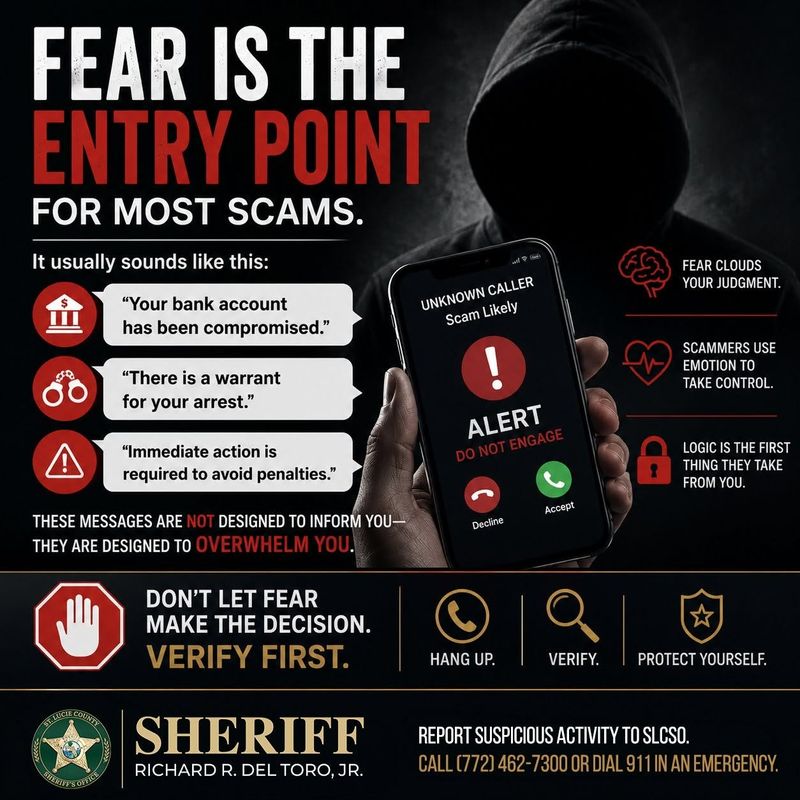
Scammers, he said, start with the same premise: institute fear then urgency, then secrecy.
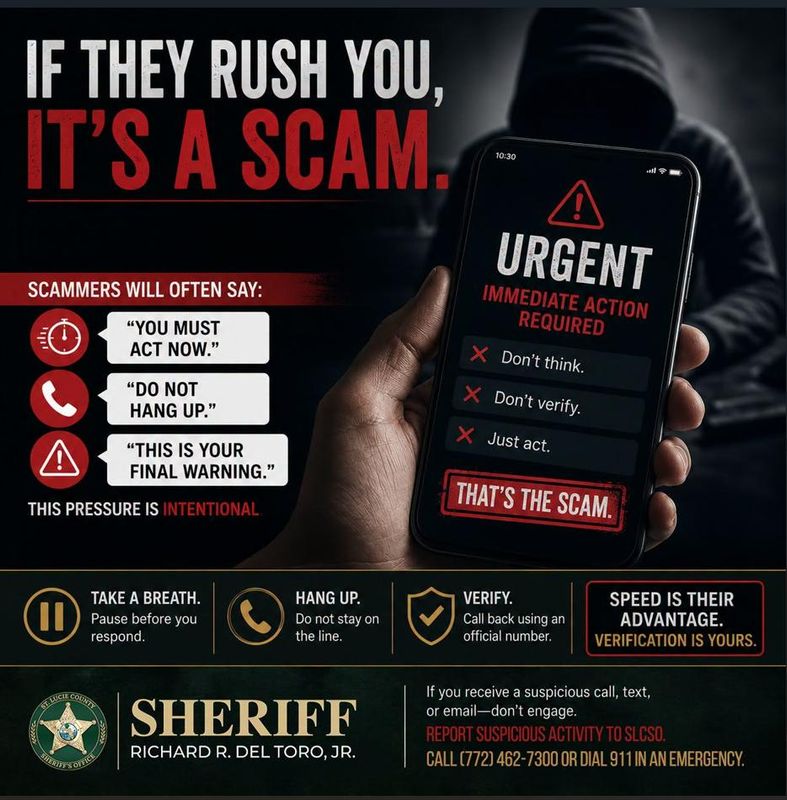
“Urgency is one of the most common psychological tools used in scams. Scammers are going to say that you must act now. Don’t hang up. This is your final warning,” Bolonka said. “This pressure is intentional, and it’s designed to prevent you from taking the one step that exposes a scam, and that’s verification. Real organizations do not require instant decisions over the phone, text, or email.”
Instead, take a breath, hang up, and call back using a verified number, Bolonka stressed.
“Speed is their advantage,” he added, “and verification is yours.”
A woman nearly scammed out of $410,000 started with a pop-up ad on her laptop, according to Bolonka.
“Something pops up on your computer and says you have a virus, or you get an alert that says your account has been compromised, so there you go now, fear and urgency just off of those messages alone,” he said. “You’re like ‘I’ve got to do something about this right away, because if I don’t, they’re going to take all my money’.”
Victims of these scams can quickly lose money because scammers want to dupe an individual into believing the only way to keep their money safe is to move it to accounts the criminals control.
“A bank is never going to call you and tell you to do that, but people do it, and now the fraudsters have control of your money,” Bolonka said. “What makes it so detrimental, when you facilitate these transactions with your bank, you’re at risk of pretty much not getting your money back.”
Cryptocurrency scams
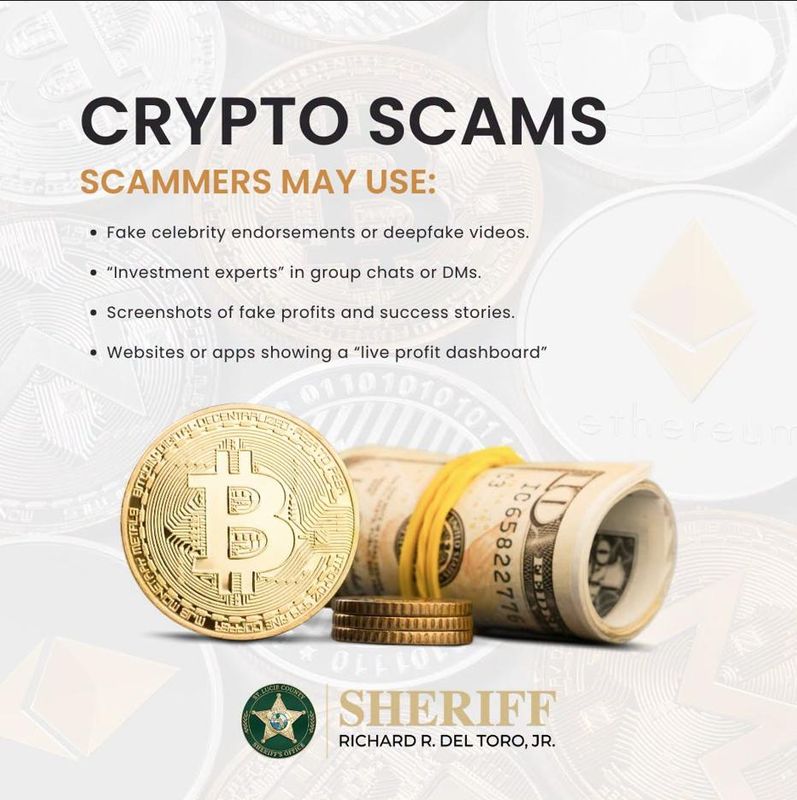
Other investment scams involving cryptocurrency often start with fake investment platforms, social media ads, or people posing as financial advisors or crypto experts, Bolonka noted.
They may show fake profits on dashboards to gain your trust, then pressure you to invest more money.
If you are contacted online or through social media promising high returns on cryptocurrency investments, guaranteed profits, or “risk-free” trading opportunities, it is likely a scam, he warned.
Legitimate investments, he said, do not promise guaranteed returns, and no reputable company will pressure you to send money quickly or repeatedly.
Overall, the most important step is to stop and verify.
St. Lucie County: Former owner of Florida plastic surgery business imprisoned
Martin County: Elderly couple lose $141,000 and home to a sweepstakes scam
“If you just react on urgency and fear,” Bolonka said, “the scammer has the upper hand right off the bat.”
If your organization would like to schedule a presentation, contact the Sheriff’s Office Community Engagement Unit at 772-462-7300.
Melissa E. Holsman is a freelance reporter for TCPalm and Treasure Coast Newspapers. Reach her at melissa.holsman@tcpalm.com.
This article originally appeared on Treasure Coast Newspapers: Florida Sheriff uses cyber scam awareness campaign to stop fraudsters
Reporting by Melissa E. Holsman, Treasure Coast Newspapers / Treasure Coast Newspapers
USA TODAY Network via Reuters Connect
By Melissa E. Holsman, Treasure Coast Newspapers | USA TODAY Network