Voter-approved nonprofit children’s services organizations around Florida that provide essential services to children and families — after-school care, sexual abuse treatment, special needs education and more — are in the crosshairs of Gov. Ron DeSantis’ proposal to eliminate property taxes.
More than 11 of these councils, trusts and boards in Florida rely on ad valorem property taxes. Removing that funding would devastate the safety net for children and families — and potentially wipe out local nonprofits that rely on the councils and trusts to provide vital services, said Cindy Arenberg Seltzer, the president and CEO of Children’s Services Council of Broward County.

“The impact on some of these non-profits would not be ‘Oh, my God, we lost some dollars and this program goes away.’ It could actually put a lot of these nonprofit organizations out of business,” she said.
With a projected 2025-2026 budget of $172 million, Arenberg Seltzer’s organization provides funding to up to 200 nonprofits.
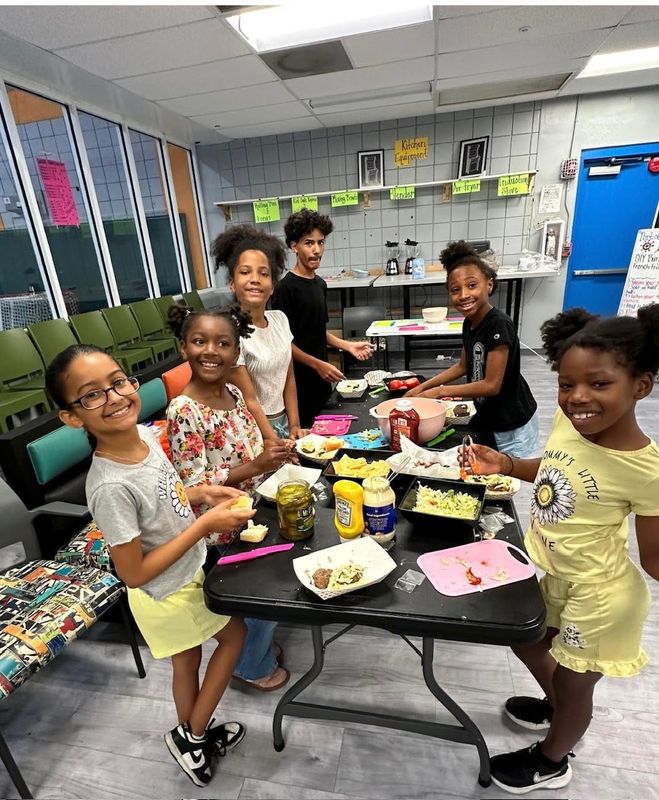
Sheryl Woods, the CEO of YMCA South Florida, said her organization receives $20 million to operate 65 after-school sites and run summer-camp programming.
“I think it would be catastrophic for the children,” Woods said of the property tax proposal. “I know the vulnerability of our kids, and that makes me extremely nervous.”
Property tax reform remains in limbo with special session expected
The Florida House during the regular session passed a bill to eliminate all non-school ad valorem taxes for homestead properties, but the Senate didn’t take up the measure. DeSantis is expected to call a special session this summer to put a proposal on November’s ballot.
“Your home shouldn’t be used as an ATM for local government,” Gov. Ron DeSantis said at a news conference earlier this month in Fort Myers.
U.S. Sen. Rick Scott, though, said on Tuesday he wants to see a reform proposal that doesn’t hurt communities. “We need to make sure our kids get a great education, make sure we have money for our roads, make sure we have money for the environment,” he told a Fort Myers public radio station this week.
Municipalities rely on property taxes to provide police and firefighters, fund libraries, maintain golf courses and pay for special events. The Florida League of Cities has led opposition to the House proposal, but little has been said about how it would affect the voter-approved taxing districts to support children’s services non-profit organizations, which go by councils, boards and trusts.
“They haven’t really talked so much about the consequences, except for education or police and fire,” Arenberg Selzer said. “They’ve kind of ignored the other things that are funded through property taxes.”
State Rep. Robin Bartleman, D-Weston, said the House’s Republican majority came up with “eight different scenarios” to address property taxes for homestead properties during the regular session, and none had an implementation plan. “That is incredibly irresponsible,” she said.
Bartleman was on the board of the Children’s Services Council of Broward County for a decade. “They’re the lifeline for our community,” she said. “When there are issues involving children and families, they are the safety net.”
Lisa Williams-Taylor, the CEO for Children’s Services Council of Palm Beach County’s CEO, isn’t ready to say the sky is falling just yet. For this fiscal year, the Council received more than $160 million from ad valorem taxes.
“No decisions have been finalized at the state level regarding property taxes. While any changes to property taxes would impact us locally, it is too early to determine the extent of that impact until more information is available,” she said.
First children’s services trust established in Pinellas County after WW II
The framework for these non-profit umbrella organizations can be traced to shortly after World War II, when Pinellas County created a special taxing district funded by local property taxes to address children and family issues. The Florida Legislature in 1986 enabled any county in the state to create its own independent children’s council as long as it secured public approval through a referendum.
Michele Watson is the CEO of Florida Alliance of Children’s Councils and Trusts, which serves as the statewide umbrella organization for the Children’s Services Councils and Trusts. “We are one of the only states in the nation where the legislature has created the authority, the opportunity to create these special taxing districts to provide for the unique needs of children.”
The five other states that have similar districts often fund them through sales taxes, dedicated income taxes or sin taxes on alcohol, tobacco, gambling, etc.
Watson said that Florida’s children services trusts and councils save the taxpayers money in the long run. “It’s significantly less expensive to provide services on the prevention side than it is for the intervention side,” she said.
Florida’s taxpayer-supported children’s services organizations exist in the following counties: Alachua, Broward, Escambia, Hillsborough, Leon, Martin, Miami-Dade, Okeechobee, Palm Beach County, Pinellas, and St. Lucie. Escambia—funded by about $10 million in property taxes annually—was the latest, established by voters with 61% of the vote in 2020, though a local commissioner tried to get it disbanded without success.
In Broward, for instance, the Children Services Council gets 45 cents per $1,000 of property value. That translates to a homeowner with property worth $320,000 paying about $145 a year, or less than $3 a week.
The Legislature, Bartleman said, is usurping the will of local voters who have approved these organizations. “Voters said, ‘We want to pay for this,” she said.
No money for children’s services and trust will result in thousands of lost jobs
Amanda Altman, CEO of Kristi House, says her organization gets $500,000 annually from The Children’s Trust in Miami-Dade County to provide specialized treatment for children impacted by sexual abuse and to support youth experiencing trafficking. She said losing that funding would mean “we would have to cut programming. It would mean longer wait times for children to get therapy services, case management services and care coordination services. Perhaps, we have to take fewer clients.”
Karina Pavone is president and CEO of Amigos for Kids in Miami, whose core mission is “to prevent child abuse and neglect.” It gets 45% of its budget from The Children’s Trust. “This is not an abstract thing,” she said. “This has a real impact because these dollars directly support services that families rely upon.”
Woods of the YMCA South Florida said the consequences of defunding children’s services councils and trusts would quickly pile up as parents lose after-school care and hundreds of employees of nonprofits end up laid off.
“I worry about the kids being left home alone. I worry about parents losing their jobs because they’re going to go home and take care of the kids,” Woods said. “We have employees who provide this care. They’ve had lifetime careers at the Y(MCA) by working in the after-school program.”
John Pacenti is the Government Impact Reporter for The USA TODAY NETWORK-FLORIDA.
You can get all of Florida’s best content directly in your inbox each weekday day by signing up for the free newsletter, Florida TODAY at palmbeachpost.com/newsletters.
This article originally appeared on Tallahassee Democrat: Florida property tax overhaul could dismantle children’s safety net
Reporting by John Pacenti, USA TODAY Network-Florida / Tallahassee Democrat
USA TODAY Network via Reuters Connect