At Florida’s largest free health clinic, the start of what’s expected to be U.S. history’s largest contraction of health insurance coverage over the next seven years is already showing up.
Federal estimates are that, with the expiration of federal health insurance subsidies that started Jan. 1 and other changes, 16 million Americans will lose their health insurance by 2034. Even without the full effect of those changes unfolding, the number of new patients arriving at the free clinic of Caridad Center in Boynton Beach is on track to double from last year, according to Linda Kallus, the chief executive officer of the Caridad Center.

In March, the clinic saw 232 new patients, compared to the 119 who came in October.
“These are the folks that are working hard, the ones that kind of keep us going—they’re the construction workers, the retailers, the restaurant workers, they’re in the hospitality, tourism industry,” Kallus said.
She sees South Florida’s Hispanic population taking the biggest hit because of the expiration of enhanced federal health care subsidies in South Florida.
The free clinic that she runs is also taking a big hit: Caridad Center enter lost $1.5 million in funding from last year, a dilemma shared by many health centers who saw their Medicaid funding cut.
“We are struggling to meet these needs with less staff and resources,” she said.
It’s a dilemma that’s likely to spread.
The majority of Florida’s 4.7 million enrollees in the Affordable Care Act (ACA) who were counted in 2025 qualified for the enhanced subsidies that expired on Dec. 31, 2025. That count made Florida the state with the highest percentage of ACA enrollees in the country, likely due to the state’s economy of agricultural and tourism sector jobs and its attraction to younger retirees, not old enough to qualify for Medicare.
How many have fallen off the rolls already is not yet clear. That’s because he government-supported health care, also known as Obamacare, had policies that auto-renewed with skyrocketing costs.
Some are already looking for other options than what they have, however.
“We’re seeing people coming in and maybe they can afford their premiums, but they can’t afford their deductibles that are costs for their surgeries or medications,” Kallus said.
In Palm Beach County, sign-ups for the Obamacare Bronze Plan—lower premiums and higher deductibles than the next tier of coverage—bear her observation out: Sign-ups for the lowest tier of coverage increased by 27% to 113,000 enrollees on that plan, according to data from the Centers for Medicare and Medicaid Services.
Long-term projections show more will be dropping their health care coverage altogether.
Just before the One Big Beautiful Bill Act was signed on July 4, the Congressional Budget Office (CBO) projections showed that 16 million Americans would lose their health insurance because of how the law allowed pandemic-era, enhanced ACA subsidies to expire and Medicaid policies to change, including a new work requirement for recipients.
Now, a new report shows that Florida Hispanics are going to be hit the hardest. They will account for more than half of the Floridians expected to lose their health insurance by 2034, according to UnidosUS, a Latino civil rights and advocacy organization. By the organization’s count, that would be about 858,000 Hispanics.
Those numbers showing Hispanics will feel the brunt of the health insurance losses come as no surprise to Jared Nordlund, Florida state director and senior strategist for UnidosUS.
“Florida is ground zero for Obamacare,” Nordlund said.
The ACA’s appeal to Hispanics is a natural one given their participation in small businesses and jobs that don’t offer health insurance, Nordlund said.
What will happen to the Affordable Care Act?
Congress could still act to save the subsidies and prevent some of the hemorrhage of insurance coverage the CBO predicts, if it acts before the end of this congressional term on Jan. 3, 2027. The CBO’s analysis showed 5.1 million Americans losing health care coverage due to ACA changes and 10.9 million losing it because of Medicaid changes, which also involve ACA enrollees in 41 states, but not Florida.
Assuming the subsidies are not restored, an analysis of a Congressional Budget Office report breaking down district by district the numbers losing their insurance show that three of Florida’s four majority-Hispanic congressional districts are among the seven districts with 90,000 or more constituents between infancy and the age of 64 losing their insurance by 2034.
Nordlund said his organization’s numbers resulted from an analysis of congressional district-by-district health insurance losses, as reported in the Center for American Progress, which bills itself as “an independent, nonpartisan policy institute that is dedicated to improving the lives of all Americans through bold, progressive ideas.”
Florida areas hit hardest by changes in federal health insurance funding
Congressional districts divide the population evenly and the Florida congressional districts losing the most health coverage over the next seven years, according to the center’s analysis, done before the redistricting effort announced this month, are:
∎ The district that covered rural areas, encompassing DeSoto, Hardee, Highlands, Glades and Okeechobee counties, represented by Republican U.S. Rep. Scott Franklin. About 96,000 people there are projected to lose health insurance coverage in the next seven years. That district has since been significantly reconfigured, however.
∎ The district that covers north Miami-Dade County and southwest Broward County, now represented by Democratic U.S. Rep. Frederica Wilson. About 96,000 people are projected to lose coverage there.
∎ The district that stretched from inland Palm Beach County into Broward County. It would have 94,000 of its constituents lose coverage. It had been represented by Democratic U.S. Rep. Sheila Cherfilus-McCormick. The district reconfigured out of existence in May and Cherfilus-McCormick resigned her seat in Congress amid violations of financial fraud.
∎ The northwest Miami-Dade County district, represented by Republican U.S. Rep. Mario Diaz-Balart. About 93,000 people are projected to lose their insurance.
∎ The southwestern Miami-Dade County and Monroe County district represented by Republican U.S. Rep. Carlos Gimenez. About 92,000 people are projected to lose their insurance.
∎ The district, primarily comprised of Jacksonville, represented by Republican U.S. Rep. Aaron Bean. About 91,000 people in that district are expected to lose their health insurance.
Why some areas have more enrolled in federally-supported insurance than others
The preponderance of health care coverage losses projected for those areas makes sense to Nordlund, of UnidosUS.
The government-supported insurance was the best option if you don’t get your coverage from work, as is the case for many in areas dominated by agriculture, small businesses and tourism, he said.
Without insurance, community health centers, like the Caridad Center, and emergency rooms, are going to get overwhelmed, he predicted.
“People will go to the ER and start using that for their primary care, basically,” he said.
Dropping Obamacare or holding on
Since the pandemic-era subsidies expired, ACA premiums rose an average of 38%, according to the latest analysis from KFF, a national health policy research organization. The increase was not as great as the doubling that was predicted because enough enrollees opted for higher-deductible plans to lower their premiums.
KFF’s analysis also shows the average ACA Marketplace deductibles increased by 37% (or $1,027 per person) to a record high in the history of ACA, to $3,786 in 2026.
Like so many, Steve Reyes, a Hollywood airplane parts distributor, gave up on his ACA plan in March when he saw that Congress was not going to restore the enhanced subsidies.
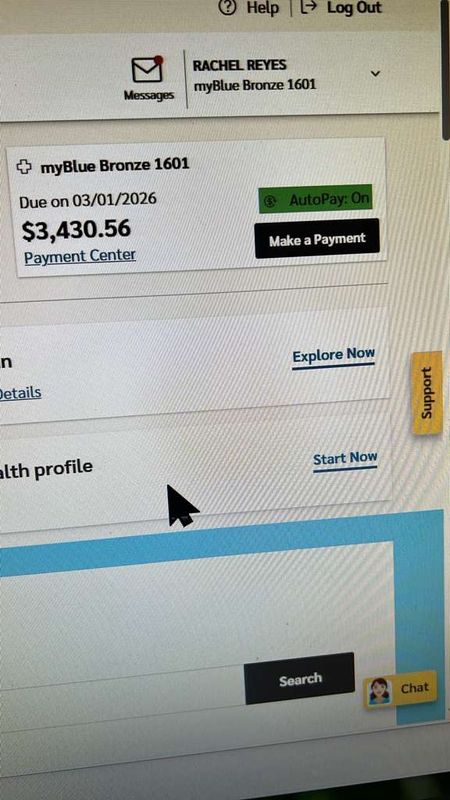
His premium, for a family of four, had ballooned from $982 a month in December to $3,430 in the first month of 2026. That cost, that came along with a $10,000 deductible, was unsustainable for his family finances, he said.
So he was facing some choices.
Reyes shopped around and suspects he was rejected by one because of a pre-existing condition, he said. Finally, though, he found one that’s costing him $2,800 a month through Florida Blue that is not offered through the ACA.
“It’s still too expensive,” he said.
His co-pay for a doctor’s visit or the emergency room has increased under the new plan.
“When is this country gonna (expletive) or get off the pot, relating to lowering the cost of health care?” he asked, rhetorically.
For Sonia Diaz, 49, a Miami public relations professional, the change of the calendar boosted her health insurance costs by more than $7,000 annually, going from $232 a month to more than $700.
It shouldn’t be like this, she said.
“It really angers me,” Diaz said.
USA Today-Florida Network writer Sarah Perkel contributed to this report.
Anne Geggis is statewide reporter for the USA TODAY NETWORK FLORIDA, reporting on health and senior issues. If you have news tips, please send them to ageggis@usatodayco.com. You can get all of Florida’s best content directly in your inbox each weekday by signing up for the free newsletter, Florida TODAY, at https://palmbeachpost.com/newsletters
This article originally appeared on Palm Beach Post: ‘Florida is ground zero for Obamacare.’ Cuts will hit us hardest.
Reporting by Anne Geggis, USA TODAY NETWORK – Florida / Palm Beach Post
USA TODAY Network via Reuters Connect