Florida lawmakers approved a sweeping property tax proposal crafted by Gov. Ron DeSantis’ office, which could drastically reduce property taxes for residents but also slash revenues for local governments and usher in a wave of budget cuts on various public services.
The next step — unless opponents challenge the measure in court — would be for Florida voters in November to decide whether to adopt the property tax proposal. It would need 60% support to amend the state’s constitution.

The Florida Legislature moved forward with the plan but bucked the governor’s vision for how property tax reform could play out in the state. Lawmakers carved out a clarification which would protect property tax revenues funding school districts and constitutional officers, which include supervisors of elections, sheriff’s offices and clerks of court.
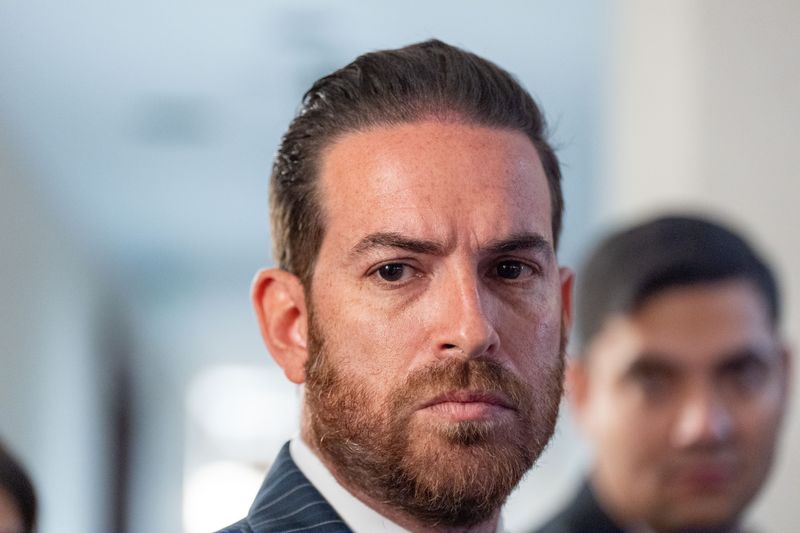
Sen. Bryan Avila, R-Miami Springs, led the charge in the Senate to approve the governor’s plan. Avila said that although opponents argue the cuts are an attack on local governments, leadership sometimes requires tough decisions. He said local leaders need to have tough conversations about their spending priorities.
“We can certainly have a conversation all day about what this may look like,” Avila said. “I think our voters, if we give them that opportunity, will tell us what that is in November.”
Many Republicans acknowledged the plan was flawed and far from perfect, but argued voters should ultimately have the chance to weigh in.
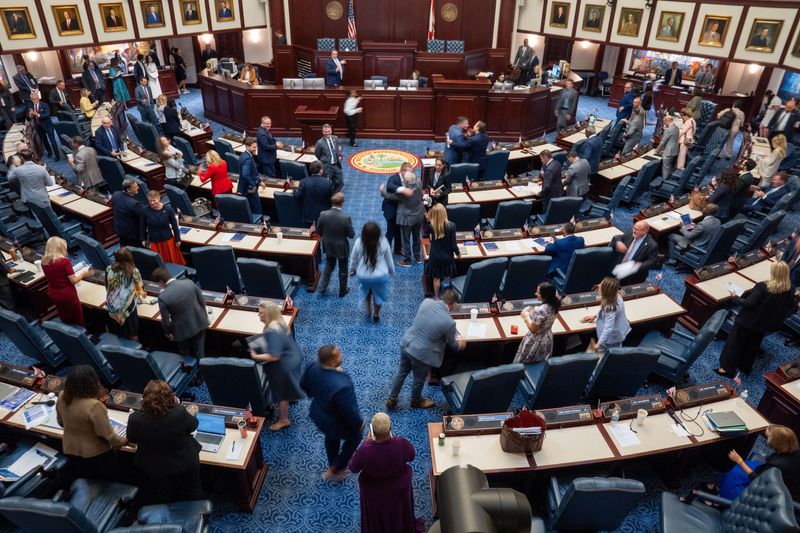
The amendment needed 60% approval from members in the House and Senate. The House approved it with a 75-26 vote, where Republican Reps. Nathan Boyles and Patt Maney voted no and Democratic Rep. Dotie Joseph voted in favor. The Senate approved the amendment with a 30-9 vote, where Democratic Sens. Barbara Sharief and Darryl Rouson voted in favor of it alongside Republicans.
The governor’s office did not immediately return a request for comment. But for the past year, DeSantis has pointed to what he says is bloated budgets at the city and county level while touting the benefits of property tax reform. His office said a majority of Florida homeowners could have their property taxes wiped out in their primary residence.
The proposal would raise Florida’s $50,000 homestead exemptions to $150,000 in Jan. 1, 2027 and then $250,000 by Jan. 1, 2028.
Tax reform or tax shift? Cities and counties could lose billions
But cities and counties are now expected to brace for the impact of losing billions in revenues. Property taxes are a key economic engine in the state which fund local governments, and these local municipalities warn that gutting their funding could harm many services — libraries, parks, community centers and veteran services.
Many opponents also warn that unclear language could still impact funding for school districts and for critical public safety services provided by firefighters, law enforcement or ambulances.
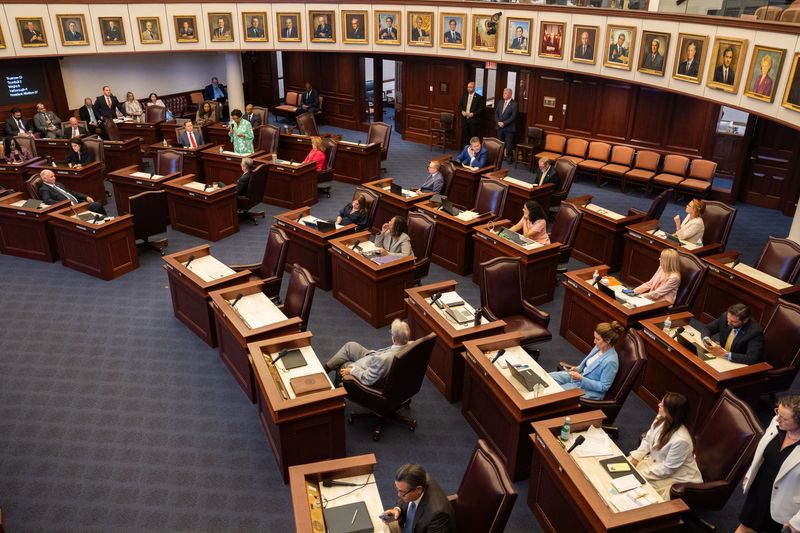
“It’s being sold as a property tax cut, but it’s really a tax shift that will collect the revenue from somewhere else or someone else, while putting local police and fire services at risk,” said Sen. Carlos Guillermo Smith, D-Orlando, on the Senate floor during debate.
Opponents have 30 days after both the House and Senate approve the ballot measure to challenge it in circuit court, which could be a roadblock to DeSantis’ plan. A circuit judge would be tasked with weighing in on the ballot summary, and if the judge sides with opponents, then the attorney general would have 10 days to revise it ahead of the midterm elections.
Other language approved by lawmakers allows the ballot summary to exceed 75 words for proposed amendments put forth by the Florida Legislature. Current Florida law restricts ballot summaries for constitutional amendments to 75 words, which critics say oversimplifies amendments but supporters say makes it easier to understand.
Fiscally-constrained counties brace for impact
A House bill analysis is predicting that local government could lose about $8.4 billion in revenues by 2028. That could prompt cities and counties to downsize staff or cut funding in some public services, which can include parks or libraries.
In response, state Republican lawmakers are telling cities and counties that if they experience major revenue losses, their next step would be to review the budget and set priorities around public safety, infrastructure, schools and debt service.
One reason the measure proposes to only allow property tax funds to be used for certain categories is to combat wasteful spending, Avila said before a Senate panel.
“There needs to be a real look at each and every budget,” Avila said to reporters. “All I’m saying is that those local jurisdictions just really have to look at what their budget is, where there priorities are, and if there’s any way that they can streamline their operations in some way, shape or form.”
Holly Smith, the president of the Florida League of Cities, said that she agrees that the goal is to make Florida more affordable for all, but that the proposal may create more burdensome problems for residents.
Smith said that Florida relies on local property tax revenue to be a crucial tool during hurricanes, in which the state is particularly vulnerable.
“Property tax revenue funds far more than public safety. It funds our roads, our parks, code enforcement …” Smith said. “These are not luxuries. They define the qualify of life in the communities that we choose to call home.”
Davin Suggs of the Florida Association of Counties said that a massive overhaul would impact every county in the state, which each have stark differences. Some counties may not be able to recover from these cuts like others.
“There will be losses of resources, but every county’s ability to attack that, whether it’s to recover, whether it’s a shift, whether it’s to cut, will probably be a little bit different,” Suggs said.
What didn’t make it from DeSantis’ plan?
Although the DeSantis-crafted plan made it onto the ballot, he didn’t get everything in his property tax wish list.
In addition to protecting public schools and constitutional officers, legislators also axed a state trust fund that would help local governments facing revenue losses, although that’s one of the primary concerns brought forth by opponents who worry that cities and counties — particularly fiscally constrained counties — would be in peril.
Additionally, lawmakers removed a mandate for counties to send taxpayers a notice of the proposed property tax amendment on the ballot, which would have cost $5.5 million, according to a Senate bill analysis.
This reporting content is supported by a partnership with Freedom Forum and Journalism Funding Partners. USA Today Network-Florida First Amendment reporter Stephany Matat is based in Tallahassee, Fla. She can be reached at SMatat@usatodayco.com. On X: @stephanymatat.
This article originally appeared on Tallahassee Democrat: Florida advances major tax cut plan with billions at risk for cities
Reporting by Stephany Matat, USA TODAY NETWORK – Florida / Tallahassee Democrat
USA TODAY Network via Reuters Connect