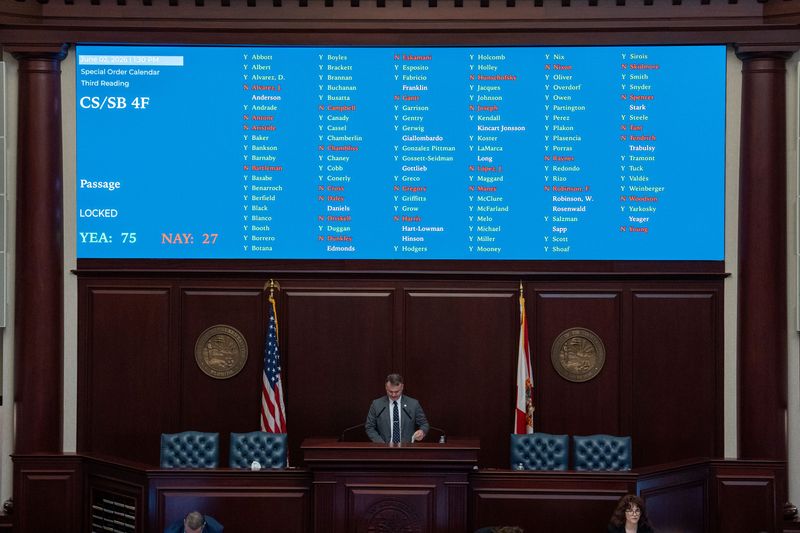
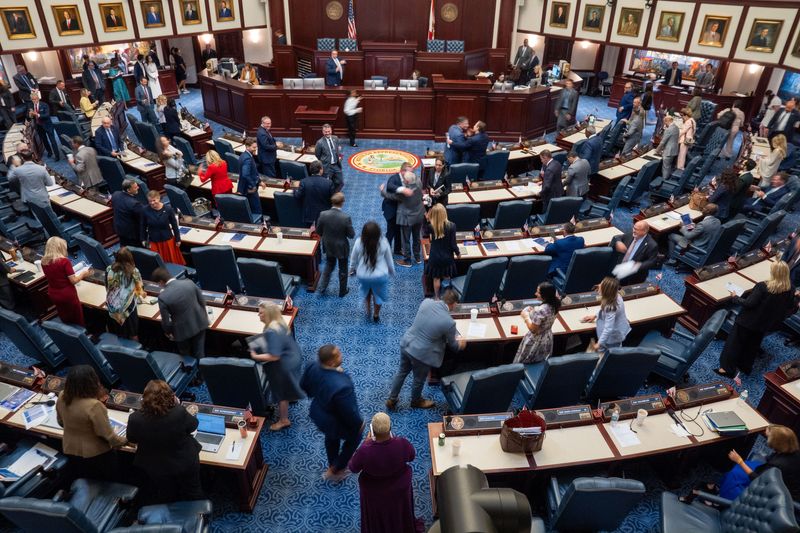
Florida lawmakers on June 2 passed a sweeping overhaul of the state’s property tax system, teeing it up for the statewide ballot in November, when voters will decide whether to ensconce it in the state constitution.
Gov. Ron DeSantis debuted the plan May 27 in Tampa and called the Legislature back once again into special session to deliberate and vote on the initiative. At least 60% of voters will have to approve it.

If OK’d by voters, it would increase Florida’s $50,000 homestead exemption to $150,000 beginning Jan. 1, 2027, and then $250,000 by Jan. 1, 2028. That exemption amounts to a property tax break by reducing the taxable value of a primary home, lowering one’s annual property tax bill.
At a recent press conference explaining his “Save Our Homes” proposal, DeSantis said, “If you believe that people need relief, and you think that’s important, and I do, it’s hard to argue against it.”
He’s often framed his push this way: “Truly owning private property should not mean perpetually paying ‘rent’ ” to the government in the form of property tax.
The governor has also put it in populist terms: “When you raise that (exemption) threshold to ($250,000), that’s 60% of people who are tax-free, and these are not people that founded Google. These are working class, middle class people.”
How is the Legislature’s version different from the governor’s?
Lawmakers made several substantive changes to the DeSantis tax plan, including:
Why did local officials speak against property tax relief in Florida?
Property taxes are the economic engine of local governments in Florida. Sales tax collections drive state revenue, along with corporate income taxes, earnings on state investments and more. There is no personal income tax in Florida, and there can’t be one under the state constitution.
While the DeSantis plan aims to save homeowners money, elected officials of municipalities say they would be forced to make drastic cuts to their operating budgets for community services such as fire rescue, road maintenance, parks, local health services, and more. There has also been opposition from business owners, who fear the tax burden will be shifted onto them.
“I’d love to get rid of property taxes,” U.S. Sen. Rick Scott of Florida said on Fox News’ Mornings with Maria May 18. “Unfortunately, you gotta think about, OK, what are you going to replace it with? We are a very efficient state, so you’ve got to come up with, how are you going to fund education, the environment, things like that.”
Florida’s property taxes were ranked 28th in the country for 2025, according to Rocket Mortgage.
What are property taxes?
Homeowners pay property taxes based on assessed value, a percentage of what the property is deemed to be worth. The more a property is worth, the higher a property tax bill will be.
Property taxes pay for a large amount of city, county, and school district budgets. Locals set the rates, called millage, based on a property’s taxable value and what the community needs. That’s what residents pay, minus exemptions such as the homestead exemption, which is only granted to those properties used as a primary residence, not a vacation home or rental property.
DeSantis has blamed the rise in property taxes on waste in government spending. At the same time, the state population has grown by about 3 million people in just the last 10 years, which means rising housing prices (which increases taxable home values) and greater need for local government services (which can drive up millage rates).
What are homestead exemptions?
If you own property and make it your permanent residence for yourself or your dependent, you can apply for a homestead exemption that will drop your property’s assessed taxable value and lower the taxes you pay on it. If you qualify, homestead exemptions include:
Homes worth more than $75,000 typically get the full benefit of the homestead exemption. It also protects Floridians from being forced to sell the home to pay most debts, and adds protections for the surviving spouse or minor children in case of the homeowner’s death.
What do property taxes pay for in Florida?
Property taxes go toward essential local services that don’t pay for themselves or have offsetting revenues, such as:
What happens if Florida reduces or eliminates property taxes?
For existing homeowners, you’d get to keep more of your money. However, your community and your standard of living could suffer when local governments are forced to cut back.
The Florida Policy Institute, an Orlando-based organization, analyzed preliminary data from the Department of Revenue and estimated that dropping the property taxes on homesteaded properties would result in counties and school districts losing about $7.8 billion each and cities having to replace some $3 billion. The Tallahassee-based Florida TaxWatch made a similar projection based on 2024’s local taxes.
Slashed property taxes could mean higher rent, more expensive first homes
Local governments could also hike property taxes on commercial and rental properties to make up the difference, resulting in higher rent and higher overhead costs for private businesses.
And new first-home buyers could get hit with higher property values of 7-9% more, according to an analysis from Realtor.com,
“It would be a boon to existing property owners,” said Realtor.com senior economist Joel Berner. “But this measure would disproportionately benefit wealthy Floridians at the expense of those who don’t own homes, and would make it even harder to break into homeownership because of the increased prices.”
What won’t change right away
Florida’s property tax system is tied to annual assessment cycles, budget hearings, and Truth in Millage (TRIM) notices that wouldn’t go out until late summer of 2027.
Local officials facing steep budget cuts and the need to cover services like schools, road repairs, and police may also sue to prevent the amendment from going into effect, which would further delay changes.
Portions of this story were published previously. Jim Rosica and C. A. Bridges of the USA TODAY Network-Florida contributed. You can get all of Florida’s best content directly in your inbox each weekday day by signing up for the free newsletter, Florida TODAY.
This article originally appeared on Tallahassee Democrat: Florida property tax exemption plan passes, now voters will decide
Reporting by USA TODAY NETWORK – Florida / Tallahassee Democrat
USA TODAY Network via Reuters Connect