The Federal Aviation Administration’s tactic of responding to local objections over Mar-a-Lago flight restrictions in court — and not in person — is disrespectful to many in the community that President Donald Trump calls home.
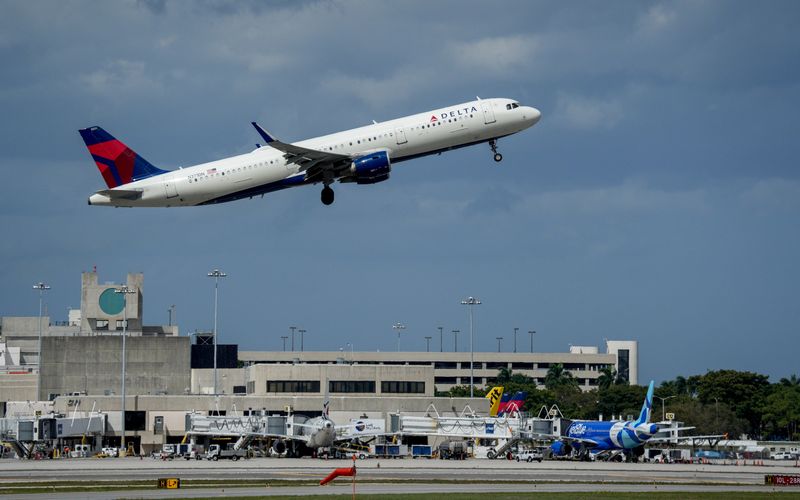
For months, local officials have urged the FAA to meet with officials at President Donald J. Trump International Airport to discuss alternate flight routes that might bring some relief to people in the region whose lives have been disrupted by airplane noise from redirected flights.

At issue are the ramifications of an FAA decision that barred flights within 1 mile of Mr. Trump’s residence. That no-fly zone is in effect until at least October 2026, even when the president is away from Palm Beach.
READ MORE: FAA defends flight restrictions over Trump’s Mar-a-Lago in Palm Beach
The agency’s refusal to meet with local officials was a factor that led Palm Beach, West Palm Beach and Palm Beach County to file a petition for review in federal court in December. The governments alleged that the FAA unlawfully put the restrictions in place, without review. The petition also noted the restrictions sent jets roaring over areas northeast of the airport that historically were not under flight paths.
In a recent filing, the FAA told the court that it lawfully implemented the around-the-clock flight restrictions over Mar-a-Lago and that the local objections amounted to NIMBY noise concerns, short for “not in my backyard” complaints.
That kind of language shows the FAA isn’t concerned about local residents inundated with airport noise and pollution. It also shows a lack of concern for area communities. Local officials and residents particularly want to know why the restrictions remain in place when Mr. Trump is not on the island.
In their filing, federal officials cited the evolving threats against the president, who has been the target of assassination attempts. The FAA noted that, from October to July, 57 planes breached the flight restrictions. They also cited 111 instances of drone violations.
“The airborne threat vector at Mar-a-Lago is persistent and substantial,” Secret Service Deputy Director Matthew C. Quinn wrote in an affidavit that was included with the FAA’s most recent filing. “As the location of a primary residence of the President, from which he frequently conducts the business of the government’s highest office, that threat vector must be mitigated to the extent possible whether he is in residence or not.”
READ MORE: New details emerge on threats prompting no-fly-zone over Mar-a-Lago
Of course, residents of Palm Beach and the surrounding area — many of whom support Mr. Trump — want the president protected.
But the FAA doesn’t endear itself to those supporters when it cites data showing that the no-fly-zone has made it quieter under the restricted airspace, thanks to the altered primary flight paths. That means Mar-a-Lago is quieter — just as Mr. Trump has long wanted for himself and his club members — but at the expense of more populated areas that previously were not under those flight paths.
The focus of the FAA and the Secret Service on the president’s security is understandable. But federal authorities could, and should, make every effort to discuss those concerns with local officials and residents — particularly as it appears they want to make the flight restrictions permanent.
This article originally appeared on Palm Beach Daily News: FAA’s response to flight path concerns is disrespectful | Editorial
Reporting by Palm Beach Daily News Editorial Board, Palm Beach Daily News / Palm Beach Daily News
USA TODAY Network via Reuters Connect
By Palm Beach Daily News Editorial Board, Palm Beach Daily News | USA TODAY Network