A proposal by Cameratta Companies would carve a new road through Corkscrew Swamp Sanctuary to serve Kingston, a massive master-planned development in Lee County.
The Kingston community is approved for up to 10,000 homes, which could mean roughly 24,500 people needing to evacuate if a storm heads their way.

In March, the developer had a pre-application meeting with the South Florida Water Management District to discuss “additional evacuation route options between Lee County and Collier County.”
It showed maps of two roads, both of which cut through the sanctuary.
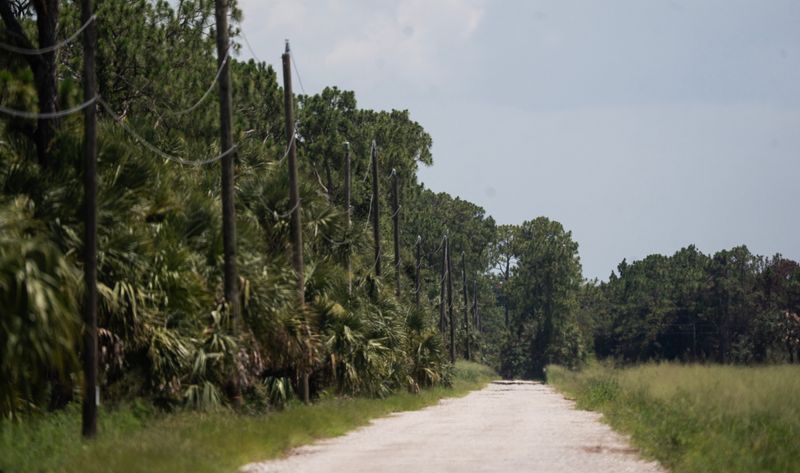
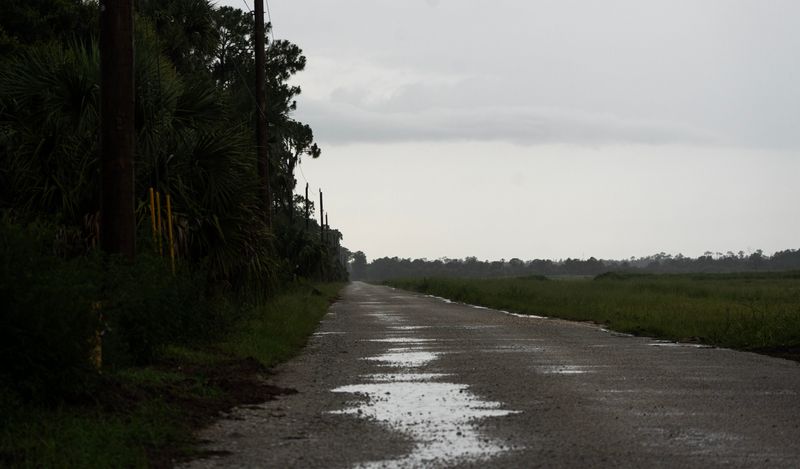
Both routes start at Corkscrew Road at Kingston and end on Sanctuary Road near Immokalee Road in northeast Collier County near Golden Gate Estates. The refuge is about 15 miles east of I-75 and 30 from U.S. 41.
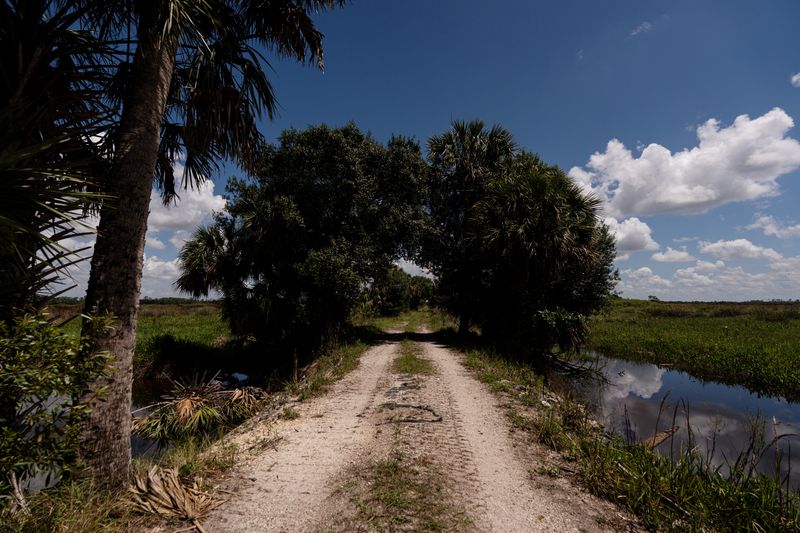
The proposal hinges on a decades-old easement that once allowed cattle to be driven across what is now the sanctuary. Audubon contends the easement isn’t valid anymore because the original landowners are gone and the circumstances that prompted the easement no longer exist.
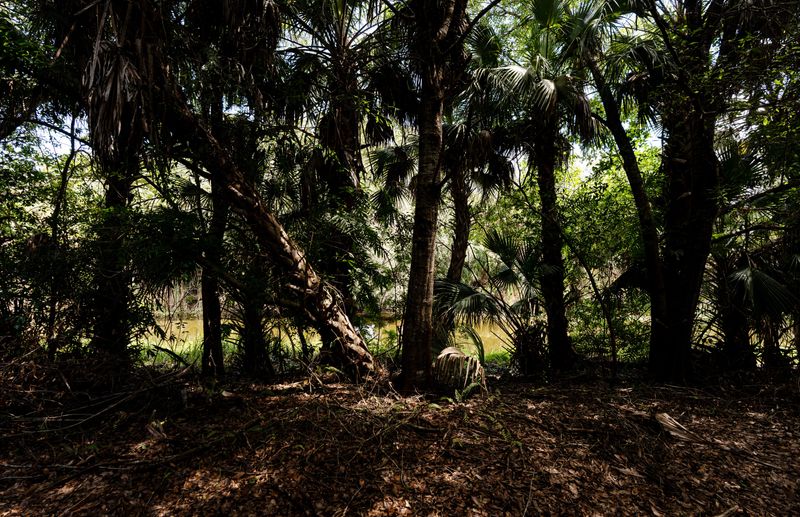
Internationally acclaimed for its ghost orchids, wood storks, and Florida panthers, the refuge is 20 square miles of old-growth cypress, freshwater marsh and pine flatwoods which Audubon has protected for more than 70 years.
“We saved the rookery from poachers in the early 1900s and later saved the old-growth cypress from the saw when the region was being clear-cut,” says Julie Wraithmell, executive director of Audubon Florida. “This is the crown jewel in the National Audubon sanctuary system.”
Its 2-and-a-quarter mile boardwalk winding through some of the oldest cypress trees in North America sees more than 80,000 visitors a year, but that’s only part of its value, says Wraithmell.
From the swamp to Wiggins Pass: Corkscrew’s water flows to the beach
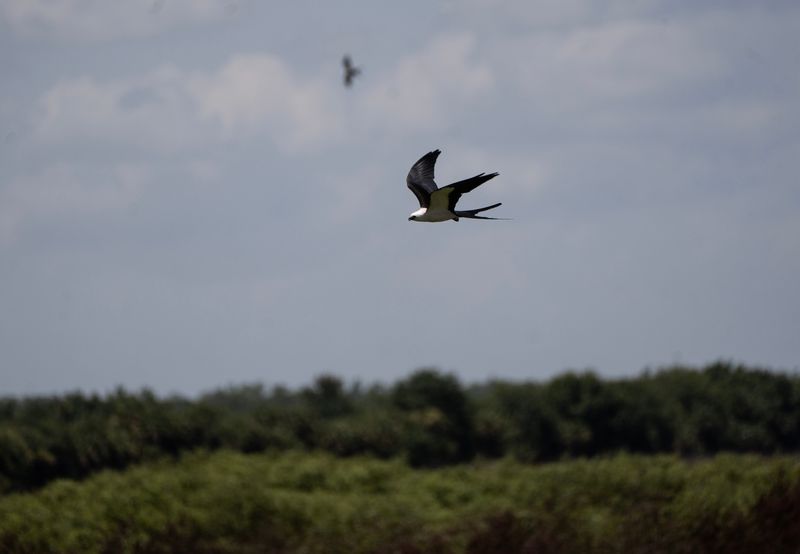
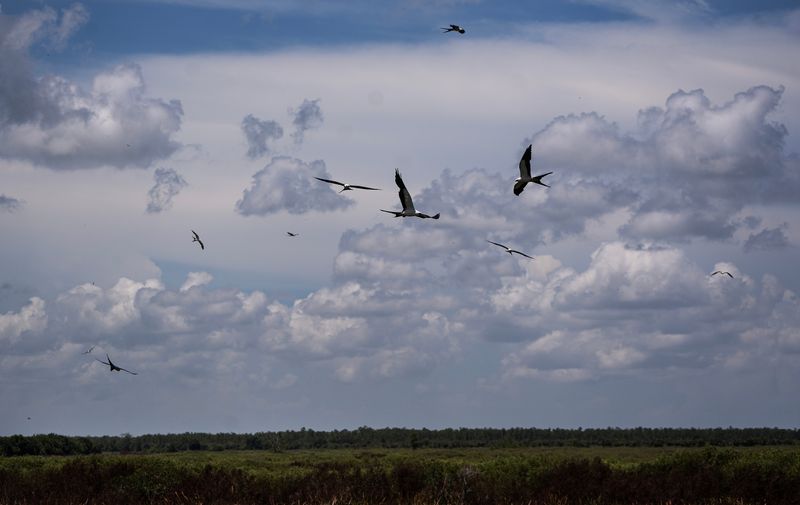
“The larger sanctuary is critical not just to the watershed – the water that flows through Corkscrew is flowing out of Wiggins Pass just a couple weeks later – but also it’s really important to wildlife,” Wraithmell says. “It’s home to black bears and wood storks and snail kites and roseate spoonbills and also to iconic Florida panthers.” Federal and state wildlife agencies have called Corkscrew “the panther-iest place in Florida,” she says. “And they’re proposing to put a road through it. And we all know how panthers do with roads.”
Last year, after the U.S. Army Corps of Engineers gave Kingston its final approval, Audubon took the agency to court. Audubon argues the 6,700-acre development could affect the sanctuary’s water quality and flow. Just as worrisome, they say, it could limit managers’ ability to use prescribed fire on conservation lands, important for keeping wildlands healthy and curbing wildfire risk.
Suing is not what Audubon wanted to do, sanctuary Director Keith Laakkonen told The News-Press/Naples Daily News at the time. “We’re not litigious as a first option (but) we have faith in our attorneys … and the U.S. Army Corps violated federal environmental protections by failing to perform adequate analysis.”
Should an old cattle trail become an evacuation road?
The rationale Kingston is using traces back generations to when the refuge was carved from cattle country.
Historically, Corkscrew Sanctuary and the surrounding land was owned by ranchers and homesteaders, says Wraithmell.
In 1968, the refuge granted an easement to one of those neighbors, who had property on both sides of the refuge, Wraithmell says. “They had to move their herd (so) as good neighbors, we agreed they could move their cattle from one side of the sanctuary to the other.”
The northern leg of the trail is now occupied by Kingston.
The agreement didn’t stipulate cattle, but that was clearly its purpose, she says. Over the next half-century, properties changed hands but it’s been decades since anyone moved cows across Corkscrew.
“From our perspective it’s really not valid because the owners – the folks that we had that agreement with … no longer exist (and) no longer hold those ownerships.”
Ray Blacksmith, president of Kingston developer Cameratta Companies, was out of town when the News-Press sought his comments about the road proposal.
Asked about Audubon’s objections, he said, “Kind of odd (because) I am entitled to a 100-foot-wide easement going right through the Audubon property,” then referred the News-Press to Kingston CEO Joe Cameratta, for further comment.
Cameratta did not immediately return calls or texts. The home page of his company’s website features a prominent quote from Ayn Rand, the political philosoper who coined “the virtue of selfishness”: “Throughout the century there were men who took first steps down new roads armed with nothing but their own vision.”
Six or so miles of road; about 70 acres of wetland impact
Both potential routes would go through the refuge. Option 1 is 6.4 miles; Option 2 is 5.7 miles. Assuming a 100-foot right-of-way, they could mean 77 or 69 acres of impact respectively.
The month after the pre-application meeting, Lee County assistant manager Dave Harner wrote a letter to Blacksmith: “Due to recent hurricanes impacting South Florida, Lee County is very aware that evacuation routes are critical for safely moving residents out of danger zones, particularly during hurricanes .… Lee County has limited alternatives for evacuation routes moving from the south. A route east of I-75 has the potential for easing congestion on I-75 during evacuation times.”
Harner pointed out Lee County‘s comprehensive plan requires it to provide safeguards against the effects of hurricanes and tropical storms and “the creation of another south to north evacuation route has that potential.”
He closes by saying the project would have to be presented to the commissioners for review and approval and thanks him for taking the time to discuss the proposed route and “your vision for this project and the safety of Lee County residents.”
Lee County did not immediately respond to a request to speak with Harner and for public records about the project.
That Kingston is pursuing this now, long after planning has happened, makes little sense to Wraithmell.
“It should not be news to anyone who’s building new communities out there that there is protected land that is a barrier to additional development. It’s a selling point for their communities – that they have all of this gorgeous wild space around them. The flip side is that it’s not a reasonable expectation that there will be new roads through it.”
Collier Commissioner Bill McDaniel, a sanctuary neighbor who regularly hikes the sanctuary, isn’t ready to weigh in. “I don’t have an opinion on it as of yet … I’d have to look at how they’re going to manage the extremely environmentally sensitive areas being proposed to be traversed, but it’s way too early,” he said. “At this stage it’s preemptive to talk about anything.”
Landscape architect and environmental advocate Ellin Goetz owns property adjacent to the sanctuary. The proposal was news to her, she says. “Nobody ever contacted me about it.”
Goetz calls the plan “insane … They have I-75. They have U.S. 41. They don’t need to cut another corridor through a distinctively important habitat.”
Amy Bennett Williams is a senior reporter. Reach her at awilliams@news-press.com.
Do you have an opinion about this topic? Write a letter to the editor and send it to letters@naplesnews.com and/or mailbag@news-press.com. Keep it to 250 words or fewer and include your contact info. Have more to say: Send a guest column of no more than 600 words.
This article originally appeared on Naples Daily News: Exclusive: Developer wants road through ‘crown jewel’ Corkscrew Swamp
Reporting by Amy Bennett Williams, Fort Myers News-Press & Naples Daily News / Naples Daily News
USA TODAY Network via Reuters Connect
By Amy Bennett Williams, Fort Myers News-Press & Naples Daily News | USA TODAY Network