A winter onslaught set upon Florida this past weekend with an historic whimsy and devasting brutality that dusted the frozen night with snow flurries as far south as Fort Myers, and sent a crop-killing freeze to farmers, who despaired as heaps of damaging ice grew like tumors on their plants.
At least 30 overnight low temperature records were shattered early Sunday, Feb. 1 from the marshy fringes of Apalachicola, which dipped to 20 degrees, to the touristy beaches of Miami, which hit 35 degrees — 27 degrees below normal.

Multiple gauges statewide measured record lows of 23 degrees, including Jacksonville, Sanford, Leesburg and Daytona Beach. Gainesville broke a record at 20 degrees. Winter Haven measured 23 degrees, also a record breaker. And West Palm Beach dropped to 30 degrees, which is the coldest temperature as measured at Palm Beach International Airport since Dec. 25, 1989, according to the National Weather Service.
“Nobody is prepared for this kind of weather,” said Lake Worth Beach Tee Shirt Co. manager Jill Federico, who noted that sweatshirts have been an extra popular item the past few days. “You see the reports about it but then you think, ‘It’s not going to happen to us.’ Then it happens to us.”
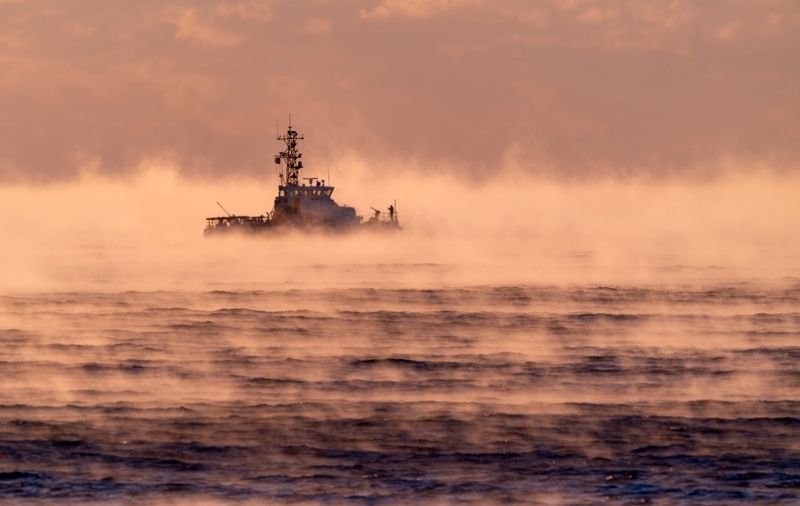
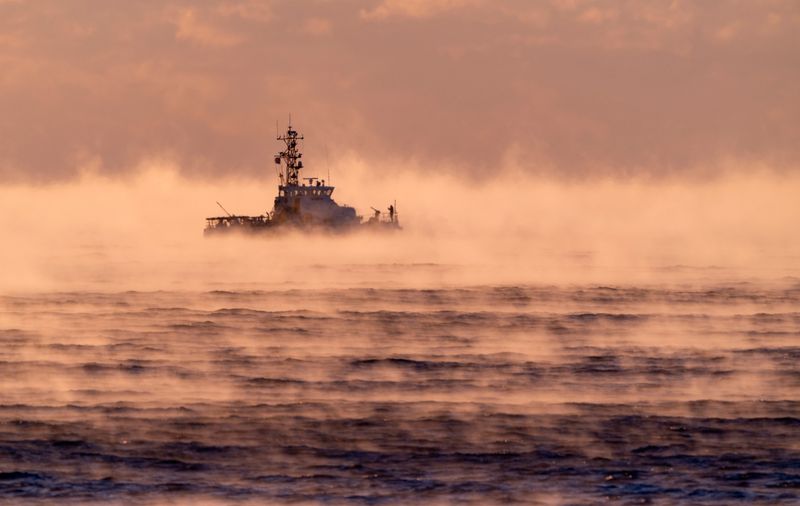
Sea smoke rose in an eerie fog off the warm waters on the Atlantic side of the state.
Snow flurries fell on the southwest coast, and in Jacksonville. Jacksonville last recorded pure snow on Jan. 8, 2015, although there was a wintry slush measured in January 2025.
The ethereal flickers of white in Fort Myers is the first time snow was recorded there, said National Weather Service meteorologist Matt Anderson, who is based in the Tampa office.
“We sincerely don’t have accurate records of that before so we can say it’s never been observed,” Anderson said. “So many things have to come together for something like this to happen. There was a very small window, and it only lasted 10 to 15 minutes or so.”
Statewide, rare extreme cold warnings were issued for Saturday night into Sunday and, in some areas, extended through Sunday night. Parts of South Florida continued under a freeze warning into Monday morning.
“We do have cold outbreaks several times a winter, but this was definitely toward the colder end,” said Danny DuBois, a meteorologist in the Jacksonville NWS office.
According to the Southeast Regional Climate Center, 39 of its 46 sites that were reporting numbers as of early Monday, Feb. 2, also recorded daytime high cold temperatures.
One gauge in Tallahassee measured a high temperature Sunday of 43 degrees, which was the coldest in 86 years of records.
Randy Parker, who owns Seminole Plumbing in Tallahassee, said he was busy Sunday with 18 service calls reporting broken pipes in subfreezing temperatures. He told the Tallahassee Democrat it was a record for a single day.
“The wind was the big factor,” Parker said, adding his company saw a surge in commercial and residential calls for service. “When we have that kind of wind, even if pipes are insulated, they’re not insulated enough, and if there are any gaps or anything like that, it causes damage.”
A Florida A&M University dorm, McCollumn Hall at Florida State University, a Publix at Village Square on Thomasville Road, and a Pizza Hut at Kerry Forest also had frozen pipe issues.
Tallahassee City Manager Reese Goad said municipal water systems fared well.
“But there were a lot of reports of broken pipes at homes and businesses,” he said. “With all of the ruptured pipes the water system experienced very high demand over the 24 hour period, pumping 38 million gallons of water. This ranks in the top 10 most for 24 hours of water flow.”
Punta Gorda’s 50-degree high was the coldest in 103 years of records. Key West (58), Marathon (57), Fort Lauderdale (50), and Fort Pierce (47) also recorded record low peak temperatures on Sunday.
How did Florida’s vegetable and citrus crops fare in the freezing temps?
Christina Morton, director of communications for the Florida Fruit and Vegetable Association, said growers did their best to protect plants from the cold, and were still assessing damage on Monday.
“Despite freezing temperatuers and tough conditions, our growers worked tirelessly through several nights, using every tool at their disposal to protect Florida’s fruits and vegetables,” she said in an email. “When I say tirelessly, I truly mean they were up all night, no sleep.”
Palm Beach County is the state’s number one agricultural producing county, with sugarcane and rice crops, as well as vegetables that grow in the normally subtropical winter temperatures when other states are too cold.
But vast areas of valuable muck farmland experienced several hours of freezing temperatures Saturday and Sunday, said Ryan Duffy, senior director of corporate communications for US Sugar. He said growers are just beginning to assess the damage.
David Hill, owner of Southern Hill Farms in Lake County, said he expects that the freezing temperatures dealt a costly blow to agriculture statewide after an often used strategy to preserve plants backfired.
Depending on forecast conditions, growers will sometimes run overhead irrigation to create a thin layer of ice on plants that acts as insulation.
But overnight Saturday into Sunday, Hill watched the ice grow and grow on blueberry bushes so that the plants got too heavy and broke off. Even worse, some bushes toppled onto irrigation pipes, breaking them.
“We took baseball bats and would go to each pipe and beat the ice on the bush until it broke the ice off the bush and the pipe,” Hill said. “That was nuts, but that’s what state we were in. People that ran the water, did more damage than good.”
Hill said he had more success with getting a think coating of ice on fields Sunday night into Monday because the winds were lighter, but still thinks he lost the first half of the blueberry crop. The blooms on his peaches are also probably gone, as well as 35% of his sunflowers. But his broccoli, onions and cauliflower are more cold hardy and may come out OK.
“There are farms that lost 100%,” Hill said. “There are so many things that go into the decision to run the water. This is a lesson learned. No one will ever forget this lesson.”
In Pensacola, people were shocked to see extremely low water levels on the sound side of Pensacola Beach. The National Weather Service said it was a function of strong north winds that pushed a lot of water out of the bays and away from shorelines.
Steve Davis, chief science officer of The Everglades Foundation, said snook are particularly vulnerable to cold weather, as well as cocoplum and native red mangroves, which will lose their leaves when temperatures drop.
After the 2010 cold outbreak, which included 12 days of low temperatures in the 30s and 40s south of Lake Okeechobee, the state was forced to ban snook fishing along the Gulf Coast for several years to let the population rebound.
Davis said he doesn’t think the cold temperatures will be enough to completely rid the Everglades and urban areas of cold adverse invasive species.
“It is worth noting this is a significant cold event for South Forida,” Davis said. “It will effect the ecology of the system, we just don’t know the full extent of it at this time.”
Tallahassee Democrat Economic Development Reporter TaMaryn Waters and Pensacola News Journal digital coach Brandon Girod contributed to this story.
Kimberly Miller is a journalist for the USA TODAY NETWORK FLORIDA. She covers weather, the environment and critters as the Embracing Florida reporter. If you have news tips, please send them to kmiller@pbpost.com. You can get all of Florida’s best content directly in your inbox each weekday by signing up for the free newsletter, Florida TODAY, at https://palmbeachpost.com/newsletters.
This article originally appeared on Palm Beach Post: Dozens of cold records broken as snow flies and crops freeze in Florida
Reporting by Kimberly Miller, USA TODAY NETWORK – Florida / Palm Beach Post
USA TODAY Network via Reuters Connect