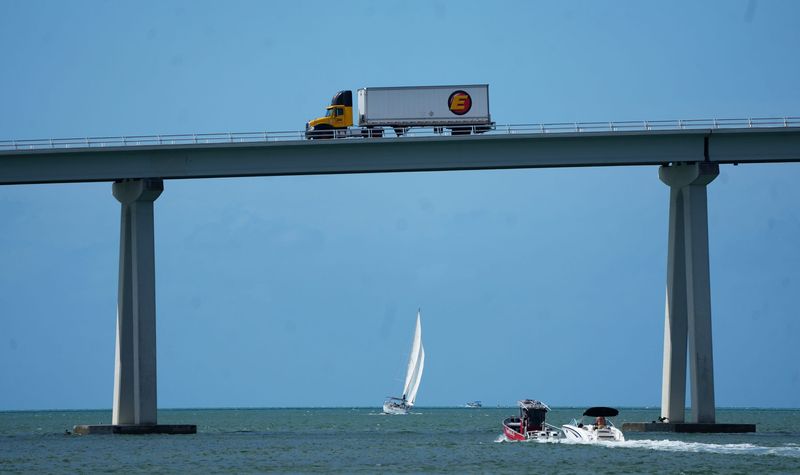
The coast is clear at the Sanibel Causeway as water quality conditions have improved over the past week.
The Florida Department of Health in Lee County, or DOH, sent out a press release June 25, saying that water quality conditions have improved there enough to allow the public to be in the water again.

DOH found Enterococcus bacteria in the water there June 19.
“Tests completed on June 24, 2026, indicate that the water quality at Sanibel Causeway shows an acceptable level of Enterococcus bacteria established by state guidelines,” the press release reads.
This is the gross type of bacteria that conjures images from the classic swimming pool scene in the 1980 silver screen hit “Caddyshack.”
Enterococci bacterium comes from the poop of warm-blooded animals. The source for this type of contamination can vary from a group of breeding manatees (it’s breeding season now) to nesting or resting birds and even failing septic systems and water treatment plants.
“Enterococci are fecal indicator bacteria that can signal contamination from human or animal waste,” a DOH website reads. “High levels may indicate the presence of harmful pathogens that can cause gastrointestinal illness, skin infections, or rashes if ingested or enter through cuts.”
Enterococci are measured per 100 milliliters of water.
DOH says levels between 0 to 35 per 100 milliliters of water is “good,” with levels between 36 to 70 Enterococci is “moderate” and that caution should be used by coastal water users.
A measurement of 71 Enterococci per 100 milliliters on two consecutive measurements triggers a public warning.
Florida has had more than poop water on its hands
Other types of bacteria have temporarily shut down coastal Lee County, like a powerful red tide bloom in 2018.
Scientists said at the time that the entire bottom of the Gulf off Southwest Florida was covered in dead fish and bacteria.
“Nothing is what we saw,” said then Florida Gulf Coast University researcher and professor Bob Wasno, who dove the Gulf in September of that year. “We went out to Edison reef, and everything was dead. For the hour-dive we did, we saw three snapper and three porkfish, and quite frankly they looked pretty lost.”
Gov. Scott declared states of emergency in Lee in 2018 for toxic waters
That red tide bloom lasted from the fall of 2017 until the spring of 2019, and it killed even large wildlife like bottlenose dolphins, sea turtles and even whale sharks.
There are also blue-green algae, which produces cyanotoxins and can cause massive fish kills.
A bloom from early in the summer of 2018 initiated on Lake Okeechobee and then spread o the Caloosahatchee River.
The water in some local canals looked like they had a bright green and blue layer of carpet on the surface.
Overall water quality is declining across the state of Florida, even as more tax dollars are being spent to clean up polluted waters like the Kissimme River, Lake Okeechobee and the Caloosahatchee River.
The delay in the original Everglades restoration plans is not helping issues here.
The original restoration plans (approved in 2000) called for work to be mostly completed at this point, and that most of the first wave of 68 projects would be functional now.
Everglades restoration was supposed to be completed by 2030, and the cost was to be $8.2 billion, according to Congressional records.
But none of the original 68 Everglades restoration projects have been completed and were intended to store, direct, clean or move water in the rain-driven system.
Now agencies like the U.S. Army Corps of Engineers and South Florida Water Management District expect it may take 50 years to complete all the projects and cost more than the original $8.2 billion estimate.
Gov. Ron DeSantis said in April of 2025 at Rookery Bay National Estuarine Research Reserve in Naples that the Caloosahatchee River reservoir would be operational for the summer of 2025.
It wasn’t, and it still isn’t delivering freshwater to the Caloosahatchee River.
What you can do to stay safe in Florida waters
The state monitors most beach areas in Florida for various forms of bacteria.
Pets and livestock can be very vulnerable to cyanotoxins during blue-green algae blooms in freshwater areas.
Blue-green algae blooms are monitored by the Florida Department of Environmental Protection, or DEP.
For beach conditions, check the DOH website.
The Florida Fish and Wildlife Conservation Commission, or FWC, monitors red tide conditions throughout the state.
“Even if a beach is in the “Good” range, local advisories or weather conditions (e.g. heavy rain, storms) can temporarily affect water quality,” a DOH website says. “Always check the latest results before swimming.”
Chad Gillis is an environment reporter and can be reached by email at cgillis@news-press.com.
Please support local community journalism and stay informed about Southwest Florida news by subscribing to The News-Press and Naples Daily News; download the free News-Press or Naples Daily News app, and sign up for daily briefing email newsletter, food & dining and growth & development newsletters here and here.
This article originally appeared on Fort Myers News-Press: DOH: Poop water has cleared from waters surrounding Sanibel causeway
Reporting by Chad Gillis, Fort Myers News-Press & Naples Daily News / Fort Myers News-Press
USA TODAY Network via Reuters Connect
By Chad Gillis, Fort Myers News-Press & Naples Daily News | USA TODAY Network