Historians within the world of auto racing, without hesitation, point to those late-1947 meetings atop the Streamline Hotel as the birthing of NASCAR and organized stock-car racing.
But all births are preceded by a chain of events. Beginning, maybe, with a gleam in the eye, a raised eyebrow, a second-glance turn of the head. Or an itch in need of a scratch.

So, it stands to reason, there may have been no Big Bill France at the Streamline, and therefore no formation of NASCAR as we know it, if there hadn’t been a Henry Segrave, a Sunbeam Motor Car Company, and a brutish hulk of rolling thunder ironically nicknamed “Slug.”
In the spring of 1927, Bill France was a teenager in Washington D.C. and a lover of fast cars when the Slug sped its way to international headlines via Daytona Beach. Some eight years later, he was married with a toddler son and on the move to Florida.
The young France family stopped in Daytona Beach and stayed, in large part because Big Bill associated the place with speed. While others would follow the Slug’s tracks and even at a faster pace, those 1927 headlines solidified Daytona as the Birthplace of Speed, and the race was on.
Daytona was doing 200 mph long before NASCAR came along
“Two hundred miles per hour.”
Around here, we generally associate that magical barrier with NASCAR and the 1980s chase to cross 200 mph in a stock car, both at Daytona International Speedway and its sister track in Alabama — Talladega.
But that number was first reached, and surpassed, by a car built for the sole purpose of doing just that, to set a new standard, not to be faster than 40-or-so other cars lining up on a race grid.
And it was done 99-plus years ago on the hard-packed sands of Daytona Beach, on the same sands where NASCAR would also eventually race and in the same city where NASCAR would put down roots and build its internationally renowned speedway.
In the years before 1927, Daytona Beach had earned its Birthplace of Speed label, as record speeds crossed 100 mph in 1905 and reached just shy of 150 by the end of the teens, before an eight-year lull in such chases.
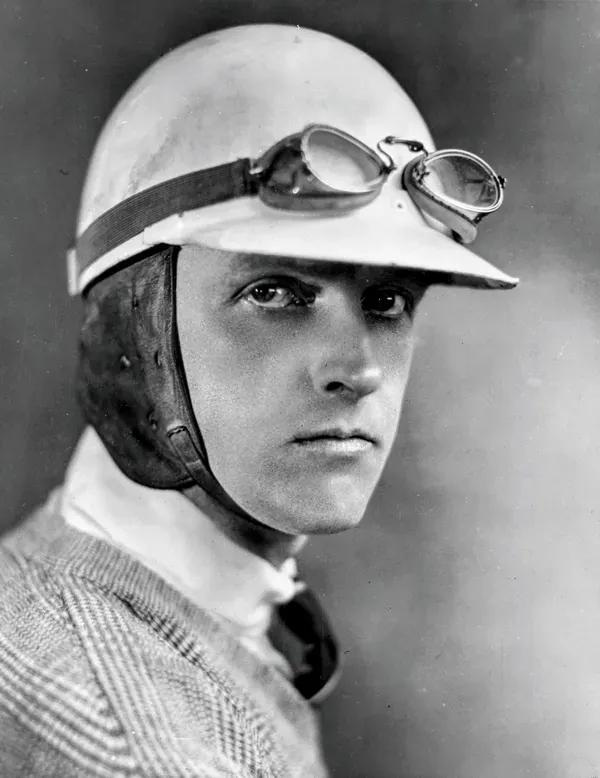
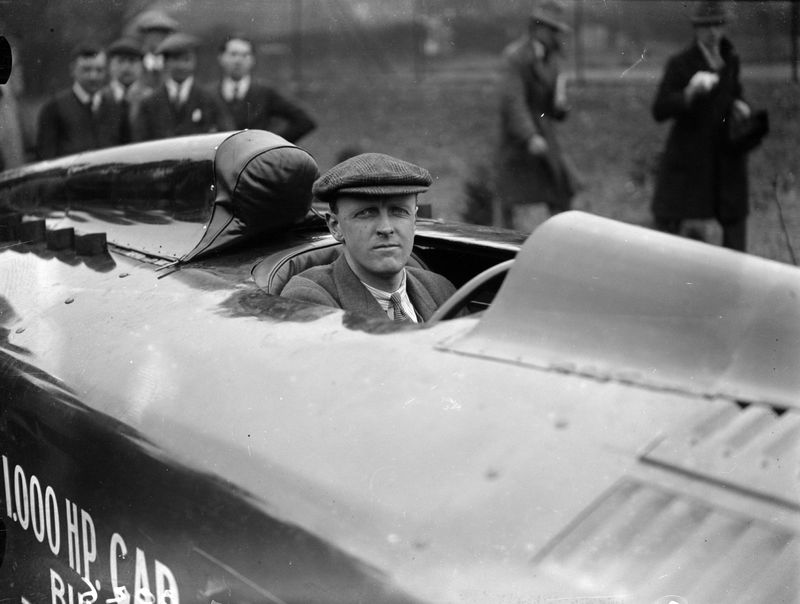
Across the Atlantic, 150 mph would be crossed in 1926 by a British national named Henry Segrave, a former WWI pilot and 1920s auto racer in the sport’s early years. Segrave went beyond 150 in a car built by England’s Sunbeam Motor Car Company, but he had bigger ideas and needed a big, wide canvas on which to write his name in history.
That’s when Daytona once again became synonymous with speed. Segrave Street, which runs parallel with U.S. 1 in Daytona Beach, is named in the driver’s honor.
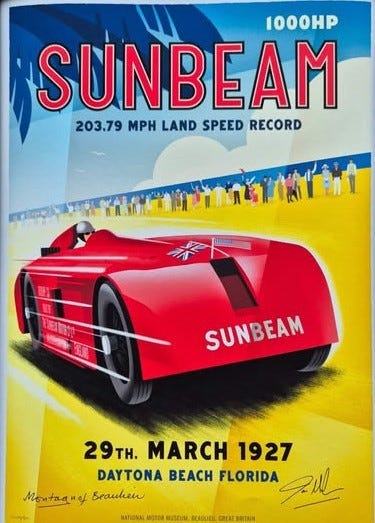
Next spring, the city of Daytona Beach and Great Britain’s National Motor Museum will celebrate a milestone set by Segrave on March 29, 1927: First man and machine to reach and surpass 200 miles per hour.
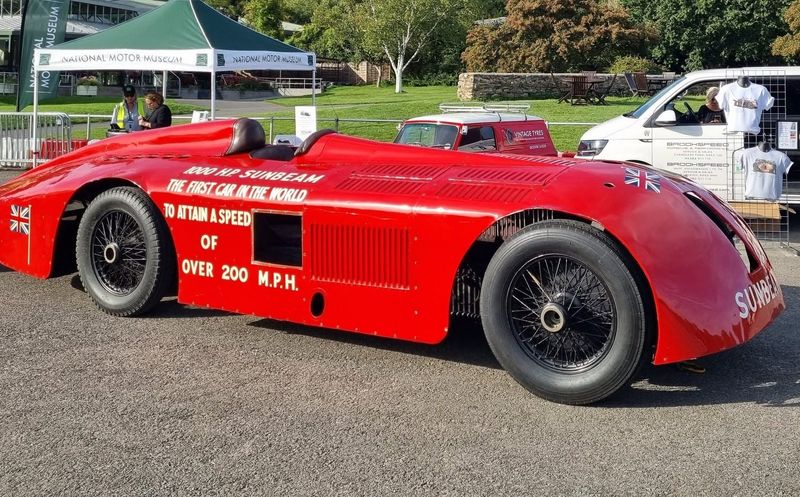
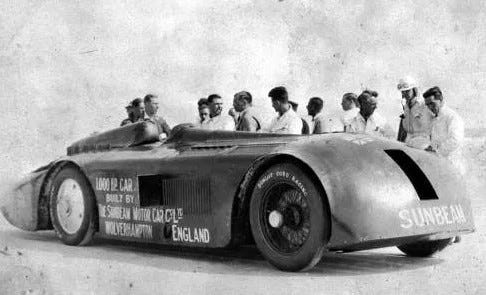
The car was officially known as the Sunbeam 1000hp, as in 1,000 horsepower. At 25 feet long and nearly four tons, Sunbeam’s Slug was an attention getter, but just to make sure, it was painted red.
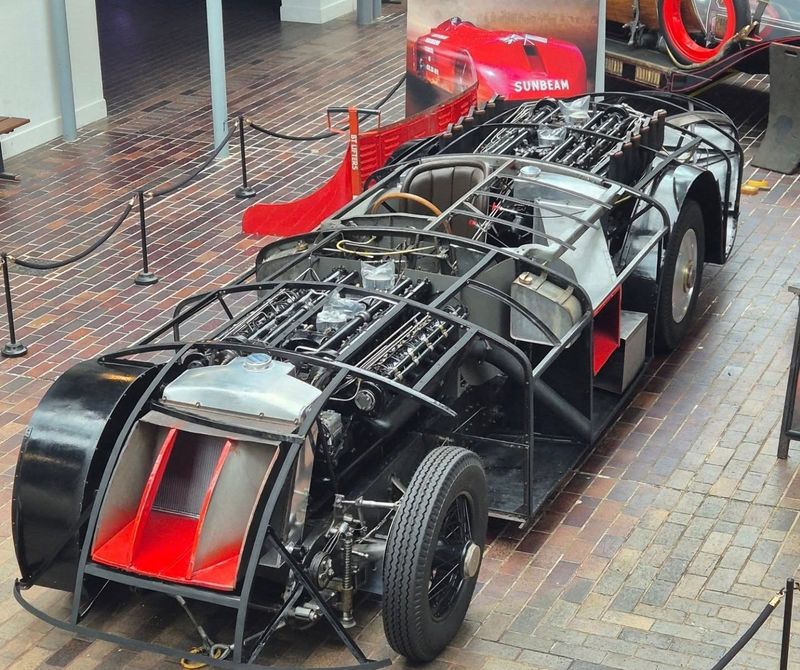
And to gather further steam, it was fitted with a pair of V-12 aircraft engines fore and aft, with the driver tucked securely — relatively speaking — between those two power plants.
When firing simultaneously, the V-12s didn’t quite produce 1,000 horsepower as advertised, but close enough to carry a white-knuckling Segrave to a new record of 203.79 miles per hour on the hard and sometimes unforgiving sands of Daytona Beach.
Depending on which account you read, somewhere between 15,000 and 30,000 onlookers lined the dunes that morning at 10 a.m., and watched as Segrave came … and went.
“Spurting smoke and flame and filling the air with the odor of burning castor oil,” was how the New York Times described it.
Segrave himself would be among the few drivers who pushed the speedometer beyond that 203 mark over the ensuing eight years. Malcolm Campbell, in his block-long Bluebird, capped the Daytona speed climb in 1935 with a run of 276 mph. He also got a local street named for him.
Shortly thereafter, Utah’s Bonneville Salt Flats became the preferred playground for speed demons, but as good fortune and great timing would have it, the race against the stopwatch quickly gave way to the type of racing with which we’d become quite familiar here — on that same beach, by the way.
The Sunbeam 1000hp would be given a proper rest-home at the National Motor Museum in Southern England — Beaulieu, in the County of Hampshire.
A few years ago, looking ahead to the 100th anniversary of that 1927 record run, the museum’s keepers and some engineers hatched the idea of restoring the Sunbeam 1000hp to operational form, which would include a rebuild of those giant and now-archaic engines.
As it was in 1927, the project’s finish line is on the sands of Daytona Beach.
The Sunbeam speedster scheduled to ride the sands of Daytona again
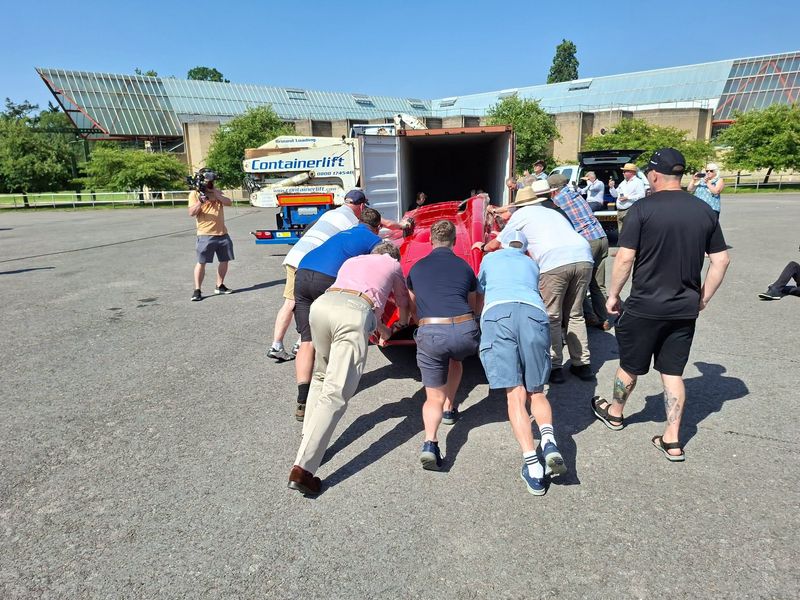
The Sunbeam 1000hp was loaded for shipment to New York this past week, and soon will be be sent cross-country to California, to take part in the famed Pebble Beach Concours d’Elegance in August. After that, it’ll spend nearly four months at the Petersen Auto Museum in Los Angeles before returning to its original launch pad.
In mid-January of next year, the car will become a centerpiece at the Motorsports Hall of Fame of America, which sits outside Turn 4 at Daytona International Speedway. But it won’t get too comfortable.
In late March, it’ll spend a few days as a conversation piece inside the Speedway during the spring “Turkey Run” hot-rod extravaganza before being ushered across the bridge on Monday, March 29, for the much-anticipated re-enactment — though at roughly 190 mph slower than the original, due to modern sensibilities, if not common sense.
After the ceremonial exhibition run, the Sunbeam will spend the rest of the day on display at the Bandshell before returning to the Motorsports Hall.
But those giant engines might finally get an honest workout two days later, March 31, when the big red machine is taken inside the Speedway, where the long pit lane will give it a chance to stretch its legs and show off some of that historic horsepower.
Soon thereafter, it’s back to England, after doing its part to remind everyone of how and why the Speedway’s “World Center of Racing” claim was made possible by those who first made this the Birthplace of Speed.
— Email Ken Willis at ken.willis@news-jrnl.com
This article originally appeared on The Daytona Beach News-Journal: Daytona’s original 200 mph car returning to town to celebrate 100th anniversary
Reporting by Ken Willis, Daytona Beach News-Journal / The Daytona Beach News-Journal
USA TODAY Network via Reuters Connect
By Ken Willis, Daytona Beach News-Journal | USA TODAY Network