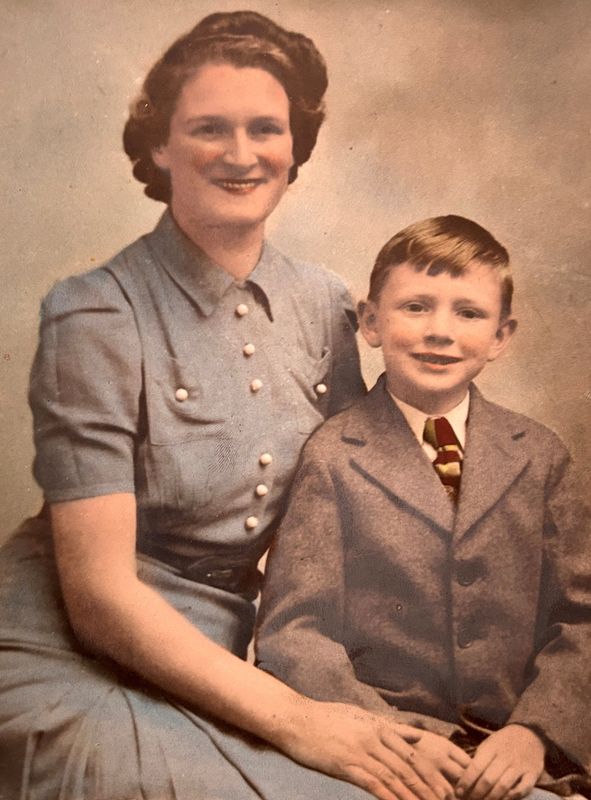
Michael Dodds was 5 years old when the tanks and green Army trucks rolled into his British village during World War II.
The Americans had arrived.

And they brought candy for the children, too.
“As kids, we thought it was fantastic: Tanks going through our village,” Dodds recalls. “And all the soldiers would throw us gum and chocolate and everything.”
World War II had been raging in Europe for three years. Much of Great Britain lay in ruins after the Germans’ intense bombing campaign from 1940 to 1941. And no one knew how the war would end.
Then the Japanese bombed Pearl Harbor, and the United States joined the fight in 1941.
And soon Dodds’ village was full of American soldiers, gathering there for the battles ahead and — eventually — the massive invasion of Normandy, France on June 6, 1944, that would become known as D-Day.
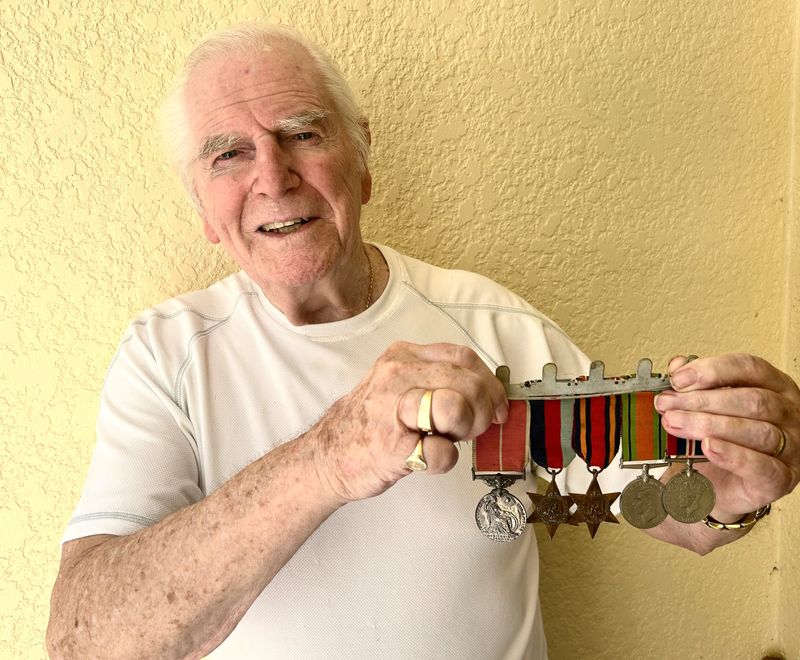
More than eight decades later, Dodds is an 88-year-old, retired insurance executive living in Cape Coral. But he vividly remembers those American G.I.’s and the two years they spent in his hometown in Wiltshire County, England, just 10 miles from Stonehenge.
Dodds’ eyes tear up, sometimes, when he talks about those soldiers — many of whom undoubtedly died on D-Day.
He thinks a lot about what happened to those young men, including a parachute regiment that mistakenly jumped over the wrong area in France and got shot out of the sky by the Nazis.
“It lasts forever,” Dodds says, his voice choked with emotion as he sits at his dining room table in Cape Coral. “And every time I see a war film, you know, it brings it back.”
Life in World War II: Growing up under Nazi bombings in Great Britain
Dodds grew up in his grandparent’s small, three-bedroom house in Bulford, England, with his mom, his grandparents, his great grandmother and his aunt.
As a small child, he didn’t remember his dad, who had left home to fight the war in France and Guam for six years — only returning home for a brief three weeks of leave that his son was too young to recall.
“I didn’t know him at all,” Dodds says. “I didn’t know my dad until I was nine. … I was just so young, you know, and he was there and gone (during that three-week visit).”
Dodds also never knew a time when Great Britain wasn’t at war. He was about 2 years old when Britain started fighting Germany and 3 when the Germans started bombing southern England in the summer of 1940.
Dodds’ grandfather had dug out their garden to build a bomb shelter, and the family would huddle in there over the next six to nine months whenever the air-raid sirens blared.
“We thought that was exciting when we were kids,” Dodds says about the shelter, which he calls a “dugout.” “You know, we used to go down there and we had candles.
“I remember they’d sit there with candles until the air raid sirens went off so it was all clear. And they used to bring a cup of tea, of course. And so we thought, as kids, that was pretty cool.”
Dogfights over England
Dodds often watched the German planes crossing the sky on their bombing runs, passing over them on their way to Southampton about 25 miles away. “We’d hear them drop their bombs in Southampton,” he says. “Literal explosions.”
Those bombs never landed on their own town, thankfully. But Dodds remembers the explosions and the sounds of anti-aircraft guns blasting from their mounts on railroad tracks.
“The whole place would shake,” he says.
He also remembers German and British Royal Air Force planes battling in the sky, although he never saw any crash or get shot down.
“We used to go up beyond this railroad … and there were fields,” he says. “We used to go up there and lay in the grass, and watch the dogfights between the Spitfires and Hurricanes and all the German aircraft. And there was vapor trails. The sky was full of white vapor trails from these aircraft.”
He doesn’t remember being scared at all. But he does remember the food rations — limits on milk, bread, meat and other staples. His family raised and killed their own chickens, though, and they grew their own vegetables in their garden.
“We ate well, actually,” he says. “My granddad had a huge garden, and everybody grew stuff, you know. … We survived.”
The Americans arrive in Great Britain
Then, in the summer of 1942, the Americans rolled into town in tanks and trucks and set up camp in a nearby forest.
It was a sight to behold, Dodds says. “Until 1942, there weren’t any Americans. They didn’t come over until after Pearl Harbor.”
The village kids quickly realized: Those soldiers were well-stocked with chocolate, bubble gum and other candy (something that was impossible to find due to wartime rationing). So after school every day, they’d head out to the forest and the American encampment packed with tents and campfires.
“We would go up to the forest, where they’d make a fuss of us,” Dodds says. “They were missing their kids. … We’d sit around their campfires. They’d give us chocolate and gum.”
They’d chat with the soldiers about school and baseball (or, rather, the English version, cricket). And every Sunday, Dodds’ family would invite two soldiers into their home for dinner.
The family would kill a chicken for their meal, and the soldiers usually brought canned peaches or some other dessert.
“They would come in, and my grandmother would put a meal together,” he says. “We would give them dinner just to say thank you to them. And they’d say thank you to us.”
D-Day
Then, suddenly, D-Day had arrived.
By that time, almost 2.9 million Allied troops had amassed in southern England for the coming invasion — code-named Operation Overlord, but later known as D-Day.
Dodds had no idea what was happening on June 6, 1944, when he saw dozens of planes in the sky pulling huge gliders. Later, he learned those gliders were full of soldiers and supplies.
“We’re looking up there, and all these gliders were going over,” Dodds says. “And that was D-Day.”
Those planes — part of a massive invasion that included more than 13,000 planes and 5,000 ships (the largest armada in history) — were all heading across the English Channel to storm the coastline of German-occupied Normandy, France.
That operation would eventually turn the course of the war and made possible Germany’s eventual defeat in May 1945. Almost 160,000 Allied soldiers landed on the 50-mile stretch of heavily fortified beaches to push back the Nazis and gain a foothold in Europe.
More than 4,400 people died that day, including 2,510 Americans, according to the National D-Day Memorial in Virginia.
But when Dodds and his school friends saw all those planes and gliders that day, they didn’t know all that. They just knew something was happening — something big.
“Then we realized what the heck was going on, and the word spread,” he says. “And after school, we all raced up to the forest to see our friends. Nobody was there. They were gone already. They were gone.”
All they saw were black spots where the campfires used to be. “They cleaned the place up,” he says. “It was immaculate.”
All those soldiers — the friends they’d made over the last two years — had left for France.
Many of them would die there.
Dodds chokes up, tears in his eyes, as he thinks about all those men. He no longer remembers their names, he says, but he knows that many of them are gone while he still lives, 82 years later.
“A lot of them got killed,” he says, “but here we are.”
World War II ends. But where is Dad?
Eleven months later, the war in Europe was over.
Dodds and his family were gathered around the radio listening to the BBC when they heard the news on May 8, 1945, (otherwise known as Victory in Europe Day, or V-E Day). The Allies had formally accepted Germany’s surrender.
“The ladies were crying,” Dodds says, “and everybody was ecstatic.”
Their village — and the rest of the world — quickly broke out into celebrations. “There was parties going on all the time,” Dodds says. “We went to a great big party that was held in the village hall.”
Even so, that joy was tempered by fear and uncertainty. They hadn’t heard anything about his dad and whether he’d survived.
“My mother used to get letters from my dad, but they were always six weeks late,” he says. “And so it was kind of hard to celebrate because you didn’t know where he was. But we were just thankful and hopeful.”
Everyone in the village lived in terror of the afternoon mail delivery. Regular mail came in the morning, Dodds says. But the afternoon mailman on his bicycle usually meant bad news: Someone’s husband or someone’s son had been killed.
“You did not want to see that bicycle…” he says. “It was terrible.”
When his father finally came home several weeks later, alive and well, Dodds and his family met him at the train station.
“He was gaunt, you know, after eating nothing but fruit for almost six years,” Dodds says. “Never had any meat or anything. It was terrible. … He said he was crazy. He was drunk most of the time. He said the only thing he could get was rum.”
His father, the war hero
His father also came home a war hero.
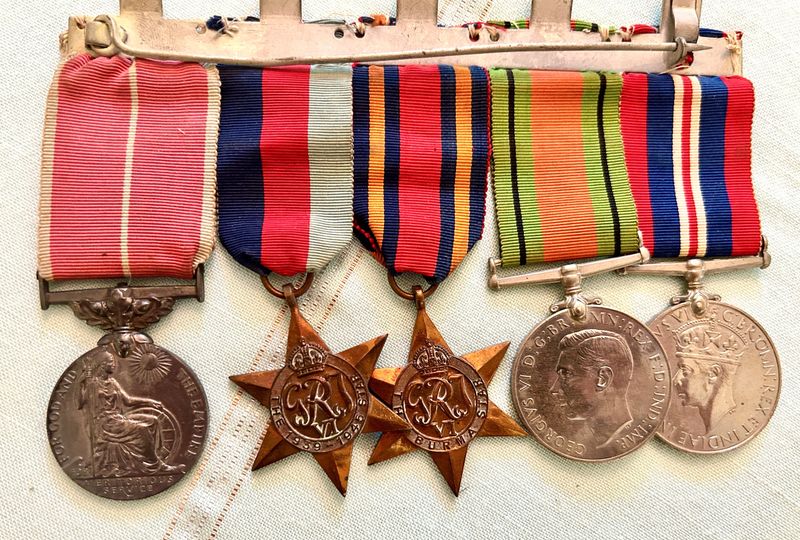
Dodds has the military medals to prove it — including the prestigious British Empire Medal. He keeps them in a drawer, but occasionally shows them off to visitors.
His dad, Henry Dodds, won the British Empire Medal after blowing up a Japanese pillbox — a small concrete guard post in Burma from which the enemy could fire machine guns or throw grenades.
“They wanted somebody who was an explosive expert — and that was Dad — to volunteer to blow this pillbox up with all these guns,” Dodds says. “So he did. …
“You light a fuse, you know, and it’s great big packages of dynamite, explosives. You throw it … and then run like hell.”
Dodds says he’s deeply proud of his father, who didn’t talk much about what happened to him during the war.
“He was quite a hero,” he says.
Remembering those American soldiers and the ‘wonderful time’ they had together
Eight decades later, Dodds thinks often about those American soldiers he met in the forest and what may have happened to them.
One group, a parachute regiment, died when they mistakenly jumped over the wrong landing site on D-Day and got shot out of the sky by the Germans, he says. It’s the same regiment that threw a party for the town’s kids in the days leading up to D-Day.
“We all went up this hangar, and they had parachutes draped everywhere and they had all laid out with food,” Dodds says. “Oh, it was wonderful.”
He doesn’t remember any of the soldiers’ names anymore — “It was a long time ago.” — but he thinks about those men and the times they spent eating chocolate and talking about baseball and cricket in the forest.
“We had a wonderful time with those guys,” he says. “And I’ll always remember it.”
Charles Runnells covers arts and entertainment for The News-Press and the Naples Daily News. To reach him, call 239-335-0368 or email crunnells@usatodayco.com. Follow or message him on Facebook(@charles.runnells.7), Instagram (@crunnells1) and X (@CharlesRunnells).
Please support local community journalism and stay informed about Southwest Florida news by subscribing to The News-Press and Naples Daily News. Download the free News-Press or Naples Daily News app, and sign up for daily briefing email newsletter, food & dining and growth & development newsletters here and here.
This article originally appeared on Fort Myers News-Press: D-Day memories: Dogfights, bombs, and Americans arrive
Reporting by Charles Runnells, Fort Myers News-Press & Naples Daily News / Fort Myers News-Press
USA TODAY Network via Reuters Connect