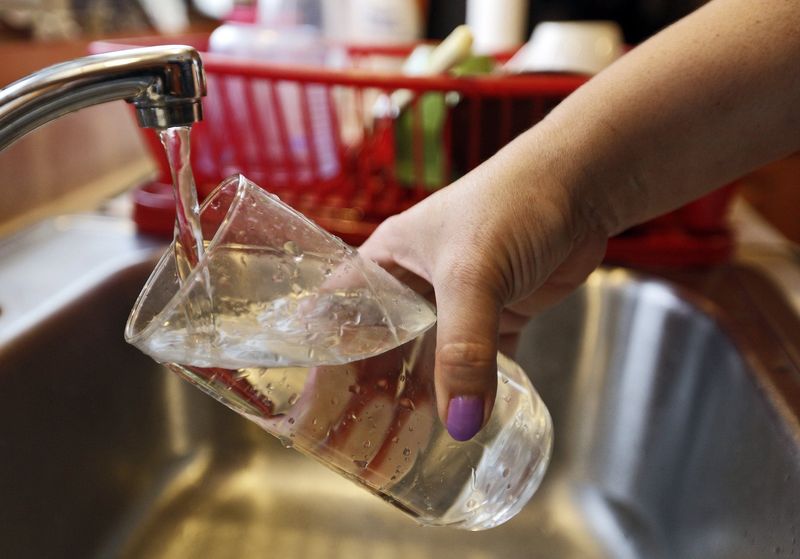
The Volusia County Council voted to have the county craft a Charter amendment and a county ordinance to ban sewage from making its way into drinking water.
The measure, not surprisingly, received strong support from those in attendance at the meeting but left some in the room wondering what the issue, known as “toilet to tap,” is actually an issue facing the county.

At-Large Representative Jake Johansson, said he understands the concern, but still sees it as something far from reality. He said he doesn’t see anyone “trying to attempt toilet to tap or anything close.”
He also voiced concern that passing such “proactive” local legislation might create problems down the road.
“If we’re going to do that, I would also like to restrict the use of autonomous vehicles that float above the ground because they’re going to be tremendously dangerous if we don’t wear helmets ― and a bunch of other stuff that isn’t happening that may cause concern in the future.”
As floated by council Chairman Jeff Brower, the proposed charter amendment and county ordinance will be based on a petition proposed by Daytona Beach resident Greg Gimbert.
The petition seeks to amend the charter to prohibit “blackwater” from being treated and reused as drinking water or injected into the aquifer. Blackwater is defined as “that part of domestic sewage carried off by toilets, urinals, and kitchen drains.”
Any charter amendment or county ordinance would only apply to Volusia County’s utility service areas, where the county has authority to control the issue.
Deltona project creates buzz, which leads to confusion
Concerns about local, so-called “toilet to tap” efforts may stem from a debate in Deltona over a project that’s supposed to help conserve drinking water.
The city is using a $2.5 million grant from the state of Florida to build two aquifer storage and recovery wells. That alternative water supply project will “harness surface water from Lake Monroe and reclaimed water and store it in wells that are separated from the drinking water supply.”
“Reclaimed water” is defined in Volusia County as “wastewater that has been treated to meet standards established by the Florida Department of Environmental Protection. Reclaimed water is clean, clear, odorless and essentially free of bacteria and viruses. It is ideal for irrigation, but not suitable for human or animal consumption.”
‘Toilet-to-tap’ discussion in council gets heated
Brower maintains that a form of toilet-to-tap is what’s being proposed, despite what the city manager said. He got into a heated exchange with Johansson over the issue at the Feb. 3 meeting.
“It is here. It’s being done right now. There’s a proposal in Deltona to do it,” he said.
“To do what, sir,” Johansson interjected.
Brower replied, shouting, “To inject treated-”
“Lower,” Johansson urged.
“No, I’m not going to lower my voice,” Brower said. “To inject treated sewage water into our aquifer, which is more harmful.”
The exchange continued.
From here, the county attorney’s office will come up with suggested language for the ballot issue and the ordinance. A vote is likely to take place at the March 3 meeting. For the ballot issue to be approved, it must pass by a 5-2 margin or greater.
This article originally appeared on The Daytona Beach News-Journal: County backs ‘toilet to tap’ ban, issue may be headed for ballot
Reporting by Sheldon Gardner, Daytona Beach News-Journal / The Daytona Beach News-Journal
USA TODAY Network via Reuters Connect