FIFA, the world governing body of soccer and recently the creator of a “Peace Prize” for President Donald Trump, is finding no peace of its own inside the 100-day countdown to this summer’s World Cup.
What began with a global case of sticker shock when ticket prices were revealed has spread to complaints by cities struggling with the cost of hosting the event, which led dozens of members of Congress, including South Florida U.S. Rep. Debbie Wasserman Schultz, to sign a letter to FIFA President Gianni Infantino expressing “great concern” and urging financial relief. Wasserman Schultz’s district of Broward County is a neighbor to Miami Gardens, where Hard Rock Stadium will stage seven matches.

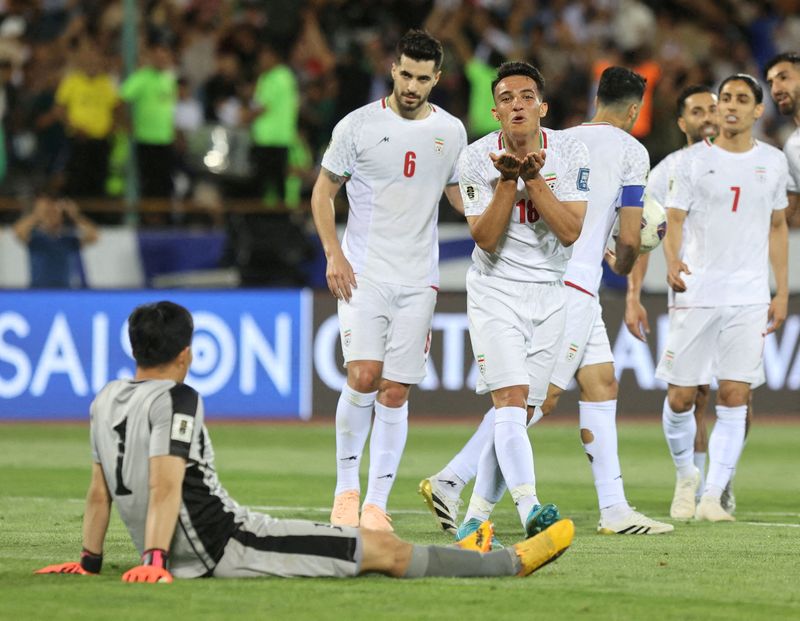
Those domestic clouds are only part of the story. After days of speculation on the status of Iran, that country’s sports minister said on March 11 that “under no circumstances” can his country send its national team to the tournament. No country has withdrawn from the World Cup after qualifying since 1950, so it remains to be seen if Iran will follow through by formally pulling out.
Clarity is difficult to come by on multiple levels. On March 12, Trump wrote on the social media site Truth Social: “The Iran National Soccer Team is welcome to The World Cup, but I really don’t believe it is appropriate that they be there, for their own life and safety. Thank you for your attention to this matter! President DONALD J. TRUMP.”
Iran responded on its social media account by saying it actually does plan to compete and there’s nothing the United States can do about it.
Alarm bells ringing before major international sporting events is nothing new — it’s almost business as usual for the Olympic Games — but those issues tend to get sorted out and virtually forgotten once competition begins. Those issues usually are concentrated into one country and one problem, such as the rush to build facilities. The issues confronting FIFA today are more wide-ranging, including a war that forced a change in leadership in Iran.
This World Cup will be the first involving an expanded field of 48 teams in 104 matches and the first with three co-hosts: the United States, Canada and Mexico, from June 11 to July 19. Excitement over the United States hosting the tournament for the first time since 1994 was tempered when tickets went on sale under “dynamic pricing” that allowed demand to set prices, which quickly ballooned to hundreds and then thousands of dollars. The greatest demand, with more than 30 million ticket requests, was for the Colombia-Portugal match June 27 in Miami, which carries price tags of $2,000 and up online.
“Everyone is pissed,” Rep. Sydney Kamlager-Dove (D-Calif.), who orchestrated the letter, told The Athletic. It was signed by 69 members of the House of Representatives — all Democrats. They include four others from Florida: Sheila Cherfilus-McCormick, Kathy Castor, Darren Soto and Frederica Wilson, whose district includes Miami Gardens.
“We shouldn’t allow price gouging when a once-in-a-lifetime event like the World Cup comes to Miami,” Wasserman Schultz said in a statement to The Post. “Ticket prices need to be affordable so that everyone — not just the wealthy — can enjoy one of the biggest global sporting events.”
Republican congressman doesn’t believe host cities ‘were hoodwinked’
Kamlager-Dove told The Athletic she “didn’t get any bite from Republicans” to sign the letter. Congressman Darin LaHood (R-Ill.) said each host city signed a contract when it submitted a bid, so “there’s no argument that somehow people were hoodwinked or didn’t know what was in the contract.”
The letter states, “Both American fans and international visitors should have access to tickets at affordable prices. The extreme high demand for World Cup tickets should not be a green light for price gouging at the expense of the people who make the World Cup the most-watched sporting event in the world.”
It goes on to say, “The employment of dynamic ticket pricing for the 2026 FWC starkly contrasts with FIFA’s core mission to promote the accessible and inclusive promotion and development of soccer globally.”
With most of the 6 million tickets apparently sold, the letter requests FIFA sell the remaining allotment at “affordable” prices. It also asks FIFA to commit to static pricing for future tournaments.
With a deadline looming next week, the New England Patriots’ home in Foxborough, Mass., has for months been in a battle threatening its seven matches, including a quarterfinal. The town wanted an up-front payment of millions of dollars to cover the cost of security. At one point, organizers said a solution had been reached. The town responded by saying organizers reached an agreement “with themselves.”
A positive omen for FIFA arrived the evening of Wednesday, March 11, when the town and organizers issued a joint statement essentially agreeing they had an agreement. The town won’t face any financial burden for the World Cup and the organizing committee will provide advance funding to cover security costs. That eased tension in New England, but with only six days to spare before a public hearing and licensing vote for the event.
Ray Martinez, COO of the Miami Host Committee, questioned the freezing of federal funds for security during a hearing in Congress early this month, saying if his committee doesn’t receive the $70 million it applied for before the end of March, it would start canceling events such as Fan Fest. But co-chair Rodney Barreto said the committee is “committed” toward going ahead with the ancillary events.
“It’s all going to happen,” Barreto said at a recent FIFA event in Miami to drum up support for the tournament.
Iran’s intentions cloudy amid mixed signals
The United States and Israel have been striking Iran since late February, resulting in the death of leader Ayatollah Ali Khamenei. That led Iran’s minister of sport, Ahmad Donyamali, to tell state TV his national team won’t go to the United States, where it is scheduled to play first-round matches in Los Angeles and Seattle.
“Considering that this corrupt regime has assassinated our leader, under no circumstances can we participate in the World Cup,” Donyamali said, according to Reuters. “Our children are not safe and, fundamentally, such conditions for participation do not exist.”
If Iran does withdraw, it’s possible Group G’s trio of Belgium, Egypt and New Zealand could be joined by a team Iran edged out in Asian Confederation World Cup qualifying. They include Iraq (which could still qualify via an upcoming playoff tournament) and the United Arab Emirates. FIFA has “sole discretion” to also select a non-Asian team.
This article originally appeared on Palm Beach Post: Congress, Iran compound problems for FIFA as World Cup 2026 nears
Reporting by Hal Habib, Palm Beach Post / Palm Beach Post
USA TODAY Network via Reuters Connect