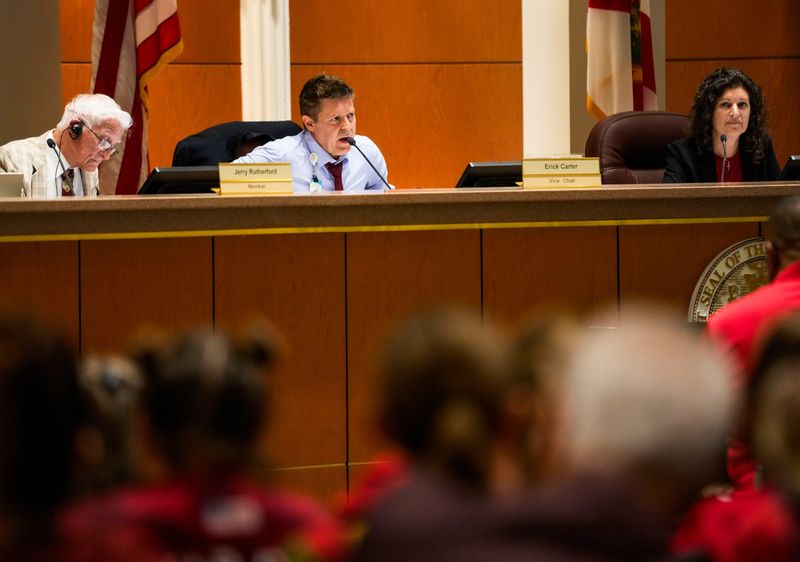
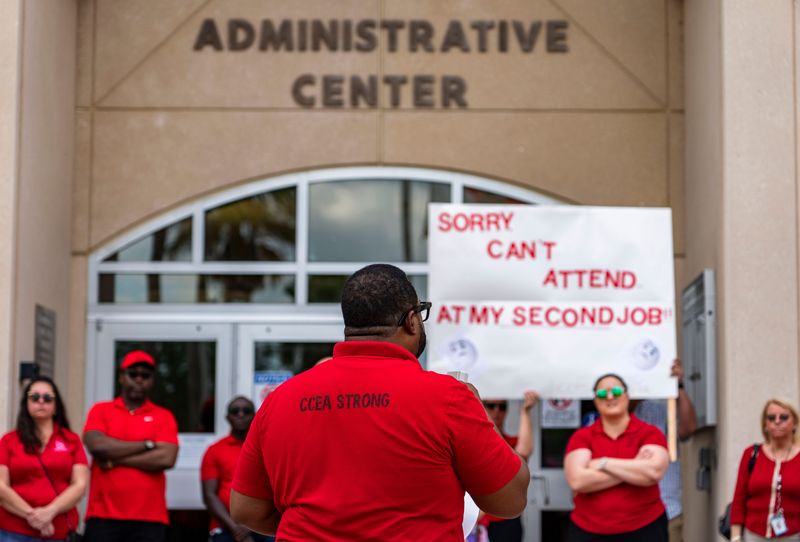
The Collier County School Board voted 5-0 May 6 to formally adopt a teacher salary package for the 2025-26 school year.
The decision ends a labor dispute that reached a formal impasse after eight months of failed negotiations between the district and the Collier County Education Association (CCEA).

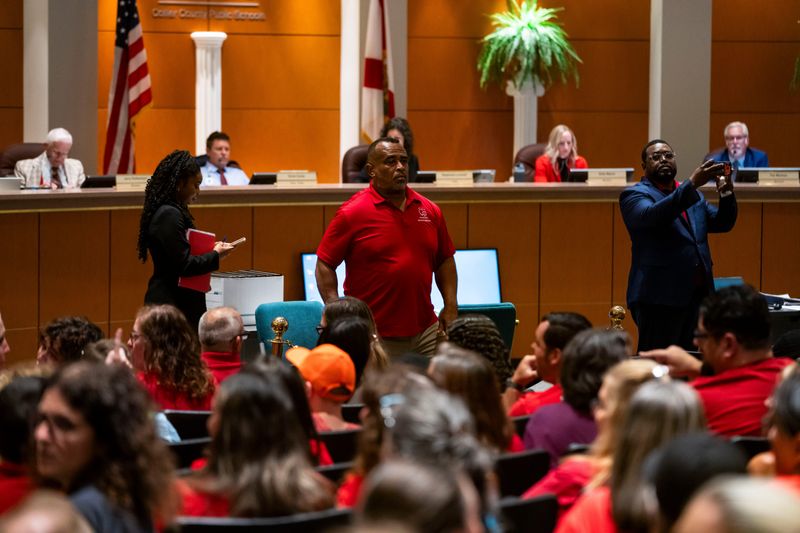
Following the vote, board members voiced frustration over the union’s conduct during a previous public hearing, while union leadership argued the board’s final offer fails to provide a livable wage for teachers.
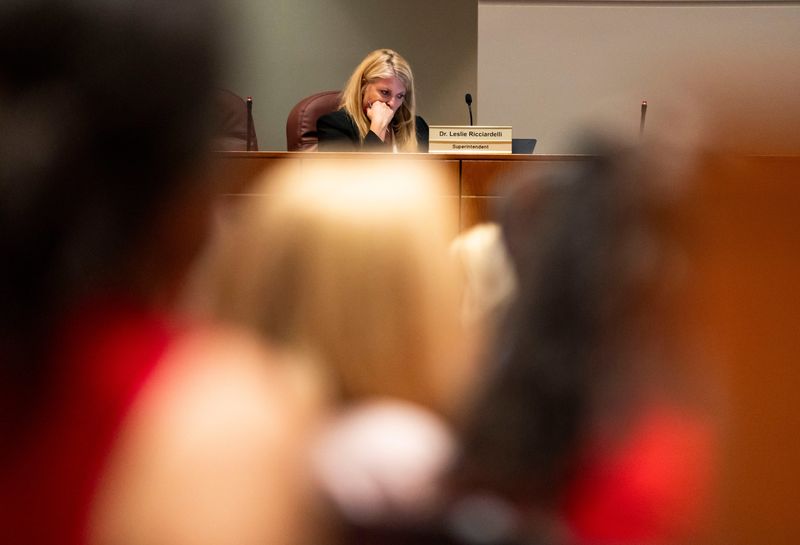
The board followed Superintendent Leslie Ricciardelli’s recommendations to resolve the impasse. Under the new terms, “grandfathered” teachers — those who were hired before July 1, 2014 — who are rated effective or highly effective will receive a $1,350 increase to their base pay. All other teachers will receive a $1,350 base pay increase, with an additional $880 awarded to those with a highly effective rating.
The total cost of these increases is approximately $8.2 million. Teachers will receive their retroactive pay in a single check, beginning in August 2025, when teachers continued working under their old salaries while contract talks remained at an impasse.
School board member Stephanie Lucarelli explained the delay in payment, saying, “The only reason that teachers haven’t seen anything yet is because the union and the district could not agree, and we are here. No other reason than that.”
During the meeting, board member Kelly Mason characterized the union’s behavior at the impasse hearing Friday, May 1, as a “circus” intended to divide the community. Mason singled out a comment made by the union’s attorney regarding teacher pay.
“He used the term ‘golden handcuffs’ as a reason to stay,” Mason said. “It’s an idiom that refers to financial incentives that keep someone stuck in a job or situation, even if they prefer to leave. The handcuffs aren’t literal. They’re golden because they are valuable, but still restrict your freedom.”
Mason continued, “I thought his conduct throughout the entire process was, frankly, a disgrace. It was disrespectful and rude to the employees who work in our district.”
Other board members shared concerns about the public perception of teachers following the hearing.
Board member Erick Carter shared a conversation he said he had with a client who was troubled by reports of how teachers behaved during the impasse proceedings. Carter and his wife are co-owners and managers of a small business, Salon Zenergy.
“He said, ‘If I had a kid in public schools right now, hearing how those teachers behave, I would take the voucher and pull them out of public schools and move to a charter or a private school,'” Carter said. “One thing I’ve always known as a business owner is that leadership reflects attitude. Good leaders can calm a situation down or they can provoke it even further.”
Lucarelli chimed in. She shared that she spent almost all of May 3, at a local school helping to set up for Staff Appreciation Week. When she returned home, she said a friend of her husband expressed disbelief that she would spend her personal time supporting teachers after seeing the conduct displayed on the news.
“His response was, ‘Why would you do that? After what I saw on the news, I cannot believe you were willing to give your time to do that to people who were so disrespectful,'” Lucarelli shared. “And that hurt me more than anything because that’s not who our teachers are. I know that that’s not who they are. That is clearly a very, very small minority, but that is not who our teachers are.”
How has union leadership responded?
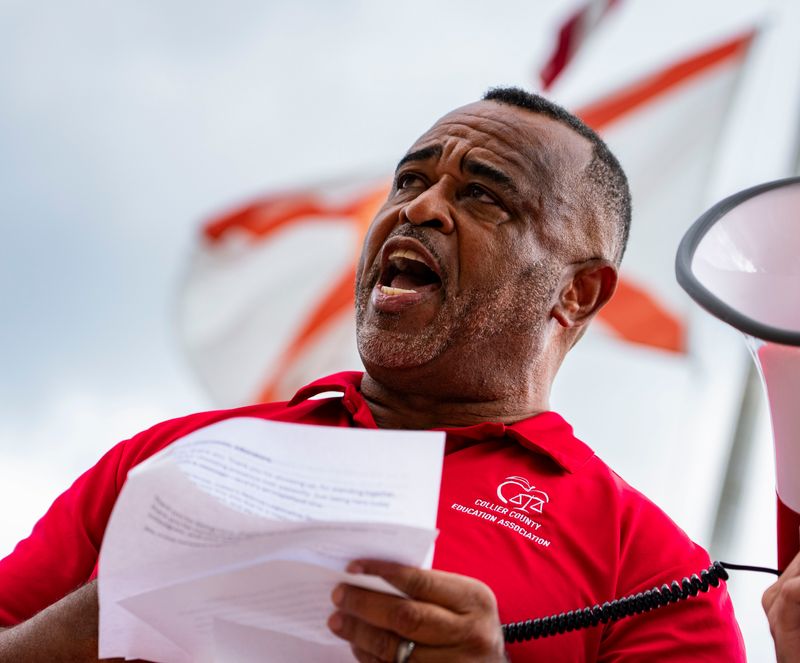
CCEA President Ken Mouton rejected the board’s characterization and described the board members themselves as “rude” and “condescending” during the proceedings. The board’s actions, he said, have only further unified the union’s membership.
“What they did last week, it brought us together. We’re not divided. The teachers are not divided,” Mouton said. “When I walk in, they’re happy to see me. They’re happy to see our team. We are more together today than we’ve ever been.”
Mouton also stood by the union’s claim that teachers were not a priority compared to administrators, who received raises of up to 3.75% earlier in April.
“Out of all the Collier County employees, they were paid less,” Mouton said. “Would you be happy with that? Are you supposed to smile and clap? Especially when school board members are talking down to you, while they’re telling you they’re not gonna pay you what you deserve.”
Where does the district get the money for these raises?
A point of contention during the meeting was the status of the Teacher Salary Increase Allocation (TSIA) funds from the state, which are designated for increasing teacher pay.
During the meeting, Lucarelli clarified that the district had not been withholding the money to collect interest.
“It has been said several times that the district has had that TSIA money, the TSIA dollars, that we have had that since January, July. We have not had any of that money since July. In fact, we couldn’t even request it from the state until we had an agreement with the teachers’ union,” Lucarelli said.
Mouton challenged the assertion that the district didn’t have that money until recently.
Florida Education Association (FEA) President Andrew Spar clarified how these funds are distributed to districts.
“The teacher salary allocation funds used to be a separate fund, a categorical fund, but now it’s just part of the FEFP [Florida Education Finance Program]. The FEFP is distributed to districts at points throughout the year. They get a bunch up front, and then they get them throughout the year based on student enrollment,” he explained.
But now, Spar explained, districts are told how much of that pot of money they must use toward teacher salaries. He noted that while the district receives the allocation throughout the year, it cannot actually distribute the “growth” portion of it to teachers until the contract is finalized.
How is the cost of living impacting teachers?
The conflict in Collier County reflects a broader economic crisis for teachers across the state.
For the third year in a row, Florida has ranked 50th in the nation for average teacher pay, according to newly released data from the National Education Association (NEA).
In the state, only Sarasota County has a higher starting pay for teachers than Collier County — at $57,500.
Many Collier teachers said they cannot afford to live in the areas where they teach. Some commute from neighboring Lee County to save on housing costs.
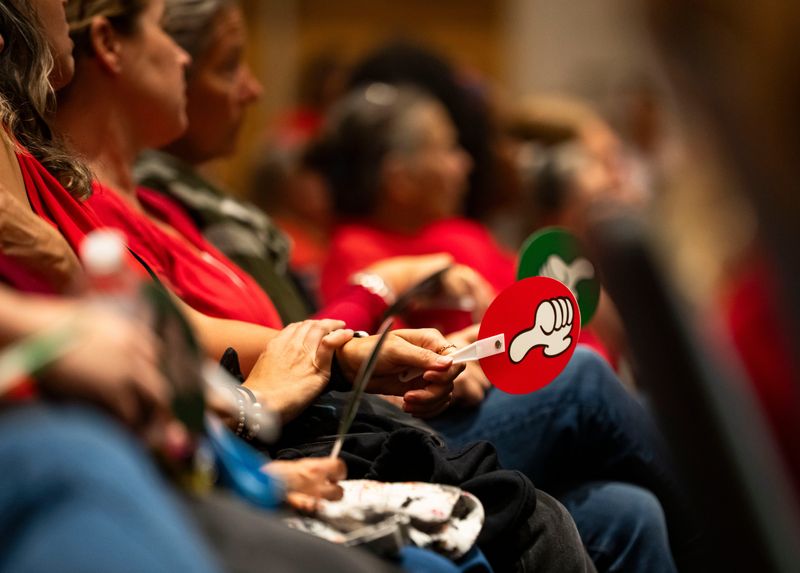
During a rally last week, one teacher asked how many teachers work multiple jobs to make ends meet. Dozens raised their hands.
Samantha Ehl, a Collier teacher and mother of three, said she and her husband work at a bar after school hours to cover expenses.
“I cannot afford to live here,” Ehl said during the rally April 27. “I live in Lee County and drive into Collier County just to be here. I get home at 10:30, 11 o’clock at night, and I am still in my classroom the next morning busting my rear, following their curriculum maps. I want my highly effective pay.”
What comes next for Collier County teachers?
While the 2025-26 contract is now ratified, the next bargaining cycle is set to begin in June.
Union leaders and some teachers have suggested that the district should pursue a voter referendum to provide additional local funding for teacher salaries, similar to measures passed in Miami-Dade and Broward counties.
The union is also looking toward the 2026 elections, where board members Jerry Rutherford, Kelly Mason and Tim Moshier will be up for reelection.
“We need to put people in there that actually understand education, that understand the importance of keeping their word,” Mouton said. “We’re going to vote them out.”
This article originally appeared on Marco Eagle: Collier County Schools: Teacher pay finalized; board slams union ‘circus’
Reporting by Mickenzie Hannon, USA TODAY NETWORK – Florida / Marco Eagle
USA TODAY Network via Reuters Connect