As we watched the last “Late Show with Stephen Colbert,” we were reminded that the Ed Sullivan Theater has been the site of many other critical events. Paul McCartney talked about how the Beatles were introduced to the USA in 1964. But something special happened 70 years ago when Elvis first appeared there.
Elvis was at the peak of stardom and public interest in 1956 when Ed Sullivan scheduled him for the show. But at the same time Elvis’s stardom was rising, a deadly virus was wreaking havoc on American youth. The disease came without warning. It particularly affected children, who could wake up with a fever and end up paralyzed a few days later. Some lost the ability to walk. Others lost the ability to breathe. In the United States alone, nearly 60,000 were infected during the major outbreak in 1952. Several thousand died. Many of those who survived were left scarred and disabled for life.

But in 1955, the researcher Dr. Jonas Salk managed to develop the first successful polio vaccine. Parents flocked to vaccination programs with their children, and the result was a sharp decrease in polio infections, paralysis and deaths. But even if vaccinated children were now spared, the virus was still rampant and affected young people. Most people believed that teenagers were not at risk, and therefore very few of them would get vaccinated. Polio was seen as a children’s disease, which made families with limited finances reluctant to invest in a vaccine that might not be worth it when more immediate needs predominated. Public health scientists had to get young adults involved to control the disease. The challenge was to reach young people.
The most popular entertainment program in the United States at the time was “The Ed Sullivan Show,” more popular than any existing shows today.
When the New York City Board of Health was discussing how to reach America’s youth about the polio vaccine, one of the representatives had a wild idea. What if they got Elvis Presley himself to get the polio vaccine, and thus reach the youth through him? They saw that Elvis was coming to New York to be a guest on Ed Sullivan, and they called agent Tom Parker with a polite request: Would Mr. Presley be so kind as to receive a polio vaccine just before he was to appear on the show?
The Board of Health was prepared to never hear back, and at best hoped for a rejection so they could settle for it. But ten minutes later, the agent called them back. Elvis said yes.
Hundreds of newspapers across the country published pictures of the star getting an injection in his arm from the doctor. And the pictures went around the world. Millions of Americans got to see Elvis himself get the polio vaccine and were eager to get vaccinated too.
Before Elvis got the shot, only 0.6 percent of American teenagers had been vaccinated. Six months later, the number had risen to 80 percent. The result was astonishing. The annual incidence of polio in the United States decreased by almost 90% between 1955 and 1960. Thanks to the vaccine.
It is impossible to calculate how many lives were saved with this stunt. But no other individual than Elvis has ever had that kind of impact on U.S. health policy history.
Is it strange that one celebrity should have such a tremendous impact on public education and health policy? Skepticism must be allowed to exist, and critical questions are necessary and welcome. But presenting historical events as fabricated, and one’s own wild theories as science, can be disastrous. And it quickly becomes so − with the U.S. president who suggested injecting disinfectants into the body against Covid. Or the U.S. Secretary of Health who is a vaccine opponent and comes up with completely unsubstantiated theories that he presents as science.
Elvis and the polio vaccine were a huge success back then. But now which famous person will publicly get the Covid boosters as the virus continues to evolve, or to publicly get vaccinated for RSV, pneumonia, influenza, shingles, and other illnesses that are present? Who will publicly vaccinate their infant against meningitis, measles, mumps, rubella, smallpox, rotavirus, RSV, hepatitis A and B, and chicken pox to combat the irrational fear of childhood vaccinations that has become so prevalent and is even endorsed by individuals in power with no background in science, or who choose to ignore science for political reasons?
We live in a time where celebrities, podcasters and influencers once again have the power to shape people’s relationship with science. Like Elvis, who accepted the request from public health officials without knowing the extent of his generous act, these people need to stand up for science and public health.
To them I say, to quote Elvis: “Don’t Be Cruel.”
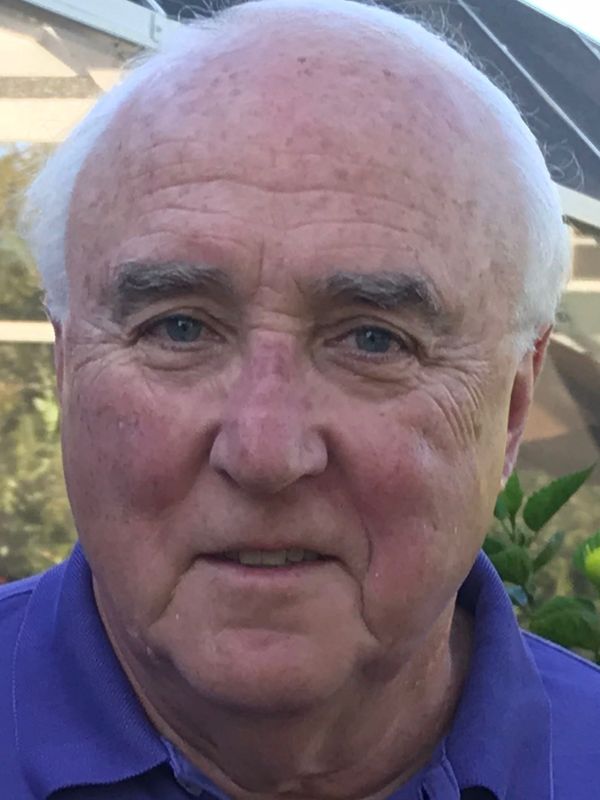
Michael F. Finkel, MD, of Naples practiced adult and child neurology for 40 years, including Mayo Clinic and Cleveland Clinic appointments. He is a Fellow of the American Academy of Neurology, a Fellow of the Florida Society of Neurology, and a retired member of the Child Neurology Society.
This article originally appeared on Fort Myers News-Press: Celebrities: Be like Elvis for public health | Opinion
Reporting by Michael F. Finkel, MD / Fort Myers News-Press
USA TODAY Network via Reuters Connect