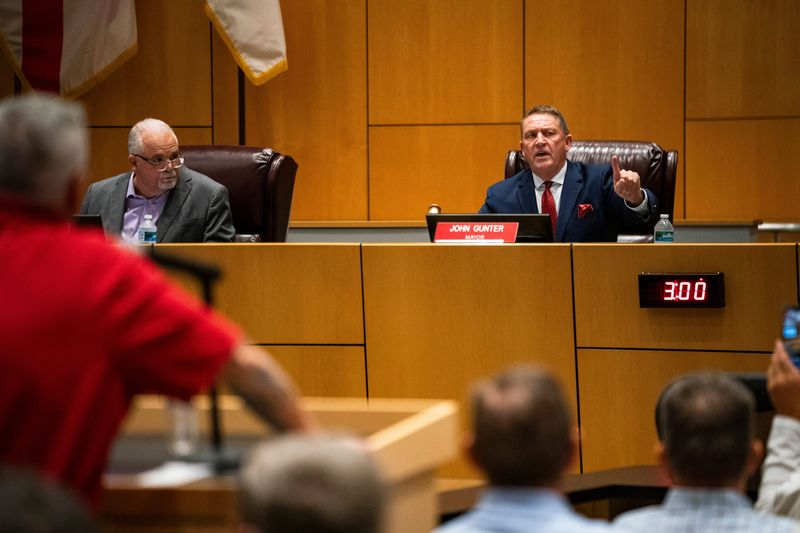
The Cape Coral City Council approved changes to how public input is handled during its meetings. The move has drawn criticism from residents amid ongoing tensions with city officials.
Starting July 16, regular council meetings will begin an hour earlier at 4 p.m., and public comment will now occur at the end of meetings, rather than near the start. Residents will also need to fill out public comment cards in advance if they want to speak.

“This adjustment allows more residents to attend after work and provides the opportunity to listen to presentations and discussions on agenda items before offering comments,” a city statement read.
The council approved the changes in a 6-2 vote June 4, with Councilmembers Jennifer Nelson-Lastra and Derrick Donnell in dissent.
Councilmember Rachel Kaduk explained the new comment cards will help staff follow up with speakers and understand their concerns. “That was the whole purpose of the cards, to capture what they are here to talk about,” Kaduk said.
“It’s going to be a game-changer, in my opinion, for the community,” Mayor John Gunter said.
Nelson-Lastra said the time change was meant to address complaints from commuters stuck in traffic trying to reach City Hall from Fort Myers. She pushed for a compromise: a 30-minute input session at the start for consent agenda items and another at the end for general comments. That proposal failed in a 4-4 tie vote. Councilmembers Nelson-Lastra, Laurie Lehman, Donnell and Joe Kilraine voted in favor, while Gunter and Councilmembers Keith Long, Bill Steinke and Kaduk opposed it.
What are residents saying about the changes?
Some residents see the move as an effort to silence critics.
Louis Navarra, a frequent council attendee, called the policy change “fascist” and said it would end public participation.
“Input time at the end of this council (meeting) is wrong,” Navarra said. “By that time, it shows me that you had your minds made up anyway.”
He referenced the council’s reasoning for increased accessibility. “You want to change it to 4 p.m. for the young people; they’re still working,” he said. “You’re just drawing excuses to limit the citizens.”
During a council meeting May 21, former Councilmember Kevin McGrail warned the council that shifting public input to the end of meetings effectively eliminates meaningful input on critical items, especially those on the consent agenda, most of which are voted on earlier in the meeting.
“Why would citizens wait around until the end of the meeting if decisions have already been made?” McGrail asked. He and others also raised concerns about elderly residents and parents who may not be able to stay late.
Resident Tom Shadrach, who was also at the May 21 meeting, agreed and said citizens should have the right to speak before votes take place.
Have public comment periods been problematic before?
The last city council meeting on May 21 turned contentious when applause and disruptions during public comment prompted Mayor Gunter to call for a 15-minute recess. He warned attendees multiple times to stop clapping, saying it wasted other speakers’ time.
Kyle L’Hommedieu, a resident who is leading a recall campaign against the mayor, said the mayor called the recess due to his own temper, not the public’s behavior.
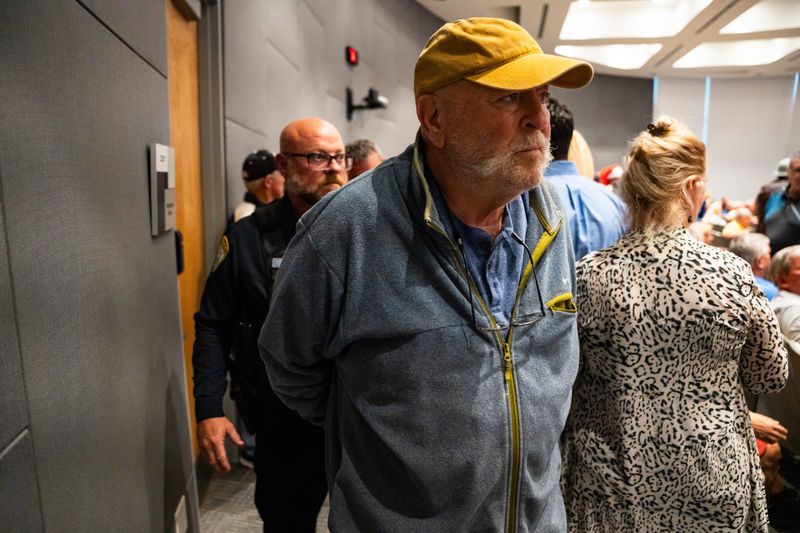
At the council meeting June 4, Navarra was escorted out by police after a heated exchange with Kaduk. Kaduk said Navarra screamed at her and told her she should resign because she’s pregnant. Navarra disputed that, saying he merely questioned whether she should continue serving if she was too busy.
The city’s handling of decorum at meetings drew attention last year after resident Scott Kempe was arrested on Dec. 13, 2023, for refusing to leave council chambers.
Kempe had previously been removed from a meeting Oct. 11, 2023, for kneeling on a chair and turning his back on the council as a way to protest Jaycee Park renovations. The mayor had asked him to sit properly, but Kempe refused. Gunter ordered the police to physically remove him, and he was escorted out.
At the December 2023 council meeting, Kempe cited a city rule requiring a council vote to reinstate banned attendees. “Just arrest me, and I will see you in court,” he told officers.
He was charged with trespassing and resisting an officer without violence but was released on bond. The State Attorney’s Office dropped the charges in January 2024, citing insufficient evidence.
Kempe filed a federal lawsuit in March 2024, alleging First and Fourth Amendment violations. The city settled the case in August 2024 for $100,000, paid by its insurance provider. The city said the decision was made to avoid prolonged litigation and that it was not an admission of any wrongdoing on its part.
Following Kempe’s arrest, the city updated its rules in February 2024. Anyone removed from council chambers for disruptive behavior is barred from council-related meetings for 30 days. A second violation within 90 days extends the ban to 90 days. A third violation within one year adds another 90-day ban, after which the individual must formally petition the council with a justification to regain meeting access.
Is this about more than public comment?
Although public comment has been the primary focus, some residents see the changes as part of broader concerns about transparency and accountability at City Hall.
Criticism has centered on communication practices, the timing of decisions, and what some perceive as a reduction in public input on local matters.
Mickenzie Hannon is a watchdog reporter for The News-Press and Naples Daily News, covering Collier and Lee counties. Contact her at 239-435-3423 or mhannon@gannett.com.
This article originally appeared on Fort Myers News-Press: Cape Coral changes public comment at meetings, drawing criticism from some residents
Reporting by Mickenzie Hannon, Naples Daily News / Fort Myers News-Press
USA TODAY Network via Reuters Connect