A high-stakes mission is on the cusp of launching an uncrewed spacecraft on a bold journey to save a NASA telescope from certain doom as it plummets back to Earth.
NASA’s Swift Observatory is at risk of falling to its fiery death in the atmosphere after more than two decades of observing the cosmos from Earth orbit.

But that won’t happen if NASA has anything to say about it.
In less than a year, the U.S. space agency and commercial aerospace partners have raced against the clock to mount a daring rescue mission that could finally commence in June. If successful, the venture NASA understatedly refers to as the “Swift boost mission” would not only extend the life of the observatory, but be the first of its kind.
“Swift has been a key player in NASA’s efforts to understand how the universe works, and we’re looking forward to getting back to that work after the boost is complete,” S. Bradley Cenko, Swift principal investigator at NASA’s Goddard Space Flight Center, said in a statement.
Here’s everything to know about the mission to save the Swift Observatory, including how it could make spaceflight history.
What is the Swift Observatory?
NASA’s Swift Observatory has spent more than two decades orbiting Earth while studying a variety of cosmic phenomena. The satellite’s primary objective, though, is to observe gamma-ray bursts – events triggered by the catastrophic deaths of massive stars and considered to be the most powerful types of explosions in the universe.
The satellite is equipped with three multiwavelength telescopes that are able to collect data in visible, ultraviolet, X-ray and gamma-ray light.
Where was the Swift Observatory launched in Florida?
The Swift Observatory was launched Nov. 20 2004 atop Boeing’s expendable Delta II rocket from what is now known as the Cape Canaveral Space Force Station in Florida.
Why is the Swift Observatory falling?
The Swift Observatory is in a region of space known as low-Earth orbit nearer to the atmosphere, which is also where the International Space Station resides.
All spacecraft in that region can expect to fall to lower altitudes if they don’t have propulsion systems to counteract atmospheric drag and maintain their orbits. But the Swift Observatory has fallen faster than NASA has anticipated because of increased solar storms since fall 2024.
Why does NASA want to rescue the space telescope?
NASA could allow the Swift Observatory to fall back to Earth, where it would harmlessly burn up as it careened into the atmosphere.
Instead, the space agency is planning a mission to rescue the telescope and extend its mission for several more years – negating the need to spend more money to replace the observatory, NASA said in a press release.
Why is the mission a big deal?
A successful mission would mark the first time that a commercial robotic spacecraft captures a government satellite that – unlike other spacecraft like the Hubble Space Telescope – was never meant to be serviced in space. The unprecedented venture, NASA leaders say, would also test a new capability that could be used on other future missions.
What is the spacecraft tasked with the rescue mission?
The spacecraft that will attempt to rescue the Swift Observatory was developed by Katalyst Space, an aerospace company based in Flagstaff, Arizona, which was awarded the $30 million contract in September 2025.
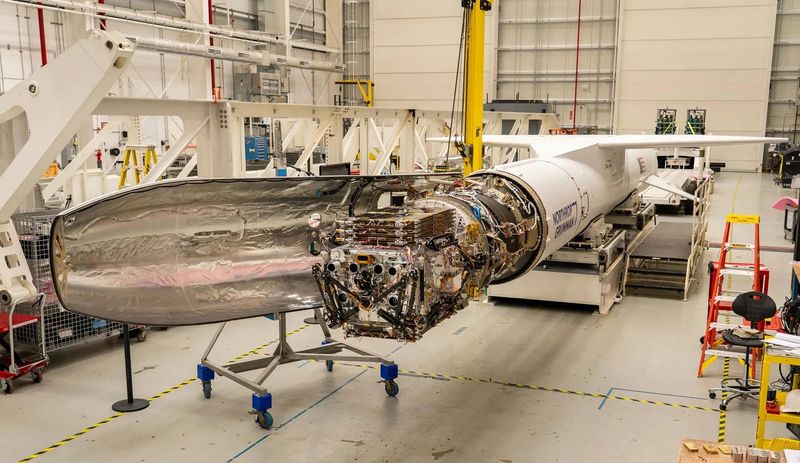
Because Swift has no docking ports or grappling fixtures to grab onto, Katalyst built its 880-pound, 5-foot tall LINK spacecraft with a custom robotic capture mechanism that will attach to a feature on the satellite’s main structure. The process is meant to mitigate the chance of any sensitive instruments being damaged, Katalyst said in a press release.
How long does NASA have until the satellite is destroyed?
Swift is falling – and falling fast.
According to Katalyst, the satellite has a 50% chance of making an uncontrolled reentry by mid-2026 without intervention, with those odds increasing to 90% by the end of 2026.
In the meantime, mission teams on the ground are keeping Swift at least 185 miles above Earth, where the boost mission has the best chance of success, NASA said.
What rocket will launch the rescue vehicle to space?
Northrop Grumman, a Virginia-based aerospace and defense company, manufactures the rocket selected to launch the LINK spacecraft into orbit.
At about 55 feet tall, Northrop Grumman’s Pegasus XL is classified as a small-lift rocket. Regarded as the world’s first privately developed orbital launch vehicle, the rocket has flown on 45 missions, including its maiden voyage in 1990.
When was the rocket, spacecraft integrated?
In mid-June, LINK was securely encapsulated in a payload fairing inside the Pegasus XL rocket at NASA’s Wallops Flight Facility in Virginia, according to Katalyst.
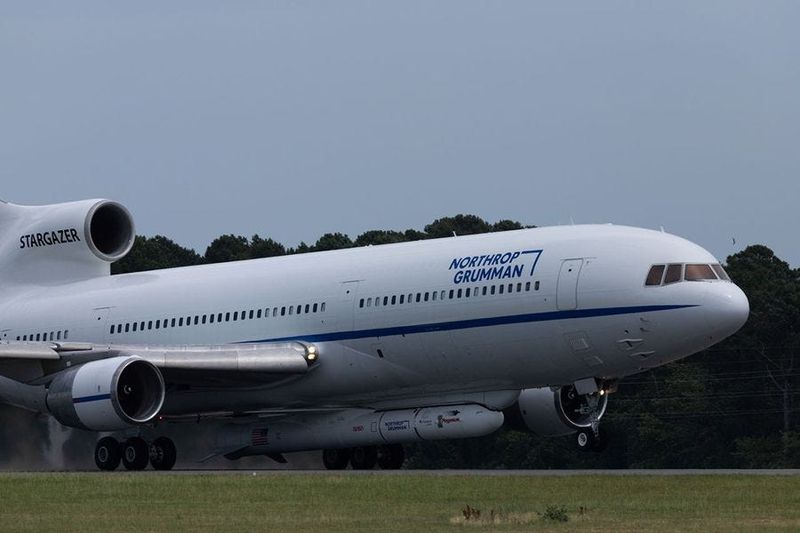
The Pegasus XL was also attached around the same time to the belly of Northrop Grumman’s Stargazer aircraft, tasked with deploying the rocket, NASA said in a press release. The Stargazer aircraft then took off June 18 from Wallops bound for the Marshall Islands, where the mission is due to commence.
When, where is launch?
The Pegasus XL rocket is due to launch later in June from the Kwajalein Atoll in the Marshall Islands, located in the South Pacific Ocean between Hawaii and the Philippines, according to NASA.
NASA is working toward a Tuesday, June 30 liftoff, with a window opening at 6:23 a.m. ET.
What will happen during the rocket launch?
Rather than get the rocket off the ground vertically on a launch pad, Northrop Grumman deploys an air-launch strategy to send the Pegasus to space. The approach will require the company’s Stargazer L-1011 aircraft to take off and climb to approximately 40,000 feet over the ocean, where Pegasus will be released.
After several seconds in free-fall, the Pegasus XL will then ignite the first of its three-stage rocket motors, delivering LINK into orbit in about 10 minutes, according to Northrop Grumman.
What comes after launch?
Once LINK is in orbit, Katalyst will spend a few weeks evaluating the spacecraft’s propulsion, navigation and sensor systems. The spacecraft will then be ordered to slowly approach and survey Swift before grabbing the observatory with its robotic arms and slowly raising the orbit to nearly 370 miles.
That process is expected to take several months, according to NASA.
Eric Lagatta is the Space Connect reporter for the USA TODAY Network. Reach him at elagatta@usatodayco.com. Subscribe to the free Florida TODAY newsletter.
This article originally appeared on Florida Today: Can NASA save the Swift Observatory? Agency has a plan to try
Reporting by Eric Lagatta, USA TODAY NETWORK – Florida / Florida Today
USA TODAY Network via Reuters Connect

By Eric Lagatta, USA TODAY NETWORK – Florida | USA TODAY Network