On Oct. 9, The Palm Beach Post met three children being escorted to Guatemala to be reunited with their mother.
They are part of the growing number of children, many of whom are U.S. citizens, who are left behind after their parents get detained and deported in the Trump administration’s immigration crackdown.

Parents are being picked up while riding on landscaping and construction trucks, coming back from running errands and by immigration agents showing up at their doors.
Just three examples: Alejandro,12, and his six younger siblings found out from their landlord that their parents had been detained by immigration agents. Beatriz, 12, got home one day from school but her mother wasn’t there. Lissette, 10, and her brother Antonio, 6, were home when ICE agents knocked on their door and took their mother.
They, like untold numbers of other children, are left to fend for themselves. While some have relatives that can take up their care, many stay with distant family, friends and neighbors.
The children, many of whom are U.S.-born, who don’t have anyone to take care of them have two choices: going into foster care or traveling to be reunited with their parents.
Mariana Blanco, the leader of the Guatemalan-Maya Center, has been helping the children contact their parents, placed some of them in temporary housing, requested passports for them and arranged flights to reunite them with their parents in Guatemala.
“What the government is doing is reprehensible,” Blanco said. “They are detaining people, many who have been following their legal cases for years, leaving their kids vulnerable.”
“Last week we helped reunite six U.S. citizens to be with their mom in Guatemala. This week we sent another U.S child — all to a country that is foreign to them, forcing them to leave everything behind,” Blanco added.
Oscar de la Guardia, an attorney who traveled with the three groups of children to Guatemala, said thousands of children, many who are U.S. citizens, are having their lives uprooted as a consequence of Trump’s immigration enforcement operations.
“These kids are basically becoming reverse refugees and being forced out of the only home they’ve ever known,” said de la Guardia, who is with the Copper Levenson Law firm in Miami.
“This is not the America that I thought I grew up in,” he added. “We are tearing their families apart.”
Blanco said all the children her nonprofit has helped reunite come from indigenous Mayan tribes and will now live in isolated, rural communities that still face prosecution by the government.
“They are going back to a place where resources are scarce and where school is not always an option,” Blanco said. “This shouldn’t be happening.”
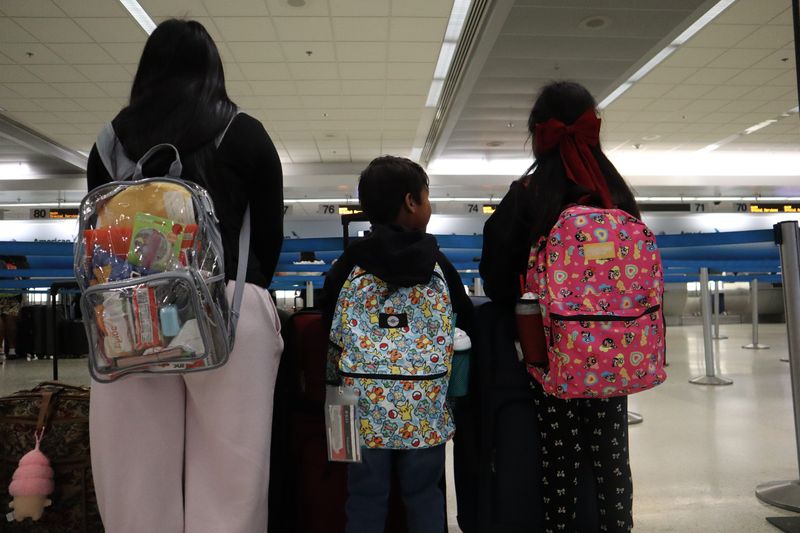
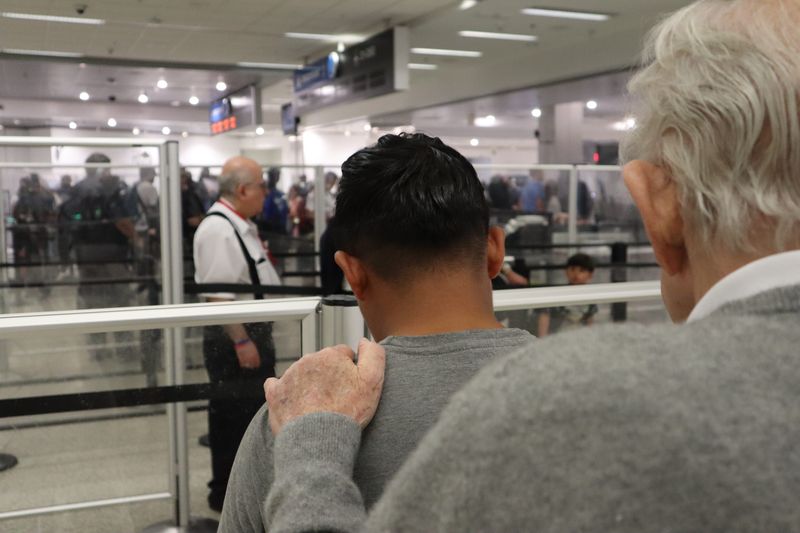
The Post accompanied Blanco and three of the children to Miami International Airport before they boarded their flights to Guatemala, and spoke with their attorneys and the staff at the Guatemalan Mayan Center to learn their stories.
Alejandro: A 12-year-old’s trumpet silenced
Alejandro, 12, was home with his seven younger siblings waiting for their parents to return when they heard an unfamiliar knock on the door.
It was their landlord. She said their parents had been detained by immigration agents.
A friend of the family, she promised to stay with them until they could figure out what to do. She brought the seven children back to her place and called Blanco.
The six youngest children are U.S. citizens, born in West Palm Beach. Alejandro, however, was 3 when his parents brought him from Guatemala and has been raised along with his siblings in Palm Beach County.
At the start of this school year, Alejandro accomplished his dream: He earned a spot in his school’s band playing the trumpet. His teacher loaned him a trumpet, which he took with him everywhere.
In September, Alejandro had to return the trumpet he just begun to love. He also said goodbye to his classmates, bandmates and teachers.
After being detained, his parents were deported to Guatemala. Both were undocumented but didn’t have a criminal record and were removed from the United States without having the chance to get their case heard by a judge.
Blanco got in contact with the children’s parents, who now live in a rural area. She had to wait for the couple to travel to the nearest town to get phone reception to speak with them.
Without anyone to care for the seven kids, the parents pleaded for Blanco’s to help send them to Guatemala. The six U.S. citizens would be going to a country they had never been to before. Alejandro had not gone back since he arrived with his parents.
The Guatemalan-Mayan Center raised over $2,000 to pay for tickets with the help of the Florida Immigrant Coalition.
All the children were thrilled at the news that they would soon see mom and dad. Alejandro, being the oldest, also felt relived but knew that once he got on that plane, he would never come back to the United States.
A day before the flight, Alejandro broke down in tears.
“He was just completely devastated,” Blanco said. “It was very clear that he was not going to continue his studies, and when he arrived home, he was going to have to help around the house and start working.”
In the airport, the Rev. Frank O’Loughlin, a priest who has worked with immigrants in South Florida for more than 50 years and who founded the Guatemalan-Maya Center, surprised Alejandro with a black case. Inside lay a trumpet that he could take to take to his new home.
Beatriz: ‘Home is where her mom is’
One August afternoon, Beatriz came back from school and her mother wasn’t home. Beatriz waited and waited, but her mother never appeared.
By nighttime, her neighbor realized Beatriz was still alone and immediately called Blanco.
The next day, Beatriz learned her mother was picked up by immigration agents who had pulled over the landscaping truck she was riding in and took multiple undocumented workers into custody.
Beatriz’s life was turned upside down.
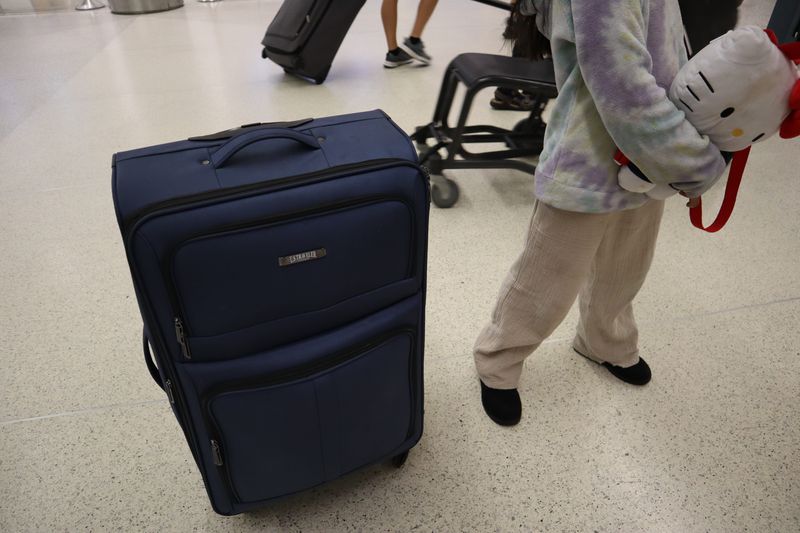
She had to pack her entire life into a suitcase and a backpack, and for the next two months jumped from house to house until she stayed with a distant half-brother in the southern part of Lake Worth Beach.
Living with her half-brother, Beatriz walked an hour to school and an hour home everyday.
Blanco managed to get in contact with Beatriz’s sister in Guatemala while her mother remained in detention. They decided to have Beatriz move to Guatemala after her half-brother said she couldn’t stay with him any longer.
Five days before the trip, Beatriz spoke to her mother for the first time in two months. Blanco said it was the first time she saw Beatriz cry since they met.
“Everything is going to be OK. We are were going to see each other soon,” her mother repeated on the phone while Beatriz sobbed, unable to utter words.
Two days before the trip Blanco asked Beatriz what she wanted as a gift to take on the trip.
“Can you please buy my mother some underwear?” Beatriz said.
On Oct. 9, Beatriz stood anxiously in the Miami International Airport concourse waiting to board a plane for the first time. It would take her to a country she had never been before to reunite with her mother.
“Even though she is going to a country that is completely foreign, for her home is where her mom is,” Beatriz told Blanco.
When Beatriz arrived in Guatemala, a family friend came to pick her up. Her mother couldn’t afford transportation to make the eight-hour trip to the airport from the rural village where she lives.
In Guatemala, school tuition is only free until sixth grade. Beatriz will continue her studies with help from a nonprofit that will sponsor her high school education.
“All of that speaks to all the barriers that families are facing and how difficult it is to reunite a child who has no fault in this, who is an American citizen and who has all the rights to be here,” Blanco said. “But also how quickly we can just devastate their lives.”
Blanco added: “She’s been stripped away from her childhood.”
Antonio and Lissette: Seeing mom, but leaving dad behind
It was still dark outside when Mauricio woke up and dressed his half-asleep son Antonio, 6, and his daughter Lissette, 10, for the last time in the foreseeable future.
That morning, the two children would take a plane to Guatemala, and Mauricio didn’t know when he would see them again.
Mauricio carefully split his daughter’s long, brown hair in half, took two strands and braid them into a half pony tail before holding them together with a red bow.
Usually, it was Lisette’s mother who braided her hair, but ever since she was picked up by immigration agents, her father had taken upon himself to learn how to braid her hair.
Lissette and Antonio were home when the agents arrived looking for their mother. Their aunt hurried the children into a room so they couldn’t see as the agents arrested their mother and took her away.
Mauricio found out his wife had been taken when he got home from a long day working in construction.
Where was his wife? How would he take care of the two children? Were they coming to get him next? What would happen to their children then? Mauricio asked himself again and again, without being able to come up with any answers to his questions.
“He was super distraught after they took his wife,” Blanco said. “His family stepped in to take care of the kids, because he just couldn’t do it on his own.”
After talking to his family, Mauricio made the toughest decision of his life: He would send their children back to the country he had fled years before so they could be reunited with their mother. It was the best for them, he said.
Mauricio showed up at the Guatemalan-Mayan Center seeking help to send their children to Guatemala.
Blanco helped arrange for their travel and visited their home to drop off suitcases for the trip. She broke the news to Lissette and Antonio that they would be getting on a plane to see their mom.
Their eyes light up at the words “plane” and “mom,” Blanco recalled. Lissette ran to her father and wrapped her arms around him screaming with excitement, but she quickly pulled herself back.
She realized her father would not be joining them in their trip and broke down sobbing in his lap.
At the airport, Mauricio held back tears as he watched his children wander around the concourse.
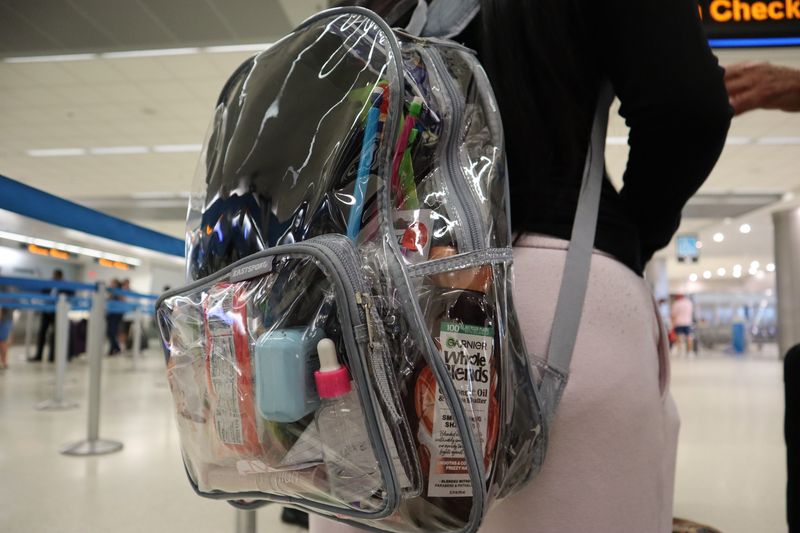
Maria de la Guardia, a teacher at the Guatemalan-Maya Center, sat them down to go over all the things in their new backpacks: They had notebooks, folders, stickers and new set of colors. She explained they would go through security and board the plane, and that their mother would be at their airport waiting for them.
Mauricio held his children’s hands as the group made the line to check them into their flights. Yards away, border patrol agents were escorting three men who were getting deported onto a commercial flight.
As the grouped reached the entrance to TSA, Mauricio got on his knees and hugged his children tightly. Lissette and Antonio both began crying, with their heads buried in their father’s chest.
“Dad is just going to pack up a couple of things and see you there. I love you,” Mauricio whispered in Spanish.
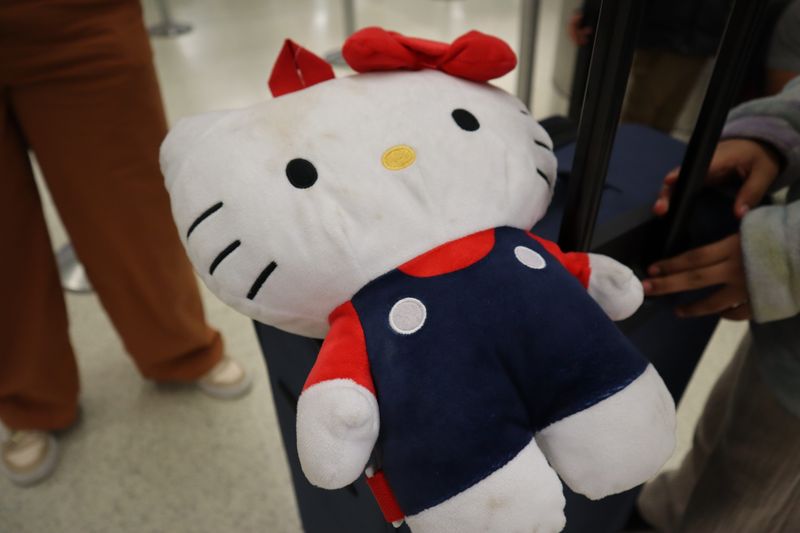
Lissette kissed Mauricio on the cheek and dried her eyes. She grabbed Antonio with one hand and held her Hello Kitty plushie with her other and began walking next to Beatriz.
Once the children passed through security, Mauricio broke down sobbing. O’Loughlin wrapped his arms around Mauricio and held him in prayer.
Then Mauricio cried the entire way back to Lake Worth Beach. He couldn’t say much other than he knew that it was the best for his children.
Three hours later, Lissette and Antonio arrived in Guatemala and met their mother, who was waiting for them with balloons outside the airport.
Antonio clung to his mother’s arms and asked: “Dad said he was coming. Where is he?”
Valentina Palm covers Royal Palm Beach, Wellington, Greenacres, Palm Springs and other western communities in Palm Beach County for The Palm Beach Post. Email her at vpalm@pbpost.com. Support local journalism: Subscribe today.
This article originally appeared on Palm Beach Post: Born in the United States, these children were sent to Guatemala to be reunited with parents
Reporting by Valentina Palm, Palm Beach Post / Palm Beach Post
USA TODAY Network via Reuters Connect