Florida’s first lightning-related death of the year happened on the rain-swollen Blackwater River in Milton as the atmosphere trembled and detonated, unleashing a thunderstorm that ended the life of an 18-year-old man.
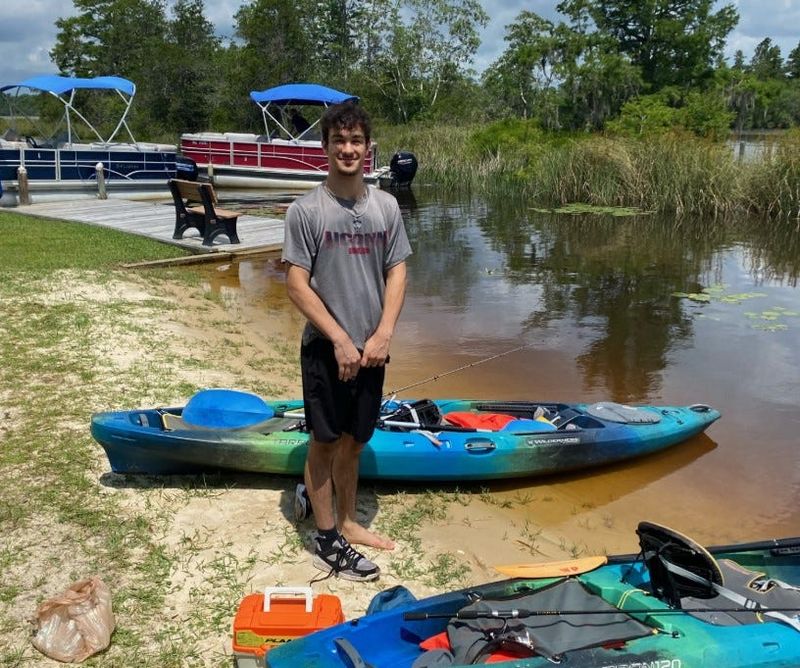
Michael Aidan Vargas, who went by Aidan and was a passionate angler, was kayaking near Milton on May 31 when witnesses, including Vargas’ father, said they saw him get struck around noon and fall into the water. He didn’t surface.

A desperate search of the current-tugged waterway began with the Florida Fish and Wildlife Conservation Commission taking the lead.
“I heard a very large lightning strike, so loud that it was ear piercing and scared me,” said Steven Sanders, who said he was at the river near where the strike occurred. “Like 20 minutes go by and I see 10 to 15 cops walking the shore and some went by on a boat. They let us know there was a lightning strike and didn’t say much else.”
Where does Florida rank in lightning deaths?
While raucous thunderstorms happen year-round in the Sunshine State, especially in the Panhandle where descending cold fronts are a more regular occurrence, summer is one of the more perilous seasons meteorologically.
Florida leads the nation in lightning deaths with 100 reported since 2006, according to the National Lightning Safety Council. Last year, four people suffered lightning-related fatalities in Florida between June 14 and Sept 22. They died at the beach, while fishing, and on a hunting trip.
The year before, six people died in Florida after lightning strikes. All but one happened between June and mid-September as people sat under a tree in s park, swam at the beach and rode bikes through a neighborhood.
“A good percentage of lightning injuries are associated with leisure activities, particularly boating, fishing and golfing, all of which are popularly in summer,” said Emily Powell, assistant state climatologist at the Florida Climate Center.
In 2018, the National Weather Service in Miami announced fixed dates for the rainy season of May 15 to Oct. 15 in South Florida. Similar to the June 1 start date for hurricane season, meteorologists said set dates may highlight the summer dangers of flooding, tornadoes, severe thunderstorms and lightning.
Why are there so many lightning deaths in Florida?
Florida’s geography is partly to blame for the seasonal tumult. Spiking daytime temperatures trigger invading sea breezes from the coasts that force hot moist air over land to rise in a process called convection.
Depending on the conditions higher in the atmosphere, especially if it’s particularly cold, ice particles form from that rising air. Colliding ice transfers electrons and separates electrical charges with negatively charged ice falling toward the bottom of the cloud, where it can discharge lightning to Earth.
And unlike hurricanes, which typically get days of advanced warnings, lightning is more random, striking in an instant and sometimes far from where the storm seems the worst.
“Once convection is triggered the thunderstorms can develop really rapidly,” Powell said. “Also, what catches people off guard is the lighting can happen at the periphery of the storm and strike 10 miles away.”
What happened in the recent lightning strike that killed a Florida man?
On May 31, there were several factors that could have triggered the Panhandle storm.
In forecast discussions in preceding days, National Weather Service meteorologists noted a back door cold front dripping south that could act as a catalyst.
There may have been a rogue sea breeze, or a passing ripple in winds high overhead called a “shortwave” that pulls warm air up to grow towering cumulonimbus clouds.
FWC officials said the call about the lightning strike came in about 12:25 p.m.
A review of lightning strikes between 12:15 p.m. to 12:36 p.m. by Vaisala Xweather senior scientist Martin Murphy showed a small lightning event with 22 cloud-to-ground strokes (the high energy discharge of electricity) during that period.
Because the exact timing of the strike isn’t known, it’s unclear how many precursor strikes may have heralded a warning, but a much larger thunderstorm was happening at the same time about 40 miles northeast Milton.
“There was that one storm that decided to really get going there over the Milton area and managed to deepen,” said Michael Mugrage, a meteorologist with the NWS office in Mobile, Alabama, which forecasts for the western Panhandle.
It took searchers more than 10 hours to find Vargas useing sonar and dive teams. Helping was the FWC Dive Team, the Santa Rosa County Sheriff’s Office, the Escambia County Sheriff’s Office Dive Team, and Daphne Search and Rescue.
Vargas’ Instagram account includes photos of him boxing and in martial arts gear holding a trophy. Smiling. The quote on his page is “You want to change in a big way, then you need to make some big changes.”
Vargas’ sister, Melissa Vargas, called him her guardian angel.
“He loved all of his family and his friends,” she said. “He would want people to be happy like he always was.”
Visitation and funeral services for Vargas are scheduled for 10 a.m. Saturday, June 6 at the Whithurst Powell Funeral Home, 436 West James Lee Blvd., Crestview, Florida.
Kimberly Miller is a journalist for the USA TODAY NETWORK FLORIDA. She covers weather, the environment and critters as the Embracing Florida reporter. If you have news tips, please send them to kmiller@pbpost.com. You can get all of Florida’s best content directly in your inbox each weekday by signing up for the free newsletter, Florida TODAY, at palmbeachpost.com/newsletters.
This article originally appeared on Pensacola News Journal: Blackwater River lightning death first sign of dangerous summer ahead
Reporting by Kimberly Miller, USA TODAY NETWORK – Florida / Pensacola News Journal
USA TODAY Network via Reuters Connect

By Kimberly Miller, USA TODAY NETWORK – Florida | USA TODAY Network