As the sacred practice of naming a new pope to replace Pope Francis is beginning in Vatican City, the question arises: Is it time a pope names a cardinal from Florida?
To faithful and secular observers alike, naming a Sunshine State cardinal may seem like a no-brainer “yes.”

Florida is the third-largest in U.S. population and is the home of President Donald Trump, Secretary of State Marco Rubio and Attorney General Pam Bondi. It is also the ideological center of the wealthiest and most powerful country on the planet.
So, assigning a senior clergy member to speak on behalf of the Holy See and the pontiff would appear to be meritorious.
“That does need to be examined,” said John Yep, president and CEO of Catholics for Catholics, an organization closely aligned with Trump’s policies. “As far as Florida, that could be something to look at because of its size and importance.”
Political power not enough to influence Catholic cardinal choice?
Currently, cardinals lead U.S. Catholic archdioceses in major cities like Chicago, New York, Washington, D.C., and Newark. They are among 252 cardinals, 21 of whom Pope Francis named in December.
Besides casting votes to elect a pope, the members of the College of Cardinals act as close confidants to the pontiff. They participate in papal consistories that act on matters of significance to the church and are appointed to oversee the Curia, the church’s administrative bureaucracy. The roles, therefore, give them a far more prominent bully pulpit back home.
The considerations in naming a cardinal, however, are far more complex and nuanced than Florida’s supersized standing in American politics. Rather, they are rooted in the millennium-plus-old church’s global interests and vantage points as well as the incumbent pope’s preferences.
On that landscape, Florida, with its bellwether power ranking in America, appears much humbler. The United States accounts for only 4% of the world’s Catholics, a figure further dwarfed by the growth in the “global south” — Africa, Latin America and Asia.
“It is not time for the Vatican to name a cardinal from Florida,” Bryan T. Froehle, professor of sociology and religious studies at Palm Beach Atlantic University, wrote in an email. “There are plenty of cardinals in the USA, which is just a small bit of the world Catholic population.”
A ‘lot of moving parts’ in deciding where cardinals are assigned
There are numerous other factors, too, as sheer demographics and influence are not enough. Vatican-watchers point out archdioceses in Los Angeles (the largest in America), Paris and Milan are not represented by cardinals.
Michael Sean Winters, author and journalist at the National Catholic Reporter, notes that the selection of a cardinal is often more about a specific person and how they fit a particular archdiocese’s needs.
“The thing about a cardinal is that it is personal. You are chosen as an honor to the man,” he said, adding that in the past decade, the “number one” priority has been choosing “somebody who is a good pastor.”
Winters said an example is Cardinal Robert McElroy, the former bishop of San Diego, who late last year was assigned by Pope Francis to lead the archdiocese in the nation’s capital.
He said McElroy is viewed as “the outstanding intellectual in the U.S. hierarchy,” all the more important in an archdiocese with three Catholic universities, including Georgetown University. Winters added McElroy’s appointment also made “sense for a variety of reasons,” including his acumen with fiscal and budgetary matters.
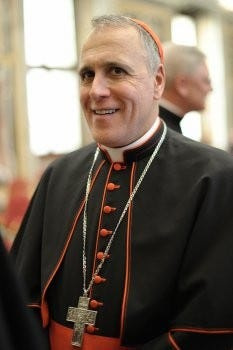
As for Florida, Winters said the assignment of a cardinal “is not impossible.” He noted that Pope Benedict XVI named Cardinal Daniel DiNardo in 2007 to the Galveston-Houston archdiocese based on reasons similar to the case for Florida — the Texas region was growing fast and the state had emerged as a power player.
Whether that is replicated in Florida, however, will first depend on the naming of new bishops across the state to replace those who are on the cusp of retirement — specifically, Winters said, a new archbishop in Miami, the sole Florida archdiocese.
“It’s not impossible, but it will depend on who that person that gets named there,” Winters said. “There are a lot of moving parts.”
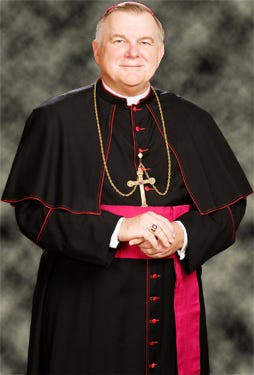
The man currently shepherding the state’s largest concentration of Catholic churches and parishioners said it’s not his call.
“That’s above my pay grade,” said Archbishop Thomas Wenski of Miami.
Antonio Fins is a politics and business editor at The Palm Beach Post, part of the USA TODAY Florida Network. You can reach him at afins@pbpost.com. Help support our journalism. Subscribe today.
This article originally appeared on Palm Beach Post: As the conclave for naming a new pope begins, is it time for a cardinal from Florida?
Reporting by Antonio Fins, Palm Beach Post / Palm Beach Post
USA TODAY Network via Reuters Connect