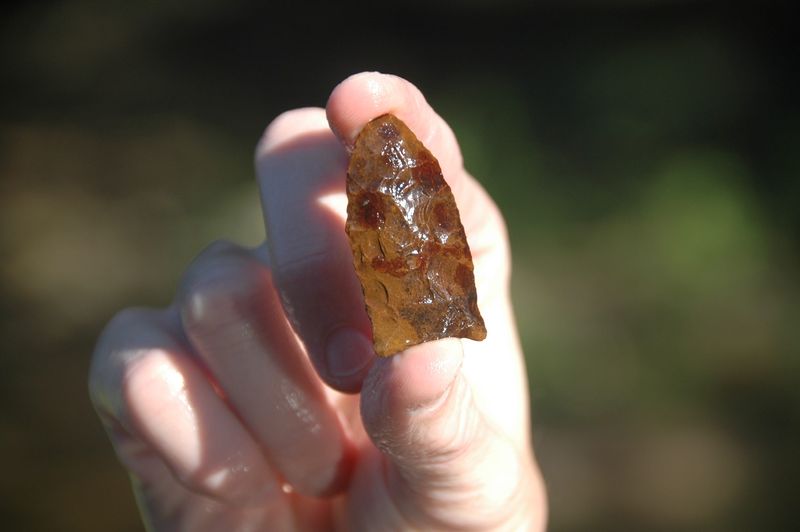
Imagine this: You’re wading through a sunlit Florida riverbed with your 8-year-old son when he spots something half-buried in the sand— a weathered arrowhead, its edges smoothed by centuries of tumbling through sand and water. Here, clutched in tiny hands, is a tangible link to the people who once thrived here. The thrill of being the first person to touch the man-made item in thousands of years creates an unforgettable experience.
But under Florida’s current laws, that moment of wonder will soon morph into a legal nightmare. By pocketing the artifact, your child – and by extension you – commit a third-degree felony, punishable by fines and prison time. This isn’t dystopian fiction. It’s the reality of Florida’s zero-tolerance artifact laws, which criminalize curiosity while undermining the state’s reputation as a haven for freedom.

Since 2005, removing even one artifact from state-owned land— a practice as innocuous as picking up a dime-size piece of pottery—has resulted in a third-degree felony, just ask several unwitting families around the state… This disconnect raises a question: If Florida is a haven for freedom, why criminalize a hobby rooted in curiosity and connection to the land?
In 1993, the legislature increased penalties against looting. Although a well-intentioned effort, it left many terms undefined which allowed bad actors to misinterpret the intent of the statute. As a result, Florida’s Isolated Finds Program (IFP) was born.
The IFP was a state-run initiative that allowed individuals to continue to collect and report artifacts found in rivers and lakes. Managed by the Florida Division of Historical Resources, it aimed to fix the unintended consequences and balance public engagement with archaeological preservation. It gave the public a chance to continue enjoying history, without receiving a felony.
However, in 2005, despite great public backlash, the Florida Department of State suspended the IFP under pressure from a handful of angry archaeologists, who ascribed to a code of ethics that preached no one should be allowed to own artifacts.
Twenty years later, things have only got worse. Archaeologists at the Department of State now argue that any trash in the river over 50 years old is also protected by law. The result has been a lose-lose scenario: amateur historians feel persecuted, professionals lose access to crowd-sourced data, and now even the environment is threatened. As one anonymous metal detectorist from Tampa stated: “Florida trusts me to own a gun, but not to pick up a rusty spoon or chipped rock.” Compare this to states like South Carolina, Maryland, and several others where collecting isolated artifacts is legal on state lands. They have no felony penalties against collecting isolated finds, yet their archaeological record remains robust.
Beyond stifling historical inquiry, Florida’s artifact laws betray its reputation as a free state. Retirees comb beaches with grandchildren and teachers use artifacts to spark students’ interest in history. Criminalizing these acts sends a message: Your curiosity is a crime. By renewing and enhancing the Isolated Finds Program, Florida could honor both its libertarian roots and its archaeological legacy, proving freedom and preservation are not opposites but partners.
Consider this, every artifact thrown back is a story untold. Florida’s past is too rich to be buried under fear. Let citizens explore, document, and cherish it — freely.
Ethan Ream is a local Tallahassee historian and small business owner, specializing in VHS tape to digital conversion.
JOIN THE CONVERSATION
Send letters to the editor (up to 200 words) or Your Turn columns (about 500 words) to letters@tallahassee.com. Please include your address for verification purposes only, and if you send a Your Turn, also include a photo and 1-2 line bio of yourself. You can also submit anonymous Zing!s at Tallahassee.com/Zing. Submissions are published on a space-available basis. All submissions may be edited for content, clarity and length, and may also be published by any part of the USA TODAY NETWORK.
This article originally appeared on Tallahassee Democrat: Arrowheads, felonies, and the erosion of common sense | Opinion
Reporting by Ethan Ream, Your Turn / Tallahassee Democrat
USA TODAY Network via Reuters Connect