While the summer season in Florida is always scorching, it will feel even worse this week.
Florida will be under a heat dome this week, along with other parts of the United States. Feels-like temps could reach as high as 112, the National Weather Service Tallahassee warned residents on June 29.

When it comes to heat-related illness, one of the most vulnerable groups of people is those taking specific types of medications, especially those on antidepressants.
As the weather outside grows hotter and more humid by the day, medical professionals are warning people taking these medications about increased side effects. Here’s what to know and what symptoms to watch out for.
What are antidepressants?
Antidepressants are common prescription medications that can help treat depression and other conditions, such as anxiety and obsessive-compulsive disorder, according to the Cleveland Clinic.
They are a very commonly used prescription medication, with about one in 10 Americans aged 12 and older taking a variation of antidepressants.
Do antidepressants make you sensitive to heat?
According to a 2022 study of drug-induced hyperthermia, researchers found that two classes of antidepressants had physiological effects on the body, causing the core body temperature to rise above 106°F.
In an interview with Medical News Today, licensed psychologist David Tzall, Psy.D said: “SSRIs have anticholinergic properties, which can prevent sweat glands from functioning properly.”
“Additionally, some types of antidepressants interfere with actions of the hypothalamus, a structure in the brain involved in heat regulation,” Tzall said. “When the hypothalamus cannot control body temperature, someone can overheat.”
The Centers for Disease Control and Prevention says antidepressants can contribute to heat sensitivity in the following ways:
Additionally, heat exposure may damage medication delivery devices and degrade medications.
Which antidepressants could cause heat sensitivity?
The two classes found to cause heat sensitivity were selective serotonin reuptake inhibitors (SSRIs) and tricyclic antidepressants (TCAs). According to the CDC, some of these medications include:
What are the signs and symptoms of heat-related illness?
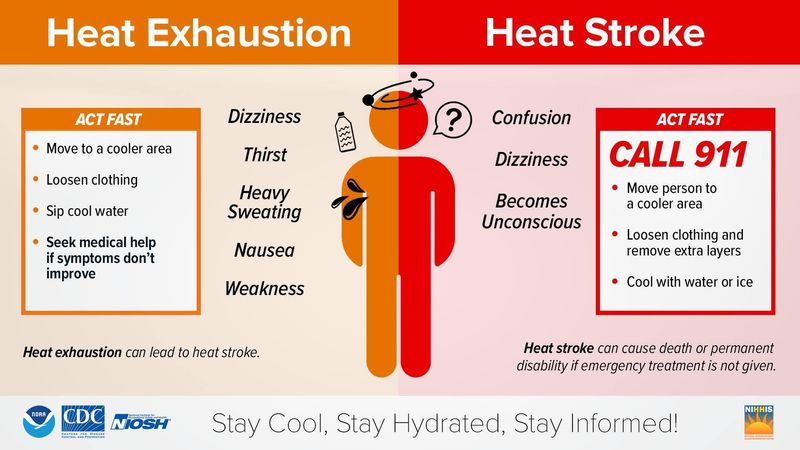
The initial signs of heat-related illness are muscle cramps and thirst, according to the National Weather Service. This can progress to heat exhaustion, which symptoms look like:
“If you’re experiencing heat exhaustion for an extended period of time, it can lead to heat stroke. Heat stroke can come on quickly if it’s very hot or you’re overexerting yourself,” Healthline said.
Florida heat index: How to stay cool, danger signs, symptoms of heat stroke to watch for
According to the CDC, heat stroke is the most serious heat-related illness. The symptoms of heat stroke:
When should you get help for heat exhaustion, heat stroke?
Immediately, especially when you notice signs of heat stroke.
In the meantime, while you wait for emergency services, experts recommend cooling the person as much as possible. This can be done by lying them in a shaded, well-ventilated environment or by applying ice packs or cool cloths to their body.
You can also encourage them to drink slightly salted fluids, such as electrolyte-rich sports drinks or salted water. Do not give someone water if they are experiencing heat stroke symptoms.
It is also recommended not to give them any medication such as aspirin or acetaminophen before seeing any medical professionals. Continue to monitor their breathing carefully and remove any airway blockages. Get rid of any tight or restrictive clothing.
How can I prevent overheating during extreme heat?
The best way to prevent heat-related illness is to stay out of the heat as much as possible. Particularly at midday when the sun is hottest.
If you can’t avoid strenuous activity in hot weather (or just generally want to go outside), make sure you’re taking it easy during the day, drinking plenty of fluids and wearing loose-fitting, lightweight clothing. And use sunscreen. Reapply at least every two hours, more often if you’re sweating or getting in and out of the pool or ocean.
Don’t just depend on only a fan to cool off. According to the National Weather Service, fans don’t cool air; they just move it. When heat index temps are in the 90s and up, fans may actually raise someone’s core temperature while making them feel like they’re being cooled off.
The Mayo Clinic also suggests giving yourself time to properly acclimate to the conditions and to be aware of medical services in case of an emergency.
Samantha Neely is a trending reporter for the USA TODAY NETWORK-Florida, covering pop culture, theme parks, breaking news and more. You can get all of Florida’s best content directly in your inbox each weekday by signing up for the free newsletter, Florida TODAY, at https://floridatoday.com/newsletters.
This article originally appeared on The Daytona Beach News-Journal: Are you on SSRIs? You might be more at risk from Florida summer heat
Reporting by Samantha Neely, USA TODAY NETWORK – Florida / The Daytona Beach News-Journal
USA TODAY Network via Reuters Connect
By Samantha Neely, USA TODAY NETWORK – Florida | USA TODAY Network