

By Leonardo Fernandez Viloria and Julia Symmes Cobb
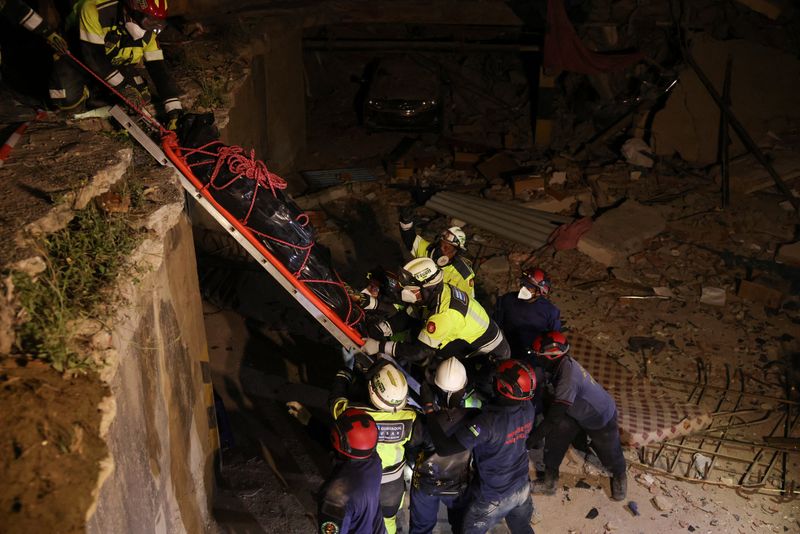
LA GUAIRA, Venezuela, June 30 (Reuters) – Rescue teams in Venezuela were losing hope on Tuesday of finding more survivors of twin earthquakes that struck the country last week, following hours of exhausting work searching for victims beneath the rubble of collapsed buildings.

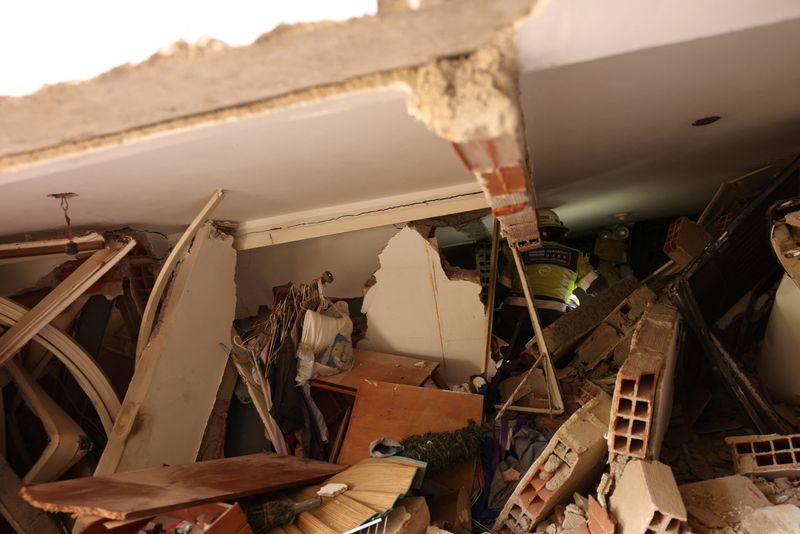
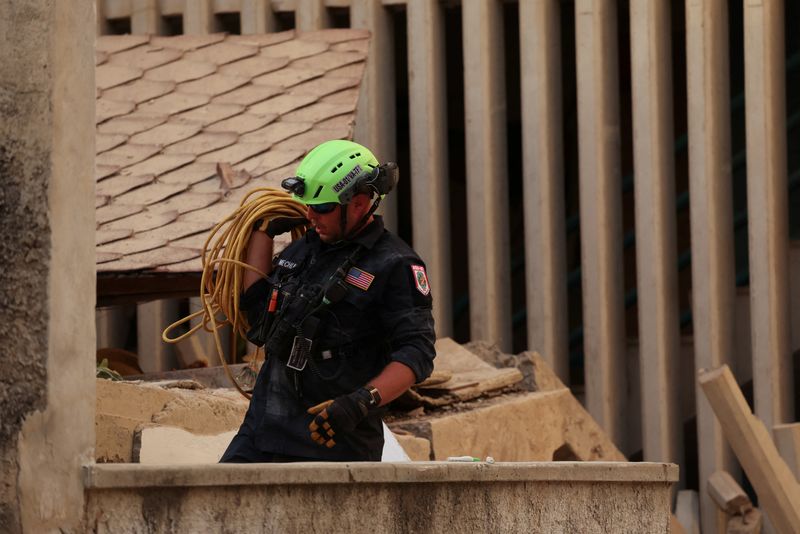
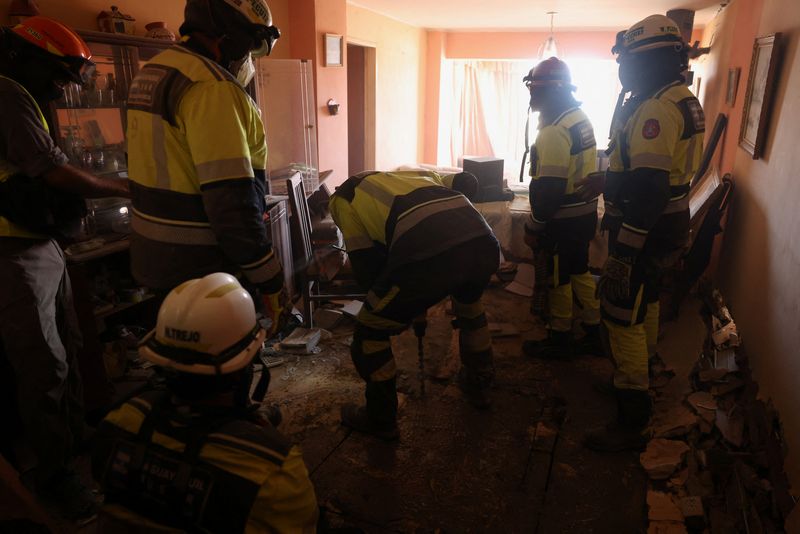
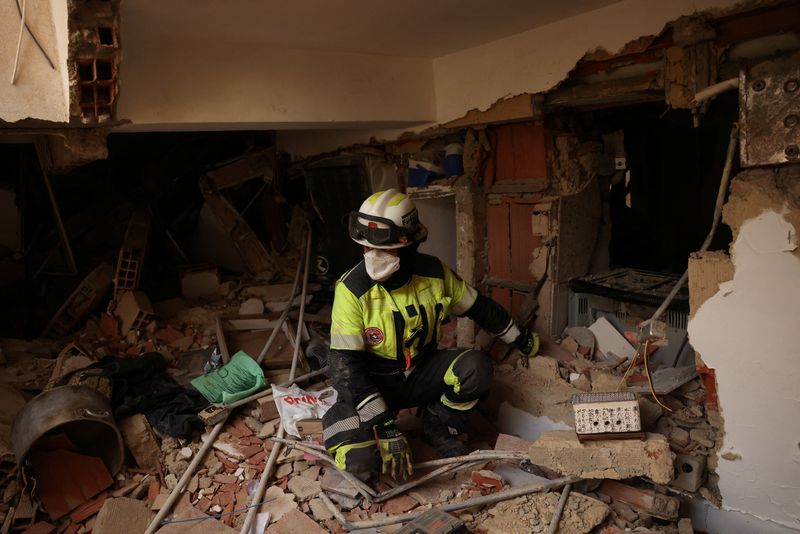
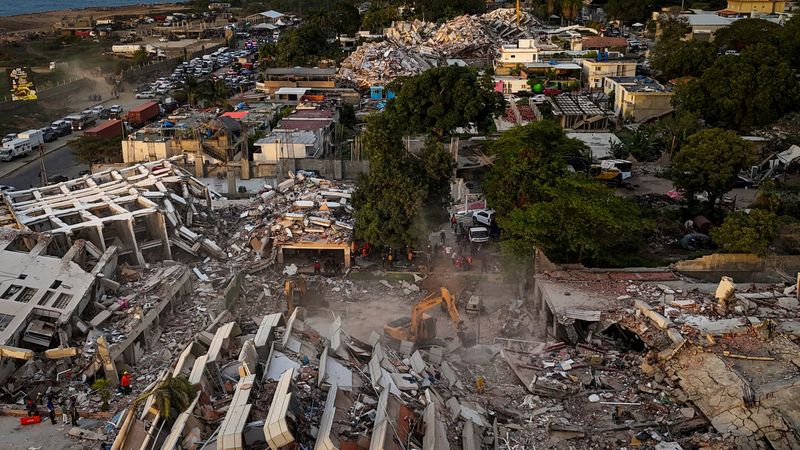
Rescue teams from Ecuador and the U.S. halted operations early on Tuesday in Macuto, a town in La Guaira state — the area hardest hit by the June 24 earthquakes — after more than 40 hours of work, when they stopped receiving responses from a mother and her three children trapped beneath a nine-story building.
“In the end, we believe the days have already passed and that what we will find now is death,” said Major Jorge Montanero, leader of the EQ11 team from Guayaquil, located on Ecuador’s Pacific coast.
“Unfortunately, things haven’t developed favorably,” he said as he stood amid rubble after cutting through four concrete slabs of the building in an effort to locate the four trapped victims.
At a makeshift morgue in La Guaira, set up at what is usually the state’s major port, Andrea Montilla sat in a plastic chair under an increasingly stifling marquee, awaiting family members who had entered the port to formally identify the remains of her cousin and his grandmother.
The 14-year-old was found in the rubble of an apartment building overnight and the family brought the remains directly to the port, Montilla said.
“It’s been so painful, a very long wait,” she said, adding her cousin’s mother is still missing.
At the morgue, staff led families through an in-person identification process, an official at the site, who was not authorized to speak to the press, told Reuters. Families can then get death certificates and cremation permissions, the official added.
The official, who said they are from La Guaira and had lost multiple family members in the quakes, had no estimate of the number of bodies already handed over to families or the number awaiting identification.
SURVEYING THE DAMAGE
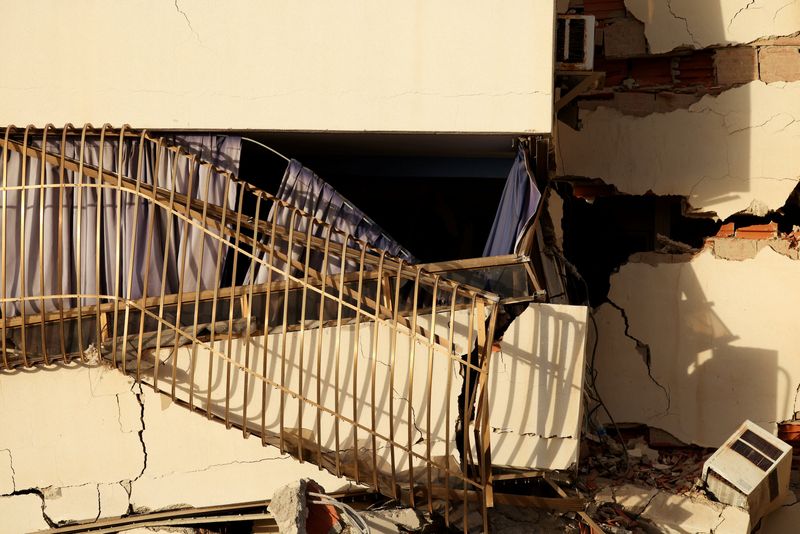
Some 59,000 buildings were damaged or destroyed by the twin earthquakes — which hit just seconds apart with magnitudes of 7.2 and 7.5 — according to NASA estimates. The widespread devastation can be seen from space.
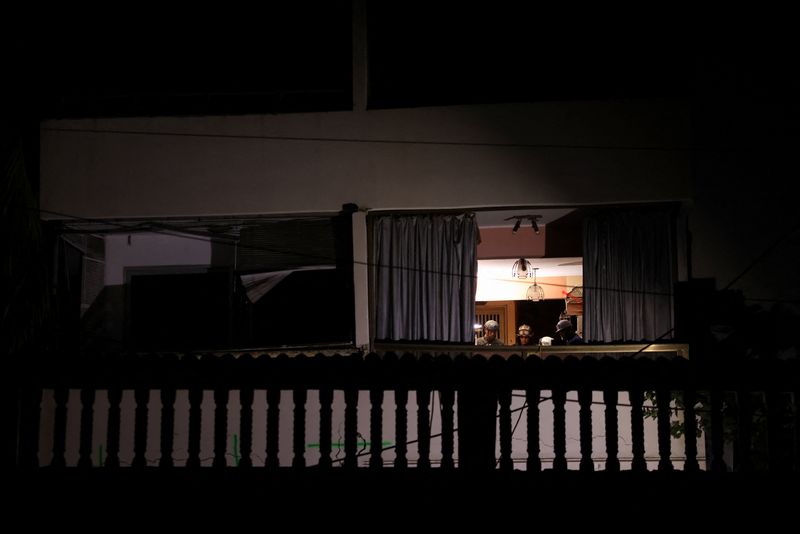
Not all collapsed buildings have had professional rescue teams on site, with relatives and neighbors working to remove debris to pull out survivors or bodies, according to survivors and residents from various areas.
“There is no doubt we are facing a figure higher than what has already been reported. I can offer an estimate: we are procuring — and this has been agreed with local authorities — 10,000 body bags,” Gianluca Rampolla, the United Nations’ resident coordinator in Venezuela, said on Monday from his Caracas office.
The government of acting President Delcy Rodriguez says at least 1,750 people have died and thousands have been injured as a result of the earthquakes. About 16,000 people were left homeless.
A website promoted by the country’s political opposition puts the number of people still missing at around 43,000.
Venezuela’s state-run energy company PDVSA and private gas distributor Domegas said in a release they are inspecting gas lines to some 600,000 consumers in Caracas to detect and repair leaks. Specialized equipment to detect leaks has arrived in the country, they said.
UN WARNS OF LOOMING HUNGER, DISEASE
United Nations agencies warned that survivors would face risks posed by hunger and disease in the aftermath of the twin earthquakes.
The World Food Programme is appealing for $50 million to provide emergency food assistance to up to 500,000 people over the next three months, the agency said in a statement, adding that it has the capacity to feed up to 1 million people if sufficient funding is secured.
The WFP has handed out rations for one month’s worth of food, including cereals, pulses, which include dry beans and lentils, and vegetable oil, to 1,200 people in La Guaira and has also set up temporary feeding centers in the state.
Earlier on Tuesday, the World Health Organization warned that Venezuela’s healthcare system was under significant strain, with at least three health centers critically damaged and six others damaged or only partially functional.
The thousands of people displaced by the quakes are also at risk of disease outbreaks like yellow fever and dengue, especially given relatively low vaccination coverage, said WHO spokesperson Christian Lindmeier.
Washington has sent 89 metric tons of essential supplies to Venezuela, the U.S. embassy in Caracas said in a post on X.
“Our team in Venezuela is working intensively on setting up the emergency field hospital,” the embassy said. “Very soon, we will be able to provide emergency medical care to those who are suffering.”
(Reporting by Leonardo Fernandez Viloria and Julia Symmes Cobb; Additional reporting by Alvise Armellini and Marianna Parraga ; Writing by Vivian Sequera and Oliver Griffin; Editing by Paul Simao, Nick Zieminski, Rod Nickel)
By Leonardo Fernandez Viloria and Julia Symmes Cobb | Reuters | © Copyright Thomson Reuters 2026.
