California has closed out its winter season on a disappointing note: Preliminary data shows this year’s April 1 snowpack is the second lowest on record, state officials say.
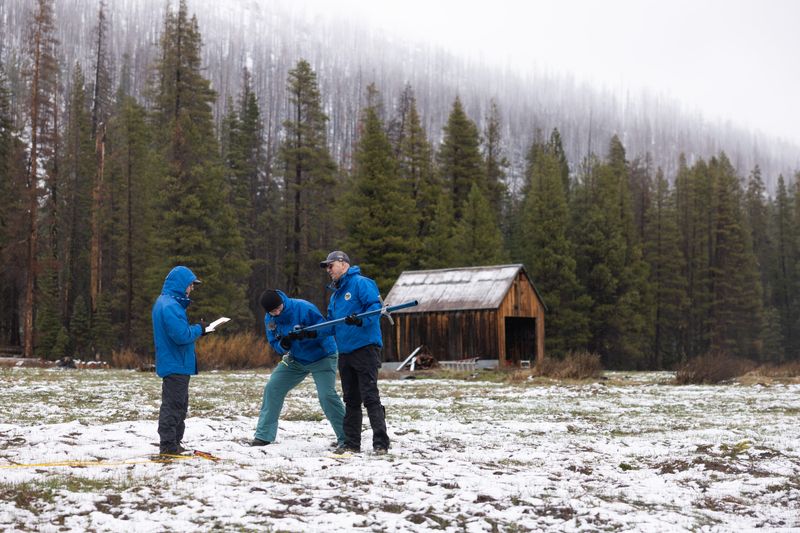
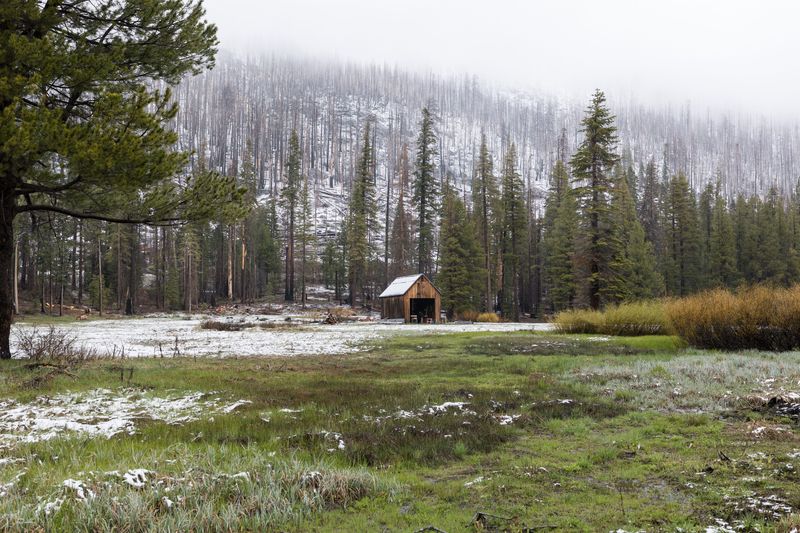
When state surveyors trekked to the Phillips Station in the Sierra Nevada to conduct their snow survey on Wednesday, they “found no measurable snow,” the Department of Water Resources said in a news release.

The lack of snow serves as “a stark indicator of how record‑hot March temperatures and high‑elevation rain have erased the Sierra Nevada snowpack months ahead of schedule,” state officials said.
This year’s snowpack was already sparse, then “warm storms and unusually hot temperatures rapidly melted” any remaining snow, officials said.
“It feels like we skipped spring this year and dropped straight into a summer heatwave,” DWR Director Karla Nemeth said in a news release. “What should be gradual snowmelt happened suddenly weeks ago.”
How does this year’s snowpack compare to years past?
The snowpack is 18% of average for this date, according to state officials. By comparison, this time last year, the snowpack depth was at 70% of average.
The snowpack level measured on Wednesday is the second-lowest April snowpack measurement on record for Phillips Station, the agency said.
During Wednesday’s survey, officials did find “some visible snow on the ground,” which is in contrast to the lowest reading from April 2015 when no snow was present, officials said.
Though additional surveys are being done across the Sierra Nevada, state officials said, “Preliminary data indicates this year’s April 1 snowpack is the second lowest on record.”
Typically, during this time of year, California’s snowpack reaches its highest volume and starts to melt, making April’s measurement “a critical marker for water managers across the state.”
However, this year, with March’s extremely hot and dry conditions, a warm atmospheric river system in late February, snowmelt began weeks ahead of schedule, officials said
Per automated sensors in the Sierra Nevada, the state’s snowpack reached its peak on or about Feb. 24, state officials said.
Andy Reising, manager of DWR’s Snow Surveys and Water Supply Forecasting Unit, said that “the disconnect between precipitation and snowpack” stands out this year.
“We received near-average precipitation in many parts of the state, but much of it fell as rain instead of snow,” Reising said in the news release. “That led to one of the lowest April snowpacks on record and one of the earliest peaks we’ve seen in decades — conditions that make forecasting runoff more complex.”
What California snowpack measurements are used for
Measuring California’s snowpack is a vital component of water management, as the data informs both water supply and snowmelt runoff forecasts, according to state officials.
Such forecasts help water managers plan for how much water will fill state reservoirs in the spring and summer.
“This information is critical for reservoir managers, who must balance flood control and water supply goals through the winter and depend on snowmelt to slowly refill reservoirs as demand increases during the dry season,” state officials said.
This year’s heatwave across the West led state officials and their partners to expand their monitoring efforts “to better track this year’s rapid snowmelt, including 100 additional mid-month snow surveys across 18 critical watersheds,” officials said.
Why the Sierra Nevada snowpack is called California’s ‘frozen reservoir’
The Sierra Nevada snowpack supplies approximately 30% of California’s annual water needs, according to the agency.
“Its natural ability to store water is why the Sierra snowpack is often referred to as California’s ‘frozen reservoir,’” the agency said.
As California sees most of its precipitation during the winter months, “snowpack serves as an important natural storage reservoir,” according to the Natural Resources Defense Council.
“In a typical year (or what used to be typical), the state’s snowpack stores 15 million acre-feet of water, more than all the water used by California cities in 2010,” the Natural Resources Defense Council said.
Snow accumulates in the Sierra Nevada and southern Cascades from October to March, then from April to July, the warmer temperatures cause the snow to gradually melt and run off, the Natural Resources Defense Council said.
Lower snowpack levels carry a range of potential consequences, including increased wildfire risk, experts told KQED.
“As the snowpack melts, water running down the Sierra helps keep vegetation and soils moist when the weather dries out,” the news outlet reported. “The ecosystem has grown to rely on that replenishment; without it, dry vegetation could become fuel for wildfires.”
The runoff also refills reservoirs, and without it, there is no steady stream to replenish water supplies, KQED reported.
What comes next after California’s early snowmelt
Though additional snow is predicted to arrive in the coming days, it is not enough “to make up for the rapid snowmelt and hot, dry March,” officials said.
This season’s rapidly melting snowpack serves as a “reminder that aging water systems need to be retrofitted for more volatile precipitation patterns,” Nemeth said.
“We’re seeing fewer, warmer storms and shorter wet seasons,” Nemeth said. “Future water supplies will depend upon our ability to capture water when it’s available and manage it more efficiently.”
This article originally appeared on Palm Springs Desert Sun: What to know as California April 1 snowpack hits second-lowest on record
Reporting by Daniella Segura, Palm Springs Desert Sun / Palm Springs Desert Sun
USA TODAY Network via Reuters Connect