In 1776, as colonists along the Atlantic declared independence from Britain, there were no European settlements in what we know as the Coachella Valley.
California was then Alta California, under Spanish control. Missions were expanding along the coast, and Spanish military expeditions were beginning to map routes through Native homelands.

But the Cahuilla people were the Coachella Valley’s first known inhabitants, living for thousands of years in communities across a homeland of more than 6,000 square miles — from the Borrego Desert to the San Bernardino Mountains, toward the Colorado River and west to what is now Riverside.
Where did early Cahuilla people live?
Cahuilla communities are often described in three distinct groups tied to geographical zones: Desert Cahuilla in the lower desert area of the Coachella Valley and near the Salton Sea; Pass Cahuilla near the San Gorgonio Pass; and Mountain Cahuilla in and around the San Jacinto Mountains.
They lived in villages of about 100 to 200 people, and their population across the entire region may have been numbered as many as 10,000 in the 17th century, with about 5,000 remaining by the late 18th century. It’s not known how many were in the Coachella Valley itself.
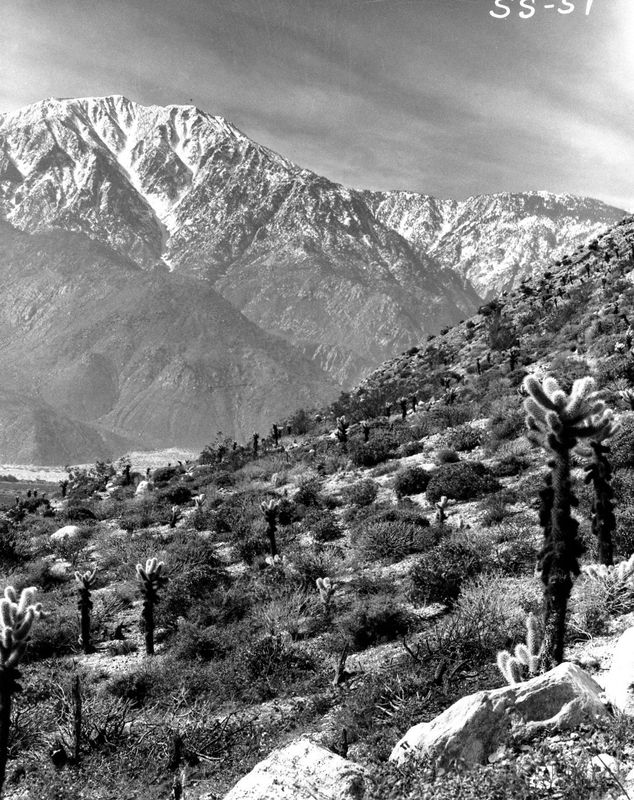
In the desert basin now known as the Coachella Valley, Cahuilla communities relied on springs, canyon streams, palm oases and seasonal water sources in an arid climate. Tribal accounts published by the Agua Caliente Band of Cahuilla Indians and the Santa Rosa Band of Cahuilla Indians describe Cahuilla people traveling between the desert floor and higher elevations, where the mountains offered cooler temperatures, different plants and access to game.
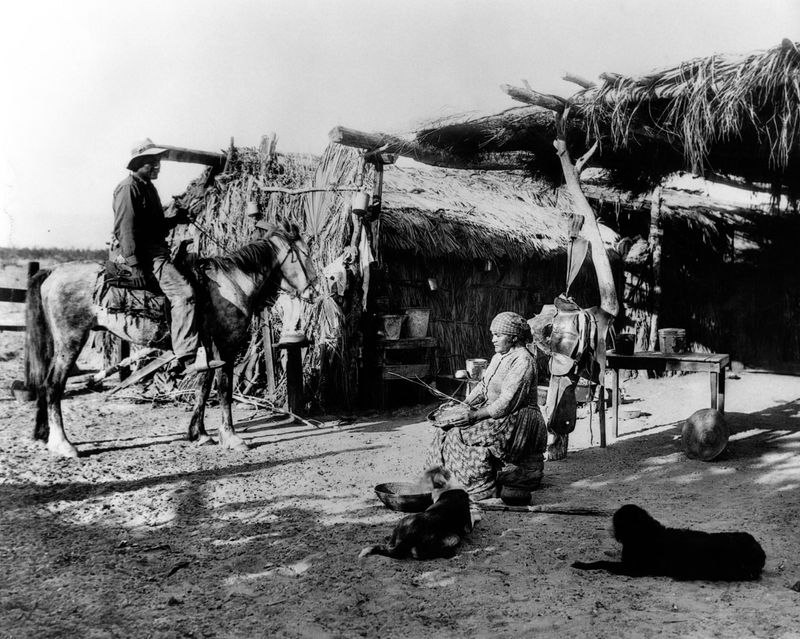
Homes, known as kish, were built from plants that grew near local water sources, like palm, willow and arrow weed. Some shelters were built against natural rock formations. Mountain homes were built with poles, branches, yucca fiber, rushes, sedges, willow and mud. At lower elevations, similar homes used palm fronds for thatching.
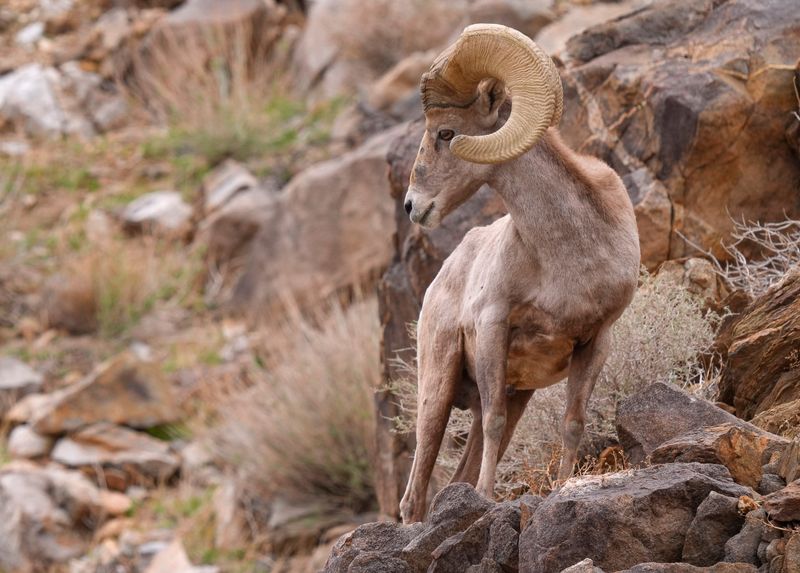
Mesquite was a staple food and could be ground into meal and cooked into atole, similar to cornmeal. Cahuilla people also gathered agave, acorns, pinyon nuts, cactus fruit, chia seeds, yucca and grass seeds, wrote Lowell Bean and Harry Lawton in the short history “The Cahuilla Indians of Southern California.” Deer, bighorn sheep, rabbits and other small mammals were hunted. Cahuilla women wove baskets used to gather, store and cook food.
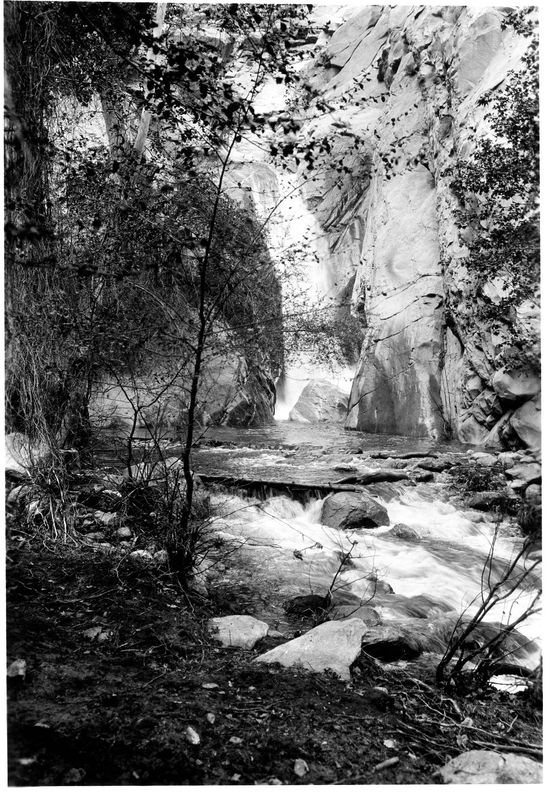
Ancestors of the Agua Caliente Band of Cahuilla Indians relied on Séc-he — Cahuilla for “the sound of boiling water” — the hot mineral spring beneath downtown Palm Springs. The spring and nearby canyon water provided drinking water, a place for bathing and a connection between the physical and spiritual world.
Trade routes through the desert linked inland communities with the coast, the mountains and the Colorado River. Many modern interstate highways and freight corridors — including Interstate 10 and the railroad through the San Gorgonio Pass — follow routes first established by the Cahuilla and other Indigenous peoples.
When did Europeans explore the California desert?
By 1774, about 40 Spanish explorers led by Capt. Juan Bautista de Anza had passed through the southern Coachella Valley on their way to Los Coyotes Canyon in what today is San Diego County. They were searching for an overland route from Sonora to Monterey.
On Dec. 20-22, 1775, during the winter solstice, Juan Bautista de Anza’s second expedition camped near a freshwater spring at Coyote Creek, now Anza-Borrego Desert State Park.
The Spanish military officer had been sent by the viceroy of New Spain to establish an overland route from Sonora, which today is a Mexican state south of Arizona, to Alta California. After a smaller scouting trip in 1774, Anza returned with a larger expedition that became part of the earliest documented Spanish contact with Cahuilla people as it moved through the desert.
The expedition continued north in 1776, reaching Mission San Gabriel in January and Monterey in March. By June, settlers had moved to the San Francisco Bay Area, where Spain established a presidio and mission, according to the National Park Service.
Cahuilla communities remained on their homelands after Anza’s expedition passed through. But the expedition helped mark a route that Spanish, Mexican and later U.S. travelers, soldiers, settlers and freight lines would use through the desert.
In the 1800s, settlers, transportation companies and farmers began to increasingly displace Cahuilla people from the lands that had sustained their communities for generations.
In 1823, Spanish explorer Capt. José Romero was sent to find a route through the San Gorgonio Pass to Tucson and recorded the name “Indian Wells” in his expedition diaries. Three decades later, W.P. Blake, identified in the city’s history as a Smithsonian Institution geologist, described Indian Wells as a thriving Cahuilla village.
‘California is stolen land’
A century after the signing of the Declaration of Independence, the federal government created the Agua Caliente Indian Reservation. President Ulysses S. Grant signed the executive order on May 15, 1876, as the United States was marking its first centennial. Later presidents — Rutherford B. Hayes, Grover Cleveland, Theodore Roosevelt, William Howard Taft and Warren G. Harding — expanded it.
The Palm Springs reservation protected some Agua Caliente land, but it did not create one continuous tract. Because the federal government had already granted some sections to the Southern Pacific Railroad, the reservation took on a unique checkerboard pattern of alternating square miles.
The Cabazon Reservation was also set apart by executive order in 1876. That same year, the Torres and Martinez reservations were later combined under the Relief of Mission Indians Act of 1891. Congress formally established the Augustine Reservation on Dec. 29, 1981.
And although Native people were the first known inhabitants of the land that became the United States, Congress did not grant them U.S. citizenship until 1924. Even then, many states continued to deny them full voting rights.
Today, nine federally recognized Cahuilla tribes have reservations in Southern California.
Several are in or near the Coachella Valley, including the Agua Caliente Band of Cahuilla Indians, the Augustine Band of Cahuilla Indians, the Cabazon Band of Mission Indians, the Torres Martinez Desert Cahuilla Indians and the Santa Rosa Band of Cahuilla Indians.
The Twenty-Nine Palms Band of Mission Indians also has ties to the region and reservation land near Coachella, though the tribe identifies as Chemehuevi.
As the United States approaches its semiquincentennial, Agua Caliente also recently celebrated the 150th anniversary of the establishment of the Agua Caliente Indian Reservation in May.
They have continued to preserve Cahuilla culture, as well as exercise sovereignty and stewardship of its ancestral lands.
Some of those examples include the Agua Caliente Cultural Plaza, which encompasses The Spa at Séc-he and the Agua Caliente Cultural Museum, both of which opened in 2023 at the corner of North Indian Canyon Drive and East Tahquitz Canyon Way in Palm Springs.
The plaza sits above Séc-he, geothermal reservoir that Agua Caliente that the tribe and their ancestors have used for millennia, and which are closely linked to Palm Springs’ tourism history. The cultural museum presents Agua Caliente history — both in its beauty and horrors — from time immemorial to the present, including its cultural traditions, the violence inflicted on Native people and the fight to retain land and sovereignty.
In his doctoral dissertation, “The Treaty of Temecula: A Story of Invasion, Deceit, Stolen Land, and the Persistence of Power, 1846-1905,” Sean Milanovich describes that history as one of “land theft, deceit, genocide, tenacity, perseverance, and the fight for basic human rights.”
“California is stolen land,” wrote Milanovich, whose father was the late former Agua Caliente chairman Richard Milanovich.
The tribe has also opened a courthouse to take up issues of tribal law and has expanded a curriculum in local schools to teach students about its history.
The effort to protect Cahuilla history also includes preserving the language itself. Federal boarding school policies forced many Native children into English-language schools and barred them from speaking their own languages. In 2020, the University of California, Riverside became the first UC campus to offer Cahuilla as a language.
And in 2026, Palm Desert’s California Indian Nations College — chartered by the Twenty-Nine Palms Band of Mission Indians in 2017 — became the state’s only accredited tribal college.
“We are not only advancing higher learning, but we are honoring the knowledge, traditions, and strength our ancestors carried before us,” Celeste Townsend, CINC’s president had said.
In a first, more than 1,200 acres of ancestral land have been returned to the stewardship of the Agua Caliente Band of Cahuilla Indians through a series of state transfers — 280 acres in 2023, 320 acres in 2024 and 656 acres in 2025.
“This land return strengthens our sovereignty, protects sacred and ecological resources, and ensures that future generations will continue to benefit from the cultural and environmental legacy of these lands,” Reid D. Milanovich, who chaired the tribe at the time, previously said in a statement.
So while the United States traces its founding to 1776, the Coachella Valley already had a history deeply rooted to its original inhabitants, the Cahuilla people.
Previous reporting by Desert Sun staffers and accounts from the Palm Springs Historical Society were used in this story.
This article originally appeared on Palm Springs Desert Sun: What the Coachella Valley was like in 1776
Reporting by Jennifer Cortez, Palm Springs Desert Sun / Palm Springs Desert Sun
USA TODAY Network via Reuters Connect
By Jennifer Cortez, Palm Springs Desert Sun | USA TODAY Network