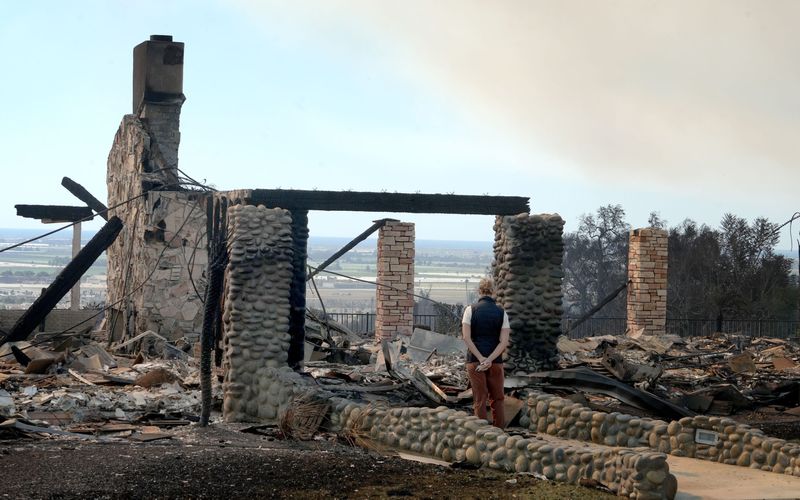
California is once again bracing for a perilous wildfire season. CalFire reports that, as of mid‑June 2025, California has already experienced 3,290 wildfires this year, burning approximately 96,994 acres. This presents a threat that is both real and escalating. Rising temperatures, early snowmelt, spring rains and prolific seasonal grass growth, coupled with Santa Ana winds and dry conditions, have extended what once was a seasonal risk into an almost year-round concern.
Homeowners and insurers both have a vested interest in strengthening structures and surrounding landscapes. Clear defensible space, fire-resistant roofing, non-combustible fencing and decks, and ember-resistant plants may all demonstrably reduce wildfire vulnerability. Insurers are increasingly incentivizing these measures through discounted premiums and some consumers are gladly complying.

The cost of making homes fire resistant can be steep. New roofing, upgraded siding, and landscape overhauls can be expensive. While these improvements may yield lower insurance rates, that savings takes years to realize and is proving difficult for cash-strapped homeowners.
The Board of Forestry’s “Zone 0” proposal would require homeowners to keep the first five feet around their walls — known as the ember-resistant zone — entirely free of combustible plants, wood chips, or even tall potted plants. In principle, this has merit as embers can travel and ignite homes via small fuel sources close to structures.
But the rule is being applied as a one-size-fits-all approach. It ignores the vast differences between Wildland-Urban Interface (WUI) areas where ember showers arrive en-masse — and dense urban settings where fires are spread less by embers and more by adjacent buildings and their composition. Applying the strict Zone 0, or even Zone 1, to a block full of apartments or condominiums seems impractical and potentially detrimental to the urban canopies that cover some of these neighborhoods.
Even well-intentioned policies can fail without flexible implementation. We’ve already seen local governments push back. In Berkeley, rules targeting combustible ground cover sparked debate, with residents seeking revisions to preserve trees that take decades to mature. Similarly, major urban areas rarely lack firefighter access, rendering extreme ember zones less critical than they might be in WUI areas.
Enforcement of Zone 0 remains another challenge. Policing a clear‑five‑feet rule across millions of homes would be a nightmare, turning fire department personnel into the Zone 0 police.
By focusing Zone 0 in areas where structures abut a wildland urban interface, and focusing on home hardening practices in the urban areas with dense infill, seems a more measured approach. The wildfire risk in California is undeniable and escalating. Large numbers of homeowners now recognize that fire resistance measures are essential, and not optional, and insurance pricing seems to be slowly adjusting to the new reality as well.
The Board of Forestry’s Zone Zero Regulatory Advisory Board has been conducting monthly meetings and workshops to solicit public input. This input should be considered in the final and addressed in future amendments. The final guidance by the Board of Forestry should provide flexibility for local enforcement and allow for alternative means of compliance. If local enforcement seeks to go beyond state recommendations, a robust process should take place to meet Zone 0 goals.
The policies being contemplated lack the recognition that not all areas are alike. When promulgating these policies, care needs to be taken so that residents are provided clear, realistic, and achievable results that reflect the actual threat to their property based on their surroundings. A one-size-fits-all approach is rarely the answer and makes little sense in this instance.
Assemblymember Jacqui Irwin represents California’s 42nd Assembly District, which includes portions of both Ventura and Los Angeles Counties; including all of Agoura Hills, Bel Air, Beverly Glen, Brentwood, Casa Conejo, Calabasas, Hidden Hills, Lake Sherwood, Malibu, Moorpark, Oak Park, Pacific Palisades, Santa Susana, Simi Valley, Thousand Oaks, Topanga, Westlake Village, and portions of Camarillo. Assemblymember John Harabedian represents California’s 41st Assembly District, which includes the cities of Bradbury, Claremont, La Cañada Flintridge, La Verne, Monrovia, Pasadena, San Dimas, Sierra Madre, and portions of Hesperia, Rancho Cucamonga, and Upland.
This article originally appeared on Ventura County Star: Guest column: ‘Zone 0’ not the one-size-fits-all approach California needs
Reporting by Jacqui Irwin and John Harabedian / Ventura County Star
USA TODAY Network via Reuters Connect