Spooky, wonderous, stalactite-y: Crystal Cave in Sequoia National Park returns this summer season for guided tours after a four-year closure due to consecutive natural disasters in the national park.
Sequoia National Park is decorated in superlatives. The red-barked sequoias are the largest trees in the world, and Mt. Whitney on the outer rim of the park is the tallest mountain in the contiguous United States.

The park is also home to half of the caves and karst systems over a mile long in California, the longest cave in the state, and at least 275 total caves in Sequoia and Kings Canyon National Parks alone.
A walk through the drip-echoed walls of the marble-carved Crystal Cave establishes its reputation as extraordinary. Even the impressive, segmental-arched entrance is one of the grandest in the Sierra Nevada.
Tucked away in a canyon, the cave has excited Sequoia and Kings Canyon visitors since 1940. Today, more than 55,000 visitors make the half-mile loop trek to witness the glittering calcite formations.
“The opening of Crystal Cave is a big step forward in disaster recovery for Sequoia and Kings Canyon,” said Clay Jordan, Sequoia and Kings Canyon National Parks superintendent. “We’re excited to be able to reopen this incredible attraction to visitors and encourage people to enjoy all of the beauty and wonder these parks have to offer.”
How was Crystal Cave formed?
By and large, Sequoia National Park is formed of granitic rock. The caves, however, form in a rock that’s much older — 200 million-year-old marble.
There is a very small amount of marble compared to granite in the national park, and almost everywhere there’s marble and some water, there is a cave, Sequoia park rangers said.
Marble is dissolved in water. Over time, the marble rock in Sequoia and Kings Canyon gradually disintegrated, forming the parks’ 275 cave passages over hundreds of thousands of years.
What’s inside Crystal Cave?
According to the National Park Service, the caves in the Sierra Nevadas contain Pleistocene era fossils, rare minerals, and unique animals. They are the sites of numerous scientific research projects and provide recreational opportunities to thousands of park visitors each year.
Scientists have discovered at least 40 new invertebrate species in caves since 1965, the National Park Service reported.
These include spiders, a harvestman, scorpions, pseudoscorpions, centipedes, beetles, millipedes, flies, a mite, and many more types of invertebrates. Most invertebrates found in park caves are not only newly documented for the parks, but also new to science. Vertebrates also use park caves for roosting, shelter, and occasionally as food sources.
Crystal Cave features
Cave features include formations called “speleothems.” These include tall stalagmites, deep rimstone pools, masses of angular or curving growth forms called “helictites”, and 10-foot diameter shields.
Park caves also display a diverse assemblage of colorful minerals. They form blue, green, yellow, black, white, orange, and red deposits and formations along the walls, ceilings, and floors of caves.
The parks’ caves include rooms 100 feet in diameter and tiny passages barely big enough for a small person to squeeze through. Some caves have active stream systems, while others are dry and abandoned remnants of ancient water-flow patterns.
Why was Crystal Cave closed?
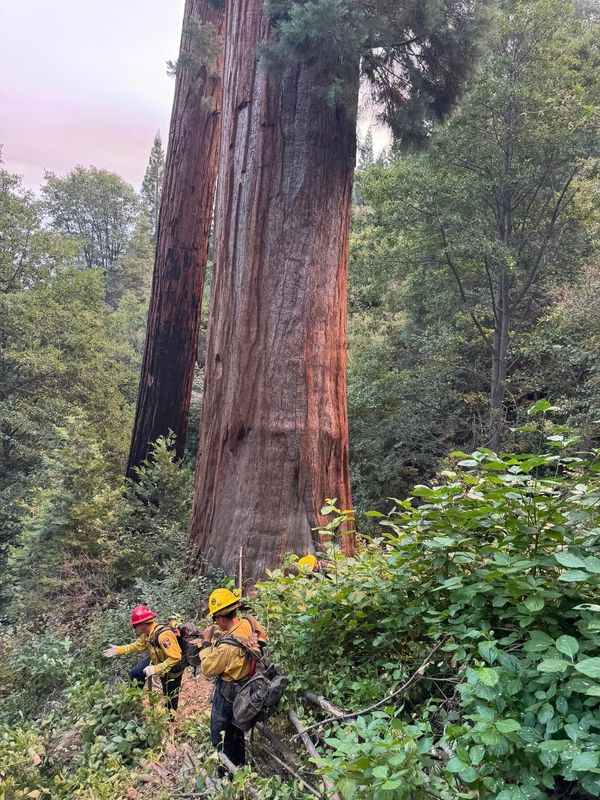
Natural disasters, including the KNP Complex wildfire in 2021 and severe winter storms in 2022–2023, impacted the road and infrastructure leading to Crystal Cave. The conditions were too unsafe for visitation at this time.
Last year, contractors began clearing hazardous trees along Crystal Cave Road, Sequoia Parks Conservancy explained in a press release. So far, the crews have felled 4,887 trees and removed around 2,750 from the area.
Crews are continuing to remove felled hazard trees along the roadway, which may create traffic delays throughout the 2025 season. Road construction and other projects are expected to continue after the seasonal closure.
“We’re thrilled to reopen Crystal Cave, thanks to our partnership with the National Park Service,” said Savannah Boiano, executive director of the Sequoia Parks Conservancy. “When visitors join us in exploring, learning, and engaging with nature, they become partners in our mission to protect this incredible wonder for future generations.”
How to book a tour
Crystal Cave tours will run between 9 a.m. and 3 p.m. from May 23 to Sept. 7, offering plenty of opportunities to explore the geological masterpiece.
Tickets are available to purchase at sequoiaparksconservancy.org/crystal-cave and sell quickly. Visitors are encouraged to secure their spots early. Tickets will not be available for purchase on-site.
Day pass versus America the Beautiful Pass
All guests to Sequoia National Park must purchase either a day pass or an annual America the Beautiful Pass. The Crystal Cave Tour ticket does not include park admission.
The standard day pass ranges from $20-$35, with the regular passenger vehicle fee at $35.
The annual pass to only Sequoia and Kings Canyon National Parks is $70 for unlimited access to the two California parks.
The America the Beautiful pass is $80 per year and grants unlimited access to every U.S. national park. Order online at the USGS store.
Please note: Sequoia and Kings Canyon National Parks are moving to only accept cashless payments for entrance fees at park entrances as well as walk-in wilderness backcountry permits beginning Wednesday, May 21.
2025 Free Entrance Days in the Sequoia and Kings Canyon National Parks
Experience the national parks free of charge on certain days throughout the year.
Mark your calendar for these entrance fee-free dates:
Cave safety information
The Crystal Cave Tour includes a half-mile round-trip hike with steep terrain and stairs, and the cave environment is cold, damp, and dark.
To ensure a safe and enjoyable experience, it is important to review the key safety guidelines before visiting the parks.
The National Park Service encourages those with claustrophobia, difficulty walking, heart or respiratory conditions, recent surgery or illness, or other physical limitations to avoid the cave tour.
The cave is also not recommended for young children who cannot walk on their own, as baby backpacks and strollers are not permitted. Additionally, visitors are to assume all risks associated with personal injury and loss or damage to property.
Sequoia National Park weather by month
The best months to visit Sequoia National Park are from May to September, when late winter snows have likely thawed. Some roads may also be closed in the winter, restricting access to the park.
Here is a breakdown of Sequoia National Park’s weather by month:
Summer: May – September
Summers in Sequoia & Kings Canyon are generally sunny and dry, with thundershowers in the afternoon and lightning storms on occasion. Sunscreen is a backpack essential at this time.
The average temperatures during the day are in the mid to upper 70s. Nights are in the upper 30s and lower 40s. If traveling to higher elevations, temperatures can reach the 20s at night.
Fall: September – December
The colorful foliage of fall is a crowd favorite in the parks, despite the weather’s unpredictability. Snowstorms come with more frequency as winter approaches, with accompanying drops in temperatures.
Highs during the day average from the 40s to the 60s. Nighttime temperatures average around 30 degrees in September, dropping to between 10 and 22 degrees in October and November.
Winter: December – March
Winters can be bitterly cold in Sequoia and Kings Canyon parks. Warm Chinook winds blow in on occasion, pushing temperatures up into the 40s.
Winter temperatures during daylight hours often hover near zero but can get into the upper 20s. Nighttime temperatures commonly go subzero. As spring approaches, the weather gets better, with highs averaging in the 30s and 40s and lows in the teens.
Spring: March – June
Clouds and rain are more abundant in the spring in Sequoia & Kings Canyon, with cold and snow lingering, often into May. Daytime temperatures average from lows in the 40s to highs in the 70s, with nights falling to the 20s and 30s.
Sequoia National Park fire season
Summer is the most pertinent time for wildfires in Sequoia National Park. The official fire season is from late spring to early fall, particularly during periods of dryness and high winds.
Campfire restrictions are often implemented by the National Park Service during fire season. Visit https://www.nps.gov/aboutus/news/index.htm for fire updates.
McKenna is a reporter for the Daily Press. She can be reached at mmobley@gannett.com.
This article originally appeared on Visalia Times-Delta: Crystal Cave in Sequoia National Park to reopen this month after four years of closure
Reporting by McKenna Mobley, Victorville Daily Press / Visalia Times-Delta
USA TODAY Network via Reuters Connect