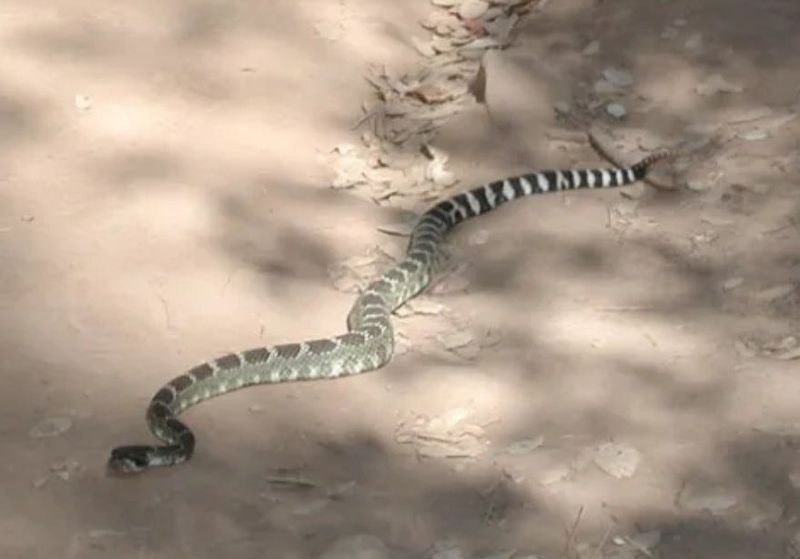
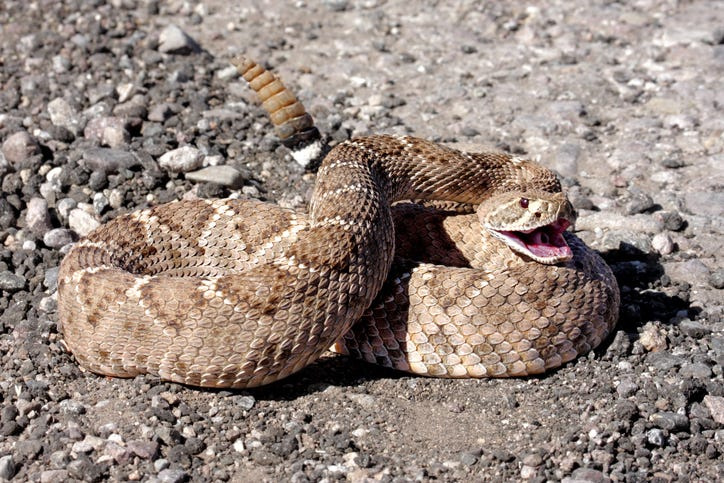
Summer weather beckons hikers, campers and swimmers to Lake Shasta, the Sacramento River Trail and Whiskeytown. But we’re not the only Shasta County residents venturing outdoors when temperatures warm up.
Rattlesnakes come out of their hideaways to sunbathe after spending cooler months snoozing under rocks and logs or in tall grasses, the California Department of Fish and Wildlife said. When the weather is hot, these snakes like to sunbathe at dawn and dusk to help keep their bodies from overheating in the sun. Both are times that attract Redding hikers because these are usually the coolest times of the day.

But people can encounter rattlesnakes at any time of the day or night. A woman received a bite on here ankle while hiking Southern California’s Buena Vista Trail the afternoon of April 12.
While they occasionally show up in Redding yards, these snakes prefer places like the sunlit cliffs next to the Sacramento River. There’s fresh water nearby and rodents for them to eat, said wildlife experts with Shasta County Animal Control.
Rattlesnakes may come out to sun themselves even during brief warm snaps like the one Redding had in late March.
Matt Hayden was listening to music while hiking near Buenaventura Boulevard during that warm spell. When the song stopped, the 28-year-old said he heard something that sounded like maracas. About 6 feet away, an 18-inch rattlesnake sounding a warning.
“I’ve seen gopher snakes. I’ve seen garter snakes. This was my first rattlesnake,” Hayden said.
He backed up and gave it space to retreat down an incline at Starlight Boulevard.
Staying calm and giving the snake space to get away was the right thing to do, according to the CDFW. Rattlesnakes are not usually aggressive unless they’re provoked or threatened.
A misconception is they always rattle before they strike, wildlife biologists said. While they grow a rattle per year as they age, newborn rattlesnakes are venomous. You may not get a rattle warning, so take precautions before you pitch a tent or dive into a North State lake.
Note to readers: If you appreciate the work we do here at the Redding Record Searchlight, please consider subscribing yourself or giving the gift of a subscription to someone you know.
How to avoid rattlesnakes on Northern California trails, lakes and campsites
The woman bitten while hiking on the Buena Vista Trail came prepared with a whistle and a cell phone. Although service was weak on the trail, she was able to text someone who called emergency services. When rescuers searched for the hiker, she repeatedly blew the whistle to signal her location.
The CDFW and state poison control said there are things people can do to before and during their hikes, swims, camp outs and bike rides..
Dog owners can talk with their vet about canine rattlesnake vaccines before they take their furry friend into the wilderness, the CDFW said.
What to do if a rattlesnake bites you
Rattlesnake bites are uncommon, said Cyrus Rangan at California Poison Control. People report roughly 300 bites per year.
Those bitten must get immediate medical attention, Rangan said. Call for help, stay calm and remove clothes around the bite area.
Don’t use a tourniquet, ice the bite area, cut the wound or suck out the venom, the CDFW cautioned.
For information on rattlesnake safety and behavior go to wildlife.ca.gov/Conservation/Reptiles/Rattlesnake.
Jessica Skropanic is a features reporter for the Record Searchlight/USA Today Network. She covers science, arts, social issues and news stories. Follow her on Twitter @RS_JSkropanic and on Facebook. Join Jessica on Record Searchlight Facebook groups Get Out! Nor Cal , Today in Shasta County and Shaping Redding’s Future. To support and sustain this work, please subscribe today. Thank you.
This article originally appeared on Redding Record Searchlight: Avoid rattlesnake bites while on Redding trails, Lake Shasta
Reporting by Jessica Skropanic, Redding Record Searchlight / Redding Record Searchlight
USA TODAY Network via Reuters Connect