It’s an upbeat time for those living with Parkinson’s disease, a misunderstood, stigmatized and understandably dreaded malady.
With Parkinson’s Awareness Month winding down, numerous reasons fuel my optimism: increased media coverage, new research breakthroughs, more public figures sharing diagnoses and potential changes in laws that could lead to fewer cases.

Last year, “The Parkinson’s Plan,” by Drs. Ray Dorsey and Michael Okun, landed on the New York Times best-seller list. Articles amplifying their findings — that environmental toxins are linked to PD — now appear frequently.
Stories flourish on broadcast, print and online media. Reports highlight boxing, dancing and ping-pong classes — that help manage symptoms or slow progression — while others describe brain surgeries that can also help.
Public figures like actor Alan Alda and singer-songwriter Neil Diamond have shared their experiences, helping reduce stigma. Actor Michael J. Fox, 64, likely inspired this trend. Diagnosed at 29, Fox responded by founding his eponymously named research organization, having raised more than $2 billion to find a cure.
Meanwhile, several medical milestones recently emerged, notably biological tests that use skin cells or spinal fluid to spot damaged proteins, indicators that lead to earlier diagnoses.
Throughout April, PD Avengers, the Canadian-based nonprofit seeking a cure, mounted its third “Spark the Night” campaign. The event enlists landmarks to light up in blue on April 11, World Parkinson’s Day. More than 700 sites — bridges, buildings, hospitals and homes — lit up the night sky worldwide this year, from the Freedom Tower in New York City to Ojai City Hall in Ventura County.
PD Avengers also teamed with the Parkinson’s and Movement Disorder Alliance to commandeer three digital billboards in Times Square with a series of bold messages, including, “In Our Crops,” “In Our Water,” “In Our Air” and “Parkinson’s Could Be You” — tracking with Dorsey’s and Okun’s findings.
Parkinson’s occurs when dopamine-producing cells in the brain start to die. A chemical neurotransmitter, dopamine controls motor function, mood and pleasure. Symptoms include tremors, stiffness, slowness of muscle movement, and gait and balance problems. Other symptoms include sleep disruption, constipation and loss of sense of smell.
There is no cure, but medication, exercise and a surgery called Deep Brain Stimulation can help manage symptoms.
Lawmakers appear to be listening. Congress passed the National Plan to End Parkinson’s Act on a nearly unanimous, bipartisan vote in 2024. Signed into law by President Joe Biden, the bill directs the federal Department of Health and Human Services to create a comprehensive blueprint to better prevent, diagnose, treat, and cure PD.
That said, the Parkinson’s community faces challenges.
PD is now the fastest growing neurological diagnosis in the world. Globally, 11.9 million people live with the disease, a number that is expected to more than double to 25 million by 2050. In the United States, we’re adding 90,000 new cases a year — or one every six minutes.
The economic burden now runs $82 billion a year, a figure that arrived ten years earlier than previously estimated, a new report from the Michael J. Fox Foundation found.
Efforts to implement the new federal plan initially stalled, missing its first deadline to file a report by January. Last month, Health and Human Services Secretary Robert F. Kennedy Jr. finally announced seating the act’s advisory council — a few weeks after 350 advocates told their stories to lawmakers at the annual Parkinson’s Policy Forum in Washington, DC. (I was among them).
Besides pressing for the plan’s full implementation, advocates lobbied for increased research funding at the National Institutes of Health; a rigorous, science-based study of paraquat by the Environmental Protection Agency with hopes of banning it; and supporting a new bill to research how toxins cause neurological diseases.
Dorsey and Okun take aim at a host of toxins with a strong focus on paraquat, an herbicide banned in more than 70 countries. Still widely used in the United States, farmers apply it as a weed killer before planting crops like soybeans, almonds and wine grapes.
At least 10 states are considering bills to restrict or ban use. More than 8,000 farmers are suing Syngenta, the manufacturer, arguing they were poisoned by paraquat and that the company knowingly withheld knowledge of its toxicity. Syngenta has denied those claims but recently announced it will stop making it in June. California had restricted its use for a planned phase out, pending further study, but with Syngenta’s announcement, farmers here may use it for only two more years.
That said, more than 700 generic versions to treat crops still exist on the market. Expect charged political fights over proposed bans, pitting chemical and agricultural industries against environmentalists and Parkinson’s advocates.
Not everyone completely agrees with Dorsey’s and Okun’s findings, but it appears most neurologists believe some combination of toxins and genetics play a role.
None of this, however, dulls my optimism — even knowing that a cure is not likely in my lifetime. As case numbers grow, more people will talk, read about and debate PD. The numbers advocating for a cure will only swell.
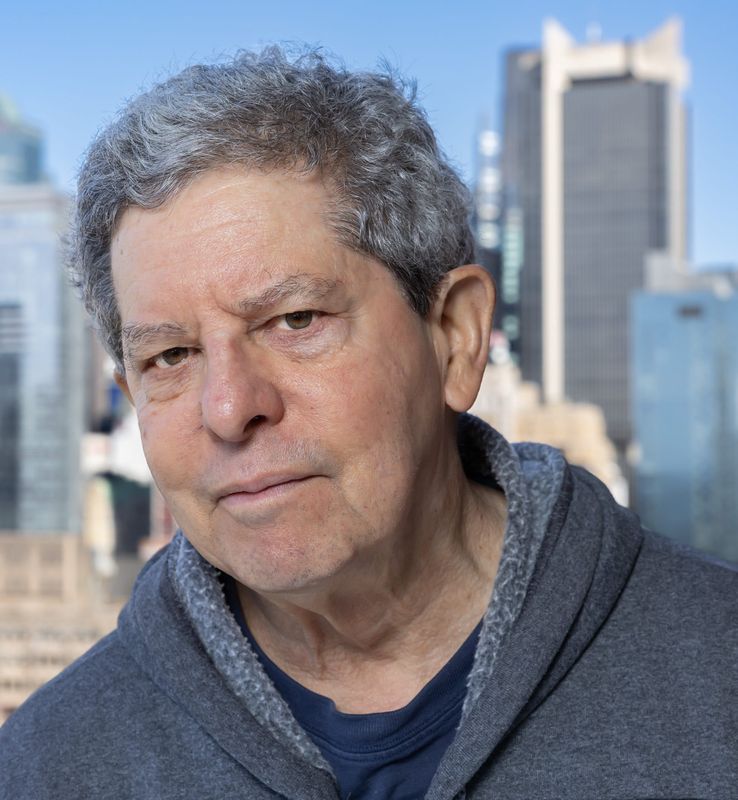
Charles Levin was a reporter at The Star from 2000 to 2008 and was diagnosed with Parkinson’s in 2019. He is the co-author with Joe La Barbera of “Times Remembered: The Final Years of the Bill Evans Trio.” He splits his life between New York City and Ventura.
This article originally appeared on Ventura County Star: A moment of optimism for those living with Parkinson’s | Your Turn
Reporting by Charles Levin, Your Turn / Ventura County Star
USA TODAY Network via Reuters Connect