Denice Lombard held her father’s hand in a Ventura memory care unit just hours before he died on Sept. 1.
Because he had difficulty hearing, she sat next to his bed with her face inches from his. She sang to him. She cried. She put his hand in her hair.

“I told him I was thankful for my life,” she said.
Ted Lombard, store owner and father of six children, gave his left kidney to Denice when she was 13 in a transplant at UCLA Medical Center on Aug. 30, 1967. Without the transplant, she would have died.
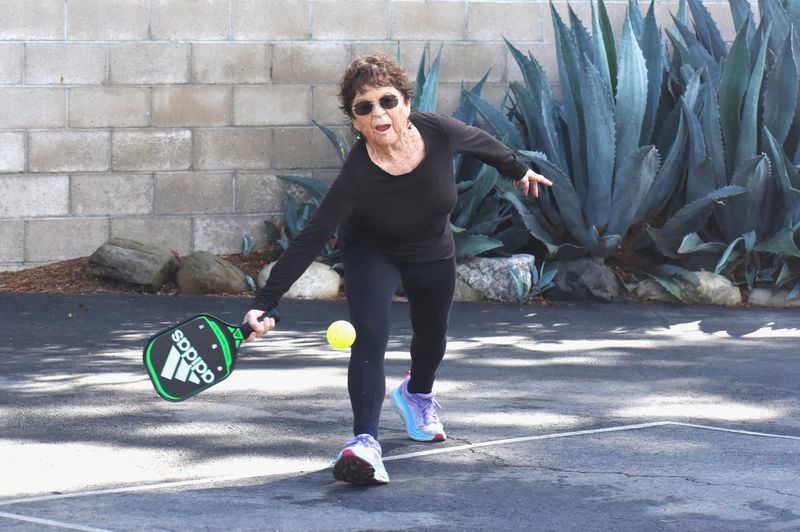
Today, the organ is faltering. But it still works. It still helps carry Lombard through a regimen that includes political activism, rallies, letter-writing campaigns, an August speech to the World Transplant Congress in San Francisco and pickleball twice a week.
The organ turns 97 on Oct. 4, just like Ted Lombard would have. It’s not the only remarkable number. The 58 years the father and daughter survived after the transplant is believed to have placed them among the longest-living kidney donor and recipients in the world.
“They were the (longest) living donor pair anywhere as far as I can tell,” said Dr. Gabriel Danovitch, emeritus medical director of UCLA’s kidney transplant program. He tried to explain the bond that formed between donor and recipient, between father and daughter.
She gained life through the transplant. Ted Lombard did too: Hers.
“He was able to give life, a long life and a full life, to the person he loved,” Danovitch said. “There are risks but there are benefits. You have done something wonderful. I call it the halo effect.”
Born with failing kidneys
Even without her father, Denice, 71, of Ventura, ranks among the longest-survivng kidney transplant recipients in the world. Danovitch said the exact rank is nearly impossible to know.
As part of her talk to surgeons and kidney transplant experts at the global forum in August, Denice showed a photo of toddlers with matching haircuts and dresses. They sat with arms draped over each other’s shoulder. One of the girls kissed the other’s cheek.
It was Denice giving a peck to her twin sister, Diane.
They were born in Ventura in 1954 with a rare chromosomal disease that caused their kidneys to fail. Diane’s went first. She was hospitalized at UCLA Medical Center. The first successful live kidney transplant had been performed several years earlier, in 1954, in Boston, but the procedure was considered too risky for children and women. It wasn’t an option.
“The only people they did it for were male heads of households,” Denice said.
Diane died in the hospital on the day after Thanksgiving in1961. She was 7.
Denice’s kidneys were failing, too. Just lifting a brush to her hair exhausted her. Her mother, Anne Lombard, argued with doctors that a transplant was the only option regardless of the risks. Her persistence persuaded a kidney specialist to ask a transplant surgeon if he would consider the procedure on the condition the family accept it as the final answer. The surgeon said yes.
Ted, who ran an electronics store on Ventura’s Main Steet and later became a master woodworker, was a good match. The long-term risks to donors, now known as relatively small, were not as well understood then. Ted did not hesitate.
“We lost one daughter,” he said in a 2017 interview with The Star, crying as he sat at a dining room table with Denice and Anne Lombard. “We didn’t want to lose any more.”
He also said he knew it would work. He knew his daughter would live forever.
A beautiful sight
The transplant took place on Aug. 30, 1967. Denice still remembers how giddy her kidney specialist was when he learned the new kidney was producing urine. It meant the surgery was a success. The kidney worked.
“He was ecstatic,” she said, describing the gallon containers that held yellow liquid tinged with pink. To her too, it seemed beautiful.
“I always wanted to make art out of it,” she said.
After the procedure, life happened. Denice grew into, in her words, a “hippy.” She dropped out of Buena High School in Ventura in favor of an alternative school in Santa Barbara.
She later enrolled at Evergreen State College in Olympia, Washington, and followed a self-created curriculum that included piano, child development and documentary filmmaking.
She worked a summer with U.S. Forest Service firefighters. She studied Spanish in Guatemala. She protested for causes ranging from ending the Vietnam War to Zimbabwe’s independence.
She became a court reporter, first in San Francisco, then in Washington, D.C. She fell in love with Nancy Wohlforth, a labor leader and activist who became nationally known. Wohlforth was the first openly gay member of the AFL-CIO Executive Council.
They were together 43 years. They married in 2013 and moved to Ventura, Denice’s hometown, seven years later. A picture of Wohlforth and President Barack Obama decorates a bookcase in Denice’s home.
Ted was a Renaissance man: woodworker, classical guitarist, painter, outdoorsman and tennis player. He divorced Denice’s mother and remarried in the mid-1980s. He and his second wife, Joyce Lombard, were together 39 years. They rode bicycles, kayaked and camped.
He was thoughtful and sensitive, Joyce Lombard said. He was strong physically and mentally. He almost never became ill.
He didn’t talk often about the transplant. But he told Joyce his father didn’t want him to do it. He worried Ted would die and leave his other children without a father.
Ted went ahead and donated his organ. He knew it would save Denice’s life.
“He didn’t make a big deal about it,” Joyce Lombard said. “He just did it. He didn’t need a gold star for it.”
Expressing thanks
Their lives became busy. Sometimes, the transplant slipped into the shadows. It became more of a memory.
The anniversary, Aug. 30, was different. Every year, they gave each other cards and gifts. On the 25th anniversary, Ted gave Denice a kidney-shaped pendant on a necklace made of silver. She still wears it.
“I will reflect on all the wonderful times we have had together, building, fixing, kayaking, hiking, shopping and just visiting and being together,” he said in a note on the 35th anniversary.
She planned surprises, too. On the 30th anniversary, she put a message on a theater marquee. “Thanks for the kidney, Dad,” it said. She had five river birch trees planted in honor of her father for the 50th anniversary.
“I always wanted to do something to show the depth of my gratitude, she said. He told her what he wanted most was for her to live the best life she could.
‘Things fall apart’
She plays pickleball with her sister and friends on nets set up in the parking lot of her east Ventura retirement community. She serves as secretary on the homeowners association board.
Much of her life revolves around activism. She helped lead a drive that led to a Confederate monument being removed from the lawn of a county courthouse in Maryland. She attends No King rallies that protest President Donald Trump. She sends out group emails about political issues ranging from immigration enforcement to California’s Proposition 50.
“She just keeps going and going,” said Lelah Ivanovich Lombard, her younger sister. “She’s just strong, and she’s always there for everyone.”
Denice talks about the transplant to kidney experts, church groups and others. She urges people to consider donating while they are still alive whether they know someone who needs a kidney or not. She tells them the recovery period is short.
She cites the nearly 100,000 people waiting for a kidney transplant across the nation. Nearly a dozen of them die every day before an organ becomes available, according to the United Network for Organ Sharing.
“They can save a life, and it’s not onerous to do,” she said. “How often do you have that opportunity?”
Her words resonate because of the 58 years her father’s kidney gave her. Danovitch, the kidney specialist, credits the longevity largely to the closeness of the genetic match between father and daughter. Denice also cited the immunosuppressant drugs that were newly available in 1967. She still takes the same drug and doesn’t plan on changing.
The kidney’s near-century run first with Ted and now with Denice carries caution too. Tests that measure kidney functions show it has deteriorated.
“My kidney is 97 years old, and things fall apart when they get that old,” Denice said. It is possible she may need a second transplant. If it happens, it would feel strange.
“It’s been such a great ride for all these years. It would be hard to get off this wild ride and get on another one,” she said.
Protecting the kidney
She moved back to Ventura with her wife, Wohlforth, about five years ago. Her parents were growing older. She wanted to spend time with them.
She did but there were tough periods. Her mother, Anne Lombard, whose determination made the transplant happen, died in February 2024 at age 89.
Wohlforth died about 10 months later on New Year’s Eve after a long illness. She was 79. Denice was her caregiver.
At times, it seemed like too much. Many things pushed Denice through. One of them was her father. She wanted to “do right” by his kidney. She took care of it and of herself.
Ted entered memory care with dementia about a year ago. It was hard to see his once powerful body and mind change.
She told her and her father’s story at his assisted living center. She created a collage of photos and old newspaper stories. “Thanks for your kidney, Dad,” read one of the panels. “You are my hero,” said another.
The words ring as true as they ever did. Now that he’s gone, she remains the caretaker — the steward — for his kidney.
“I do right by it by living a full life,” she said. “He always said that was a good return on his investment.”
More on organ donation
https://donatelifecalifornia.org https://www.onelegacy.org/wp/
Tom Kisken covers health care and other news for the Ventura County Star. Reach him at tom.kisken@vcstar.com.
SUPPORT LOCAL JOURNALISM: To see more stories like this, subscribe.
This article originally appeared on Ventura County Star: A father’s love and his left kidney keep Venturan Denice Lombard alive
Reporting by Tom Kisken, Ventura County Star / Ventura County Star
USA TODAY Network via Reuters Connect