

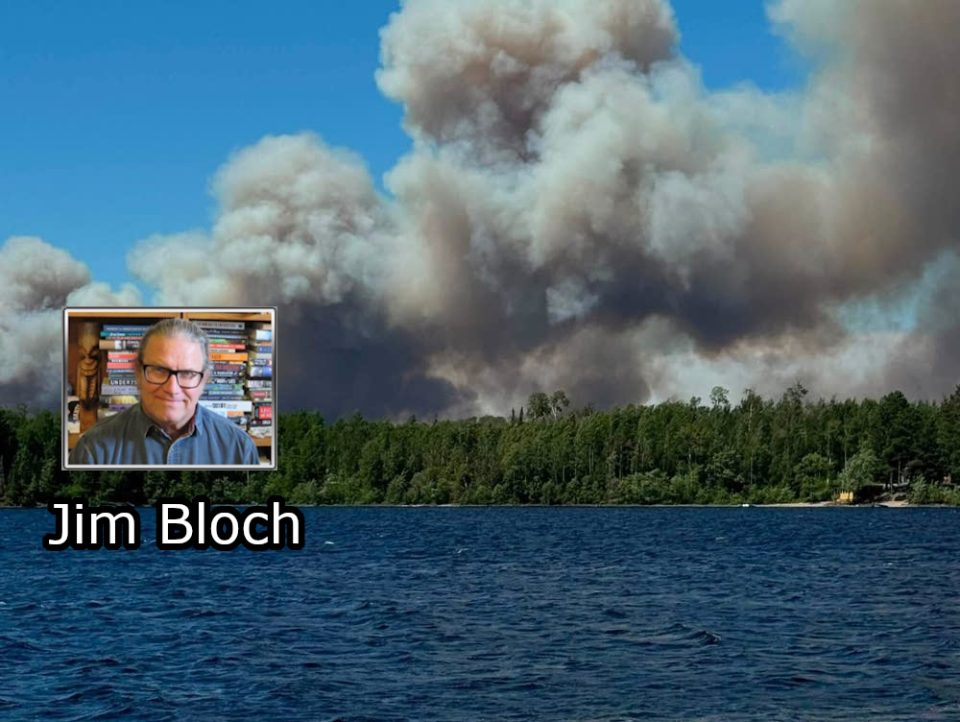
By Jim Bloch

At 8:30 p.m., July 15, the city of St. Clair, MI, had an air quality index of 406, according to airnow.gov, which ranked the air as “hazardous.”
“Everyone should stay indoors and reduce activity levels,” advised the service, a joint effort between the Environmental Protection Agency’s Office of Atmospheric Protection and it partners, such as the Michigan Department of Environment, Great Lakes and Energy.

A yellowish fog draped the municipality of 5,900 on the St. Clair River. Step outside and it smelled as if your neighbors on all side were hosting campfires.
The primary pollutant is particulate matter under 2.5 micrometers in diameter. These particles “are small enough to enter the bloodstream and typically result from wildfires, smokestacks, bacteria or small dust particles,” according to the National Weather Service.
By 8 a.m. July 16, the air quality index in St. Clair had reached 603. In neighboring Port Huron, the index was 581 and Sarnia was 648, according to CNN.
On Beaver Island, in far northern Lake Michigan, the index stood at 256, “very unhealthy,” around 8 p.m. July 15. By 8 a.m. on July 16, it had reached 500.
Lake Orion had the highest reading in the Michigan at 857, reported the Detroit Free Press. The newspaper called Detroit’s air quality “among the worst in the world.” It topped all major cities on Earth.
“This is a statewide Air Quality Alert,” said the Michigan Department of Environment, Great Lakes and Energy. “Plumes of smoke from Canadian wildfires will move through the region this week. The plumes have reached the upper peninsula and northern lower peninsula and will continue sinking through the southern lower peninsula this evening.”
According to Fox 9 Minneapolis on the evening of June 15, there were 15 active fires in the Superior National Forest in Minnesota. “Nearly 830 wildfires were burning across Canada on Wednesday, releasing thick smoke that is lofting into the United States from the Great Lakes to New England,” said Shel Winkley, chief meteorologist at Climate Central, in a June 15 email.
By the morning of June 16, the Canadian Wildfire Information System reported that the number of fires had jumped to 858.
“This smoke is causing air quality levels to reach hazardous levels for millions of Americans — not just those with respiratory issues,” said Winkley. “Air quality alerts have been issued for Thursday and Friday in over a dozen states from Minnesota to Massachusetts. Many of the fires in Ontario grew out of control under extreme heat conditions made up to five times more likely by climate change. Put simply, the heat that helped fuel these fires would have been virtually impossible without climate change.”
Heat-trapping carbon dioxide in the atmosphere, caused by burning fossil fuels like gas, oil and coal, causes the dry, hot, windy conditions that trigger wildfires.
“The number of people in the U.S. who experienced at least one day each year with smoke-related fine particle pollution levels at three times over the EPA standard has increased 27-fold over the last decade.”
Jim Bloch is a freelance writer based in St. Clair, Michigan. Contact him at bloch.jim@gmail.com.
