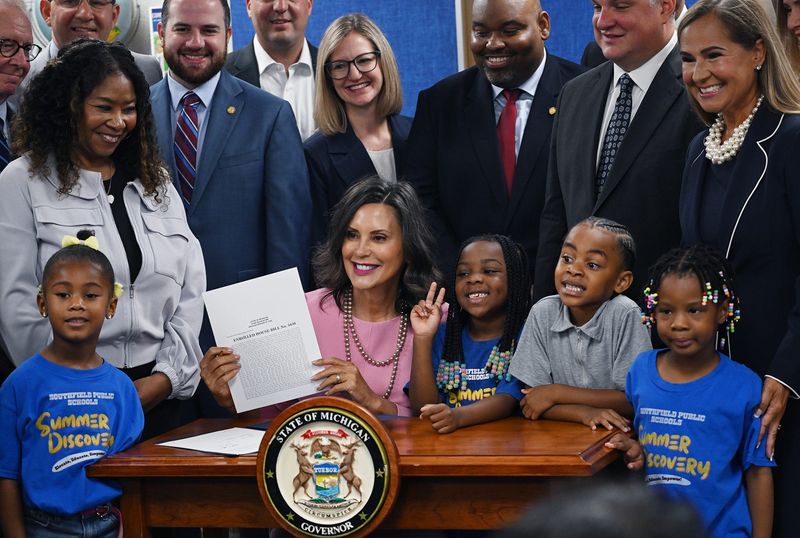
Southfield — Gov. Gretchen Whitmer signed an annual education budget and companion bills Tuesday that fund public safety and mental health programs, ensure all reading teachers can teach phonics and cement a “weighted funding” formula designed to aid schools with more student learning challenges.
The education budget, Whitmer’s last K-12 spending plan as governor, increases the per-pupil allowance by $250, from $10,050 to $10,300; increases funding for literacy programs; and hikes dollars for schools with at-risk students or kids whose primary language at home is not English. The spending plan also continues the state-subsidized breakfast and lunch program for all students.

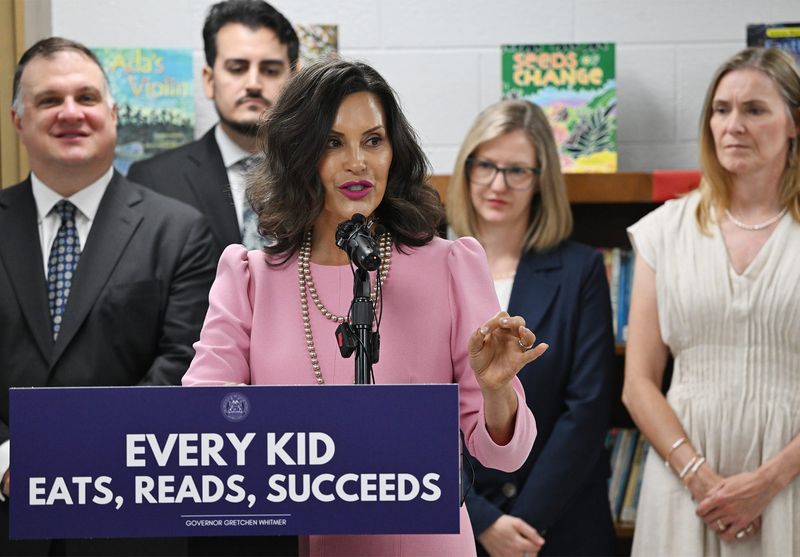
“I’m proud that this budget continues delivering on key promises that we’ve made over the years during my administration,” Whitmer said during a bill signing at Morris Adler Elementary School in Southfield.
The K-12 budget went down from $21.3 billion to $19.8 billion, a 7 percent drop in federal funds on paper.
But the plan appears to allow the federal funds not included in the tally to be spent, so it wasn’t clear how much total spending there would actually be under the legislation.
The budget and accompanying legislation signed Tuesday puts a specific emphasis on literacy efforts, including providing more funding for tutoring and requiring training for teachers on how to teach phonics. The investments come as Michigan currently ranks 44th in fourth-grade reading on the National Assessment of Educational Progress, also known as the Nation’s Report Card.
“The school aid budget that we are signing today is not perfect, but it includes key victories for our kids and our education system,” said state Sen. Darrin Camilleri, a Trenton Democrat who helped lead the Senate’s K-12 budget process. Camilleri secured accompanying legislation that cemented a weighted funding formula meant to push more dollars toward schools with students with learning challenges.
House Speaker Matt Hall, R-Richland, touted the budget’s literacy spending as well as language requiring students to participate in the President Fitness Test.
“We did a lot with the free breakfast and lunch, which was a big priority for the Republicans in the budget, and we ensured it was healthy food,” Hall said.
Lawmakers took some criticism for shifting a larger amount of School Aid Fund money, which would normally go to K-12 schools, toward higher education and community colleges.
The number appeared to rise from about $1.3 billion in the current year to about $2 billion in the fiscal year beginning Oct. 1, setting a new record. Whitmer had proposed using $1.7 billion from the School Aid Fund to support the operations of universities and community colleges.
The moves effectively free up money in the General Fund, where tax dollars are currently tight, for other needs.
As a Michigan senator, Whitmer spoke out forcefully against “raiding” the school aid fund. But on Tuesday, the governor defended the shift, arguing Congress’ One Big Beautiful Bill Act created challenges toward arriving at a balanced budget.
“The practicalities of how we build budgets are a lot more difficult than what it appears,” Whitmer said. “…I think we struck the right balance of prioritizing education, protecting people from cuts that are going to be mandated by the federal government because of all the money they’ve taken out of health care. I think this represents a good balance. But, ideally, in the future, hopefully, there are more resources so that you can fulfill all these priorities and make even greater investments in education.”
eleblanc@detroitnews.com
cmauger@detroitnews.com
This article originally appeared on The Detroit News: Whitmer signs final schools budget, zeroes in on state’s literacy crisis
Reporting by Beth LeBlanc and Craig Mauger, The Detroit News / The Detroit News
USA TODAY Network via Reuters Connect
By Beth LeBlanc and Craig Mauger, The Detroit News | USA TODAY Network